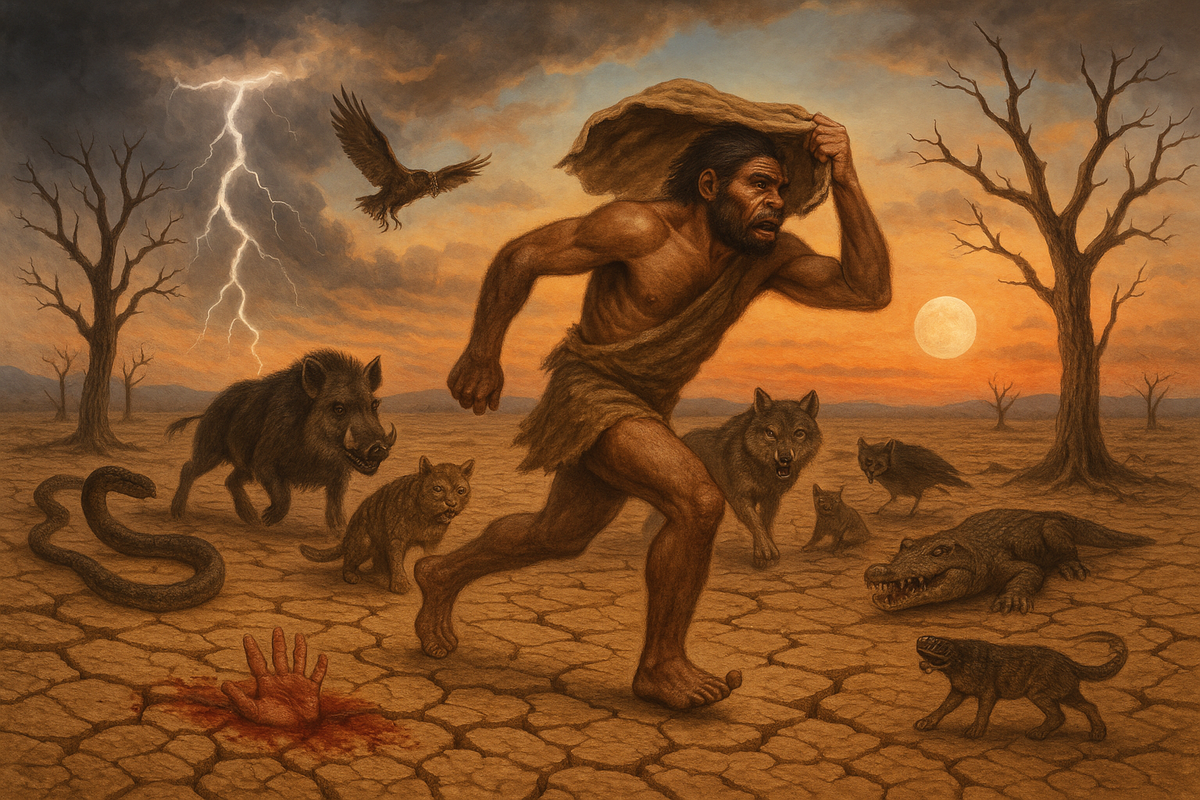
The Ten Commandments establish the absolute prohibition "lo tirtzach" (לֹא תִּרְצָח), forbidding killing of a human. The story of Cain demonstrates this principle in action - before the first murder, the world knew no divine signs, but after the shedding of blood, Cain receives a double punishment: a curse from the earth ("arur mi-adama" - אָרוּר מִן־הָאֲדָמָה), denying him the fruits of his labor, and exile ("na va-nad" - נָע וָנָד), condemning him to eternal wandering. Thus emerges the true meaning of "mot yumat" (מוֹת יוּמָת) - not physical execution, but complete alienation from the land, community, and Divine presence.
Sin in this narrative is described as "la-petach chatat rovetz" (לַפֶּתַח חַטָּאת רֹבֵץ), revealing its dual nature: simultaneously static and active, creating tension between prohibition and temptation. The mark ("ot" - אוֹת) given to Cain embodies this paradox - while protecting the murderer, it simultaneously becomes a test for others, provoking the desire to violate the prohibition.
This establishes a unique system of punishment where Cain's inviolability transforms into his eternal curse, while society faces constant temptation. Herein lies the profound wisdom of Torah, showing that true justice resides not in physical retribution, but in creating conditions where life itself becomes the punishment, and the ability to "timshol-bo" (תִּמְשָׁל־בּוֹ) - to rule over sin - serves as a test for the entire community.