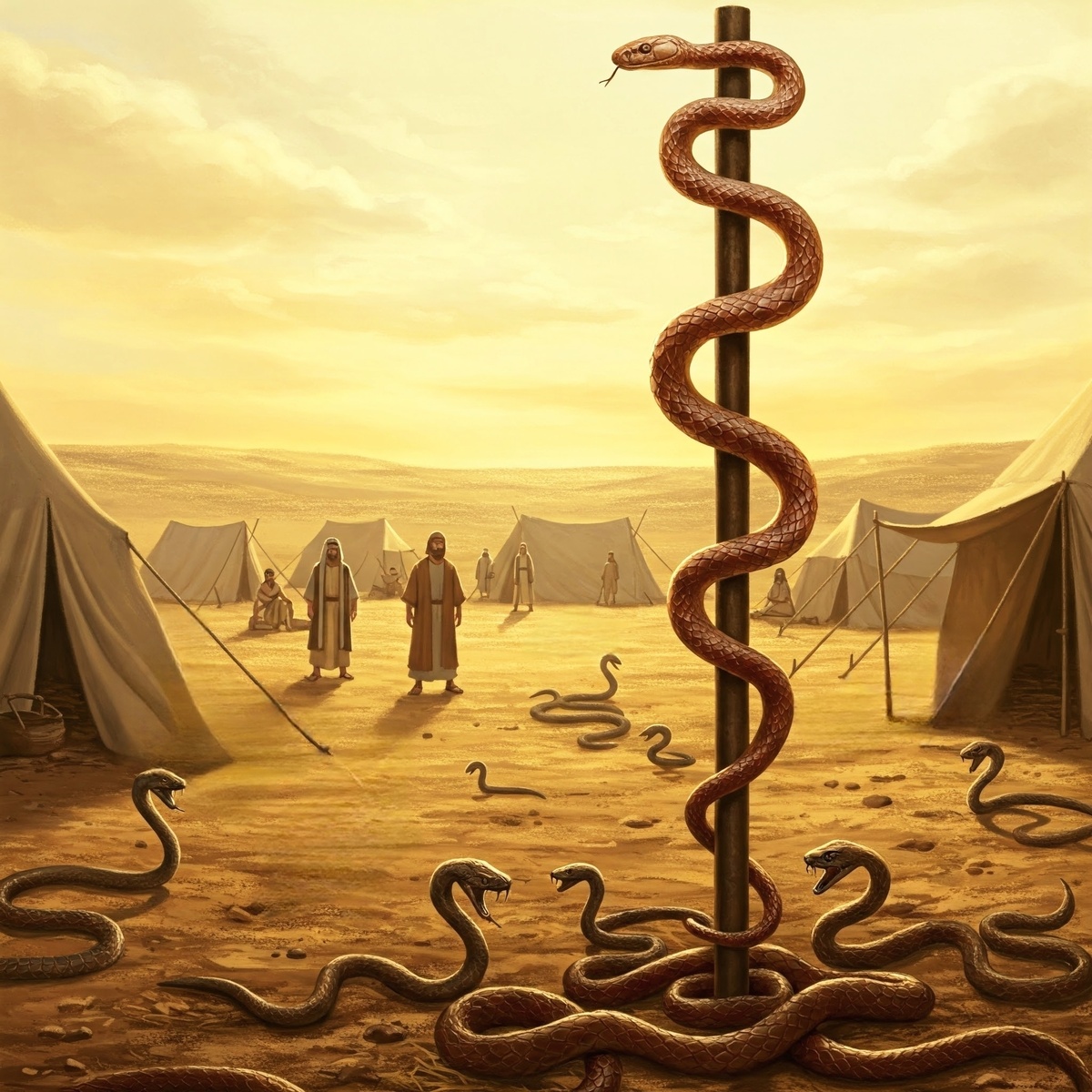
In the Torah, the serpents called הַשְּׁרָפִים (seraphim) and the bronze (copper + tin) serpent, הַנָּחָשׁ (nachash), are not two different beings, but two manifestations of a single image, differing in action and purpose. The word הַשְּׁרָפִים (seraphim), derived from the root “saraf” — “to burn,” conveys the essence of their effect: a burning, deadly pain that strikes from within. These serpents did not simply bite — they burned, becoming bearers of God's punishment, sent in response to murmuring and disobedience. Their action is described through the language of metaphor and metonymy, where fire is not literal, but an image of suffering, expressed in the sting of the bite, a herald of wrath and pain.
[It is important not to confuse the seraphim with angels. In the Torah, God's messages descend through the elements — darkness, fire, lightning, clouds. These are manifestations of the Creator’s will in nature, through which He speaks to the people.]
The word נָחָשׁ (nachash), used to describe the bronze serpent made by Moshe, refers to the same form, but with the opposite function. This serpent does not bite, does not burn, does not kill. It is made of smooth bronze and raised on a high pole — not as an idol, but as a sign, a reminder of faith, obedience, and trust. Its power lies not in the bronze or its shape, but in becoming the means through which the people receive healing by God's will. The one who looks at it with trust remains alive, not because the serpent holds magical power, but because it is an act of acknowledging God's authority and pleading for mercy.
The contrast between the seraphim and the nachash reveals the depth of the image through the union of metaphor and metonymy: what once brought death becomes the instrument of life — not by its own nature, but as part of the design of the Most High, who through the same symbol speaks first of punishment and then of forgiveness and salvation.