Игра KHOLAT основана на трагических событиях, произошедших в феврале 1959 года на склоне горы Холат-Сяхыл, известной как Гора Мертвецов, на Северном Урале, в СССР. Группа из девяти опытных туристов, планировавшая восхождение на гору Отортен, была обнаружена мертвой. Выжил только один из них — Юрий Юдин, который покинул группу по состоянию здоровья.
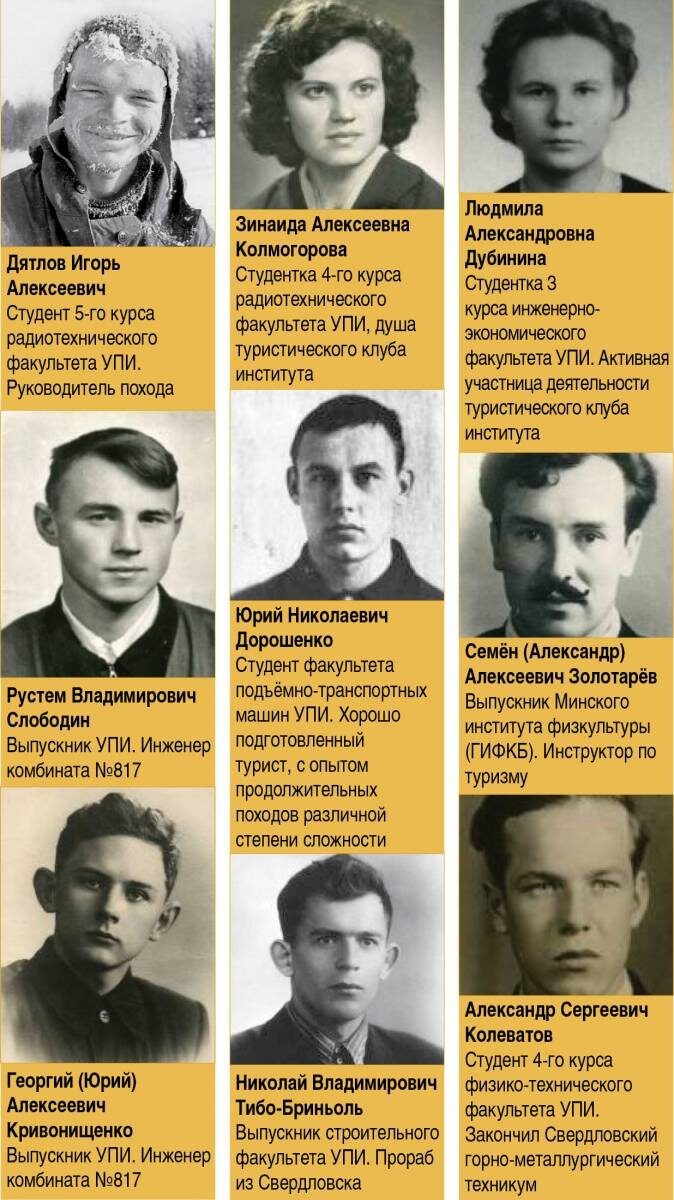
26 февраля 1959 года спасатели обнаружили палатку в ужасном состоянии: она была разрезана изнутри, а большинство лыжников бежали босиком или в носках. Большинство их вещей остались в палатке под слоем снега.
Расследование началось сразу после обнаружения первых пяти тел. Медицинское обследование на тот момент было неточным, и было сложно определить, что стало причиной их смерти. В мае были найдены оставшиеся четыре тела. У большинства участников группы не было серьезных травм. Однако трое лыжников получили смертельные травмы: у Тибо-Бриньоля было серьезное повреждение черепа, а у Дубининой и Золотарева — серьезные переломы грудной клетки. По мнению Бориса Возрожденного, сила, необходимая для причинения такого ущерба, была бы чрезвычайно велика, сравнимая с силой автокатастрофы.
Прошло 60 лет, и только в 2019 году расследование возобновилось. Лишь в 2021–2022 годах удалось найти правдоподобную версию произошедшего. На момент выпуска игры дело оставалось нераскрытым с 28 мая 1959 года.
Меня заинтересовал вопрос, почему разработчики игр стремятся создавать игры, основанные на реальных событиях. Я заметила растущий интерес к играм о мировой истории, особенно к жанру Survival Horror, который особенно поощряет чувство тревоги и страха. Имеет ли место страх перед неизвестностью в KHOLAT? Дело оставалось нераскрытым в течение 60 лет, что побудило неравнодушных людей выдвигать теории и предположения. В результате было насчитано более 100 теорий о перевале. Этим делом заинтересовались телевидение, кинематографисты, разработчики игр и другие энтузиасты из России и зарубежья. KHOLAT стала первой и единственной видеоигрой о перевале Дятлова.
Игра предлагает вам окунуться в опыт выживания в горах, но вы сидите в кресле в теплой комнате. Если рассматривать игры как форму эскапизма, то является ли это эскапизмом из нашего настоящего в наше прошлое? KHOLAT демонстрирует идеи, которые никогда не предлагались в качестве теорий расследования, насколько они нелепы. Значит ли это, что разработчики пытаются заменить реальность теорией, которая неправдоподобна даже для нас, но в неправдоподобные вещи проще верить и взаимодействовать, так как нам не хочется сталкиваться с настоящим ужасом?
Что происходит в игре KHOLAT?
Жанр хоррор от первого лица акцентирует внимание на том, что игрок должен активно участвовать в игровом процессе, а не просто наблюдать и принимать решения за персонажей, как это реализовано в The Devil in Me. В KHOLAT весь игровой дизайн построен таким образом, чтобы игрок осознавал, что не может просто умереть и начать заново. Это делает игрока более ответственным, как в реальном выживании.
Несмотря на фантастический сюжет, не связанный с «Перевалом Дятлова», игра оставляет игрока в безопасном месте, где он осознает, что не переживает опыт группы Дятлова.
Поскольку судебное расследование по делу о перевале Дятлова было приостановлено на момент создания игры, у создателей была полная свобода предполагать сверхъестественные причины настоящей трагедии. Однако разработчики также использовали это трагическое событие в своих интересах. Тема перевала Дятлова интересна людям, это поистине любопытный случай, и некоторые энтузиасты даже участвуют в журналистских расследованиях.
История группы Дятлова стала идеальной основой для игры с погружением в ситуацию, где игрок, потерявшись в зимнем лесу, отправляется расследовать загадочный случай гибели людей.
Хотя KHOLAT и имеет историческую основу, игра имеет очень мало общего с реальностью. Она паразитирует на трагедии, выдвигая свои фантазии на счет одной из версий гибели группы Дятлова.
Создатели игры также мистифицируют факты, которые подтвердились в ходе реального расследования, например, аномальные явления, которые действительно происходят на Северном Урале. В игре сильно преувеличены не только природные явления региона, но и языческие ритуалы, поскольку на территории перевала Дятлова проживает народ Манси. Если игра и намекает на какие-то реальные теории, то она превращает их в максимальный уровень сюрреализма.
KHOLAT не обязательно должен быть документальной игрой и реальной попыткой расследования, но с моральной точки зрения фантазии неуместны, поскольку это большая и тяжелая тема для россиян с 1959 года.
Помогает ли это вовлечься в историю? Какой эффект это оказывает на аудиторию? KHOLAT — одна из тех игр, когда нельзя жаловаться на то, насколько она отражает реальные события и насколько точно. Самая большая проблема заключается в том, что IMGN.PRO не осознает, как далеко они зашли в своих фантазиях. По этому делу существует более 100 теорий, и ни одна из них не была официально подтверждена, но и не опровергнута. Дело в том, что нереалистичные теории легко отделяются от наиболее правдоподобных. KHOLAT обратил внимание на нереалистичные теории, которые легко соотносятся с жанром Survival Horror.
Внимание, спойлер: в финале KHOLAT главный герой становится свидетелем паранормальных явлений. Языческие ритуалы и стихийное бедствие переносят его в февраль 1959 года. Главный герой поднимается по Холатчахлю и видит свет внутри палатки группы Дятлова. Он проникает внутрь, и игра заканчивается, оставляя нас размышлять, что именно главный герой, который все это время собирал записи и осматривал локации, убил группу Дятлова. На протяжении всего игрового процесса мы узнаем, что вся территория перевала Дятлова на самом деле является скрытым убежищем для экспериментов над людьми, также известным как Русский Спящий Эксперимент (Russian Sleeping Experiment). Адекватный человек, судя по всему, спросит «что это такое?»
В заключение, KHOLAT — это кощунство на памяти народа. К сожалению, это один из худших примеров использования исторического контекста. Я считаю, что IMGN.PRO мог бы создать игру с таким же сюжетом и прохождением, не упоминая об этом трагическом событии. Похоже, упоминание о перевале Дятлова было маркетинговой и рекламной кампанией. Разработчики знали об уникальности этого дела и об интересе людей к нему. Они использовали случай, ожидая успеха. Как это и произошло.
Бонус: https://dzen.ru/video/watch/6739d1106b0e135072b136b1?share_to=link
Kholat — a game based on real events (Dyatlov Pass)
The game KHOLAT is based on the tragic events that took place in February 1959 on the slope of Mount Holat-Syakhyl, known as the Mountain of the Dead, in the Northern Urals, in the USSR. A group of nine experienced tourists who planned to climb Mount Otorten was found dead. Only one of them survived — Yuri Yudin, who left the group for health reasons.
On February 26, 1959, rescuers found the tent in terrible condition: it was cut from the inside, and most of the skiers ran barefoot or in socks. Most of their belongings were left in the tent under a layer of snow.
The investigation began immediately after the discovery of the first five bodies. The medical examination at that time was inaccurate, and it was difficult to determine what caused their deaths. In May, the remaining four bodies were found. Most of the band members did not have serious injuries. However, three skiers suffered fatal injuries: Thibaut-Brignol suffered serious skull damage, and Dubinina and Zolotarev suffered serious chest fractures. According to Boris Vozrozhdeny, the force needed to cause such damage would be extremely great, comparable to the force of a car crash.
60 years have passed, and only in 2019 the investigation resumed. It was only in 2021-2022 that a plausible version of what happened was found. At the time of the game's release, the case had remained unsolved since May 28, 1959.
I was interested in the question of why game developers strive to create games based on real events. I've noticed a growing interest in world history games, especially the Survival Horror genre, which particularly encourages feelings of anxiety and fear. Is there a fear of the unknown in KHOLAT? The case remained unsolved for 60 years, which prompted concerned people to put forward theories and assumptions. As a result, more than 100 theories about the pass have been counted. Television, cinematographers, game developers and other enthusiasts from Russia and abroad became interested in this case. KHOLAT became the first and only video game about Dyatlov Pass.
The game offers you to plunge into the experience of survival in the mountains, but you are sitting in an armchair in a warm room. If we consider games as a form of escapism, is it escapism from our present to our past? KHOLAT demonstrates ideas that have never been proposed as theories of investigation, how ridiculous they are. Does this mean that developers are trying to replace reality with a theory that is implausible even for us, but it is easier to believe and interact with improbable things, since we do not want to face real horror?
What happens in the game KHOLAT?
The first-person horror genre focuses on the fact that the player must actively participate in the gameplay, and not just observe and make decisions for the characters, as implemented in The Devil in Me. In KHOLAT, the entire game design is built in such a way that the player realizes that he cannot just die and start over. This makes the player more responsible, as in real survival.
Despite the fantastic plot, unrelated to the Dyatlov Pass, the game leaves the player in a safe place where he realizes that he is not experiencing the experience of the Dyatlov group.
Since the judicial investigation into the Dyatlov Pass case was suspended at the time of the game's creation, the creators had complete freedom to assume supernatural causes of the real tragedy. However, the developers also used this tragic event to their advantage. The topic of Dyatlov Pass is interesting to people, it is a truly curious case, and some enthusiasts even participate in investigative journalism.
The story of Dyatlov's group has become an ideal basis for a game with immersion in a situation where the player, lost in a winter forest, goes to investigate a mysterious case of human death.
Although KHOLAT has a historical basis, the game has very little to do with reality. She parasitizes tragedies, putting forward her fantasies about one of the versions of the death of Dyatlov's group.
The creators of the game also mystify facts that were confirmed during a real investigation, for example, abnormal phenomena that actually occur in the Northern Urals. The game greatly exaggerates not only the natural phenomena of the region, but also pagan rituals, since the Mansi people live on the territory of the Dyatlov Pass. If the game hints at any real theories, it turns them into the maximum level of surrealism.
KHOLAT does not have to be a documentary game and a real attempt at investigation, but from a moral point of view, fantasies are inappropriate, since this is a big and difficult topic for Russians since 1959.
Does it help to get involved in the story? What effect does this have on the audience? KHOLAT is one of those games where you can't complain about how much it reflects real events and how accurately. The biggest problem is that IMGN.PRO He doesn't realize how far they've gone in their fantasies. There are more than 100 theories about this case, and none of them has been officially confirmed, but also not refuted. The fact is that unrealistic theories are easily separated from the most plausible ones. KHOLAT drew attention to unrealistic theories that easily correlate with the Survival Horror genre.
Spoiler alert: In the finale of KHOLAT, the main character witnesses paranormal phenomena. Pagan rituals and a natural disaster take him back to February 1959. The main character climbs the Kholatchakhl and sees a light inside the tent of Dyatlov's group. He gets inside, and the game ends, leaving us to speculate that it was the main character, who had been collecting records and inspecting locations all this time, who killed Dyatlov's group. Throughout the gameplay, we learn that the entire territory of Dyatlov Pass is actually a hidden shelter for experiments on people, also known as the Russian Sleeping Experiment. An adequate person, apparently, will ask "what is this?"
In conclusion, KHOLAT is a blasphemy in the memory of the people. Unfortunately, this is one of the worst examples of using historical context. I believe that IMGN.PRO I could have created a game with the same plot and passage, without mentioning this tragic event. It seems that the mention of Dyatlov Pass was a marketing and advertising campaign. The developers knew about the uniqueness of this case and about people's interest in it. They used the opportunity, expecting success. As it happened.