Hello, dear students!
I bring to your attention case problems with answers for this module
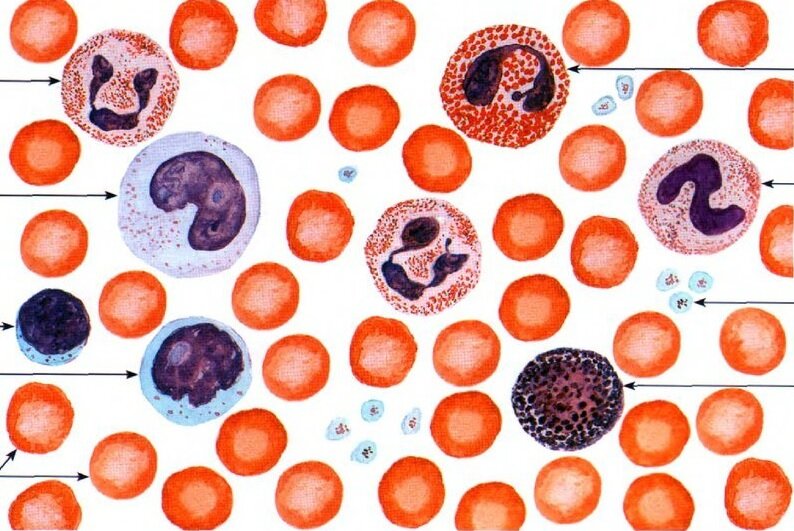
1.1. Which body organ plays the main role in producing plasma proteins?
Answer 1.1. The liver is the major source of plasma proteins.
1.2. What are the three major categories of formed elements?
Answer 1.2. Erythrocytes, leukocytes, and platelets.
1.3. What determines whether blood is bright red (scarlet) or dull red?
Answer 1.3. The colour of blood varies with the amount of oxygen it is carrying. From most oxygen to least, the blood goes from scarlet to dull red or purple.
1.4. What is the role of hemoglobin in the erythrocytes?
Answer 1.4. Hemoglobin transports oxygen and a small amount of carbon dioxide in the blood.
1.5. Which leukocytes are most important in body immunity?
Answer 1.5. Lymphocytes are the main actors in body immunity.
1.6. If you had a severe infection, would you expect your WBC (leukocytes) count to be closest to 5,000, 10,000, or 15,000 per mm3?
Answer 1.6. Infection in the body causes an increase in WBC (leukocytes) count, thus 15,000/mm3.
1.7. Little Lisa is pale and fatigued. What disorder of erythrocytes might she be suffering from?
Answer 1.7. Anemia.
1.8. What is the name of the stem cell that gives rise to all formed elements?
Answer 1.8. The hemocytoblast gives rise to all formed elements.
1.9. What property of RBCs (erythrocytes) dooms them to a limited life span of about 120 days?
Answer 1.9. Lack of a nucleus; therefore, they cannot carry out transcription and translation to produce proteins (enzymes and others).
1.10. How is the production of platelets different from that of all other formed elements?
Answer 1.10. The stem cell (megakaryocyte) undergoes mitosis many times, forming a large multinucleate cell, which then fragments into platelets.
1.11. What factors enhance the risk of thrombus formation in intact blood vessels?
Answer 1.11. Inactivity, leading to blood pooling, and anything that roughens or damages the lining of a blood vessel (laceration, atherosclerosis, or physical trauma).
1.12. What are the classes of human blood groups based on?
Answer 1.12. The self-antigens (agglutinogens) the RBCs (erythrocytes) bear.
1.13. What is the probable result of infusing mismatched blood?
Answer 1.13. A transfusion reaction in which the RBCs (erythrocytes) are lysed and hemoglobin enters the bloodstream, potentially leading to kidney shutdown.
1.14. Kareem is bleeding profusely after being hit by a truck as he was riding his bike home. At the hospital, the nurse asked him whether he knew his blood type. He told her that he “had the same blood as most other people.” What is his ABO blood type?
Answer 1.14. O-positive.
1.15. What is the difference between an antigen and an antibody?
Answer 1.15. An antigen is a substance foreign to the body that activates and is attacked by the immune system. An antibody is a protein released by immune cells that binds with a specific antigen and inactivates it in some way.
1.16. How does fetal hemoglobin differ from that of the adult?
Answer 1.16. Fetal HbF has a greater ability to bind oxygen and binds it more strongly than adult HbA.
1.17. What blood-related disorders are particularly common in the elderly?
Answer 1.17. Leukemia, pernicious anemia, and clotting disorders are particularly common in the elderly.
1.18. What is the function of lymphatic vessels?
Answer 1.18. Lymphatic vessels pick up fluid and proteins leaked from the blood into the interstitial space.
1.19. How do lymphatic capillaries and blood capillaries differ structurally from each other?
Answer 1.19. Lymphatic capillaries are blind-ended and not fed by arteries as blood capillaries are. They also have flaplike minivalves that make them more permeable than blood capillaries.
1.20. In which three regions of the body are the lymph nodes most densely located?
Answer 1.20. Particularly large collections of lymph nodes occur in the axillary, inguinal, and cervical regions.
1.21. What anatomical characteristic ensures that lymph flows through the lymph nodes slowly?
Answer 1.21. The number of afferent lymphatic vessels entering the node is greater than the number of efferent vessels leaving the node at the hilum. Therefore, lymph flow stagnates somewhat.
1.22. Which lymphoid organ gets rid of aged erythrocytes?
Answer 1.22. The spleen destroys worn-out RBCs (erythrocytes).
1.23. What is MALT?
Answer 1.23. The lymphoid tissue associated with the mucosa-tonsils in the throat, and Peyer’s patches in the intestinal walls - which acts to prevent pathogens from entering the body through the mucosa.
1.24. How do the innate and adaptive defenses differ?
Answer 1.24. Innate defenses are nonspecific and always ready to protect the body. They include intact membranes (mucosa, skin), inflammatory response, and several protective cell types and chemicals. Adaptive defenses must be programmed and specifically target particular pathogens or antigens.
1.25. How does complement cause lysis of a pathogenic microorganism?
Answer 1.25. It attaches to foreign cells, and when it is activated, membrane attack complexes (MACs) are inserted in the foreign cell’s membrane and produce lesions that allow water entry and cause lysis.
1.26. Which type of infectious microorganism causes the body’s level of interferons to rise?
Answer 1.26. Viruses elicit interferon formation.
1.27. What is the difference between an antigen and a self-antigen?
Answer 1.27. An antigen is a foreign substance in the body. A self-antigen is a body protein, typically displayed in the plasma membrane, that is foreign to anyone but oneself.
1.28. What are the two types of lymphocytes involved in adaptive immune responses, and how do their functions in body protection differ?
Answer 1.28. B lymphocytes and T-lymphocytes. B lymphocytes mount a humoral response by producing antibodies. T-lymphocytes mount the cellular response by activating B cells and cytotoxic T-cells and stimulating the inflammatory response.
1.29. Where does the “programming” phase leading to immunocompetence occur for T-cells?
Answer 1.29. In the thymus.
1.30. What is the essential role of macrophages and dendritic cells in adaptive immunity?
Answer 1.30. They are antigen presenters to the T cells.
1.31. What is the importance of the variable region of antibodies?
Answer 1.31. Primary response - this year’s new strain will be seen by the body as a different virus.
1.32. Which class of antibody is found in saliva and tears?
Answer 1.32. IgA, a dimer.
1.33. Regarding the action of antibodies, what is neutralisation?
Answer 1.33. Neutralisation occurs when antibodies attach to viruses or bacterial toxins, thereby blocking the virus or toxin from injuring the body.
1.34. Distinguish among precipitation, agglutination, and opsonization.
Answer 1.34. Agglutination cross-links cell-bound antigen; precipitation cross-links soluble antigen, which then falls out of solution like clotting proteins that have been activated; opsonisation is the “marking” of antigen for phagocytosis, which also makes it a bit sticky so it is easier for phagocytes to “catch.”
1.35. T-cells must take part in what is sometimes called the “double handshake” in order to be activated. What does this mean?
Answer 1.35. T-cells have to bind to both an antigenic particle and to a self-protein on the antigen-presenting cell.
1.36. How is the lethal hit accomplished?
Answer 1.36. The cytotoxic T-cell inserts perforin (toxic chemicals) into the foreign antigen’s plasma membrane, which then develops holes. Then granzymes, enzymes from the T-cell’s cytoplasmic granules, enter and kill the foreign cell.
1.37. What is the role of regulatory T-cells in the adaptive immune response?
Answer 1.37. To slow or stop the immune response once the “enemy” has been conquered.
1.38. In which branch of the adaptive response do helper T-cells participate?
Answer 1.38. Helper T-cells “direct” both humoral and cell-mediated adaptive responses; they interact with both B cells and T cells to stimulate cell division; release cytokines to recruit other phagocytes, such as neutrophils; and enhance macrophage activity.
1.39. Sheila is receiving a kidney transplant. The donor is her fraternal twin. What name is given to this type of graft?
Answer 1.39. Allograft.
1.40. What is an allergy?
Answer 1.40. An overzealous immune response against an otherwise harmless substance that causes injury to the body.
1.41. What causes the difficulty in breathing that occurs with anaphylactic shock?
Answer 1.41. In anaphylactic shock, released histamine causes constriction of the bronchioles, sudden vasodilation, and fluid loss.
1.42. What is the principal problem common to all immunodeficiency diseases?
Answer 1.42. Abnormal production or functioning of immune cells or complement.
1.43. What are two possible causes of autoimmune disease?
Answer 1.43. Self-proteins that were not previously exposed to the immune system appear in the circulation, or foreign antigens that resemble self-antigens arouse antibodies that attack the self-antigens.
Thank you for attention! Good luck in your studies! :-)