Boymuratova Khilola
Introduction:
How many successful people do you know? What about their backgrounds? Have you ever thought about what made them successful: parents’ money and fame or their own hard work? Some of them come from poor and some from rich families.
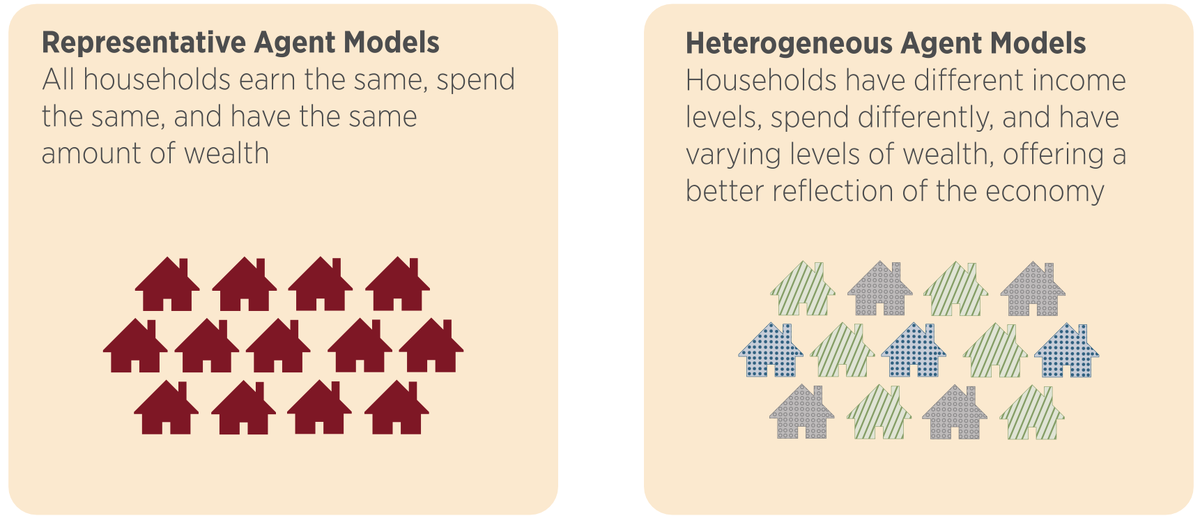
This is called relative economic heterogeneity. Economic heterogeneity refers to differences in capital assets, livelihoods, income and other economic endowments. These differences can make it more or less difficult for people to communicate, trust and co-operate with each other.
Some people believe that in order to become successful, an individual has to come from a rich family; others argue that the conditions in which the person was raised do not influence their chances to succeed. According to International Monetary Fund, excessive inequality can lead to eroded social cohesion, cause political polarization, and ultimately lower economic growth (Income Inequality par. 1).
What occurs within the household has a great impact on the development of a child. Ariel Kalil, a professor of public policy at the Harris School of Public Policy Studies, University of Chicago, states that growing income inequality increasingly affects the amount of financial resources that families of different income levels can spend on enrichment goods and services for their children (Ariel Kalil “How economic inequality affects children’s outcomes” par. 2).
Scientists believe that parents provide not only financial support to their child, but mental as well. According to Washington Center for Equitable growth, parenting of economically advantaged parents radically differ from the less advantaged ones (Washington Center for equitable growth par. 7).
Growing up in economically heterogeneous environment has an impact on children’s self-esteem, mental health and aspirations. For example, a child from a lower-income family attending a school where many of their classmates come from rich backgrounds may feel self-conscious about their clothes, possessions, or lifestyle, which can negatively impact their self-esteem. This can distract a child from studies and negatively affect their mental state. As Sharkey, P., & Elwert, F. mentioned in their study on how the neighborhood environment influence children’s cognitive ability “The legacy of disadvantage: Multigenerational neighborhood effects on cognitive ability” constant exposure to financial problems in the childhood can cause stress, sense of inadequacy and anxiety in children. Besides, children from affluent families, unlike children from poorer families, may have greater access to mentors, social networks and opportunities for development and skills advancement: all together – social capital. Availability of it can contribute to their later success. For example, a child from an affluent family may have parents who are well-connected in their community, which provides child with access to individuals who can serve as mentors and offer guidance in their career path. Additionally, youngster may attend schools or participate in extracurricular activities that expose them to a diverse network of peers and adults who can offer support and opportunities for advancement.
Current perspectives:
Global perspectives:
In United States, around 70-92% of millionaires come from families that were not considered rich or wealthy. This suggests that the majority of millionaires are self-made individuals who have achieved financial success through their own hard work, determination, and smart financial decisions. However, the reason for such a substantial difference between figures may be suspicious, in reality it comes from the how researchers define wealth. Some did it based on income, others based on net assets. One example is J.K. Rowling who was raising a daughter with the help of public assistance when she wrote “Harry Potter” in 1994. Reflecting on life before literary super-stardom, Rowling said in a 2013 interview with Daily Mail that she was “as poor as it’s possible to be.” Despite her challenging circumstances, she persevered and achieved immense financial success, earning millions annually and ultimately gaining a net worth of $1 billion.
According to statistics from 2022 in South Korea, only 15.8% of total wealth was inherited, while the rest of it was acquired through success in business, real estate, etc.
The Hurun Global Rich List 2023 showed that 70% of the billionaires in the world are self-made and only 30% are legacy.
Local perspectives:
Alisher Burkhanovich Usmanov is an Uzbek-Russian businessman and oligarch. By 2023, Usmanov had an estimated net worth of $14.5 billion and was among the world's 100 wealthiest people. He was the eldest of four children. The father of the future billionaire worked as a deputy head of the Tashkent Prosecutor’s Office, and his mother was a Russian language teacher. Their family was not lacking in material comforts.
Iskandar Mahmudov is a Russian oligarch, entrepreneur of Uzbek origin with a net worth of $7.9 billion. His parents’ salaries were barely enough to live an unremarkable, monotonous life. Despite this, he was able to graduate school with high marks, enter and successfully graduate the Tashkent State University and build his career.
Even though, there is no exact information or statistics on the proportion of self-made millionaires, from the examples above it can be seen that people from both destitute and well-off families gained success in Uzbekistan in the near past. In the present, however, there are not many successful self-made billionaire type of individuals.
Personal perspectives:
In my opinion, in Uzbekistan it is nearly impossible to financially succeed for a person coming from a very destitute family, as in modern dynamic world you must have access to various skills and knowledge to become a competitive person, you must possess a specific talent, you must have a unique spark. In Uzbekistan, you have to come from at least middle class to afford language courses, extracurricular activities, etc. which are the ways to get a ticket to a prosperous life.
Even though, case of Iskandar Mahmudov proves that not only affluent people, but poor as well can become financially successful, we cannot fully rely on that one because this person was born and raised during the period when Uzbekistan was included in USSR. We must bear in mind that the time period, economic situation in the country can greatly affect people’s chances to succeed. Uzbekistan is constantly changing and developing, and those changes have an impact on everyone.
The reason why I actually brought up this topic is to find out whether people can triumph even if they were born in a needy family.
Conclusion:
While conducting this research, I discovered that although it is possible to achieve financial success through individual effort alone, in Uzbekistan this situation is different. Uzbekistan presents a scenario where hard work, parental investment and access to resources are crucial factors in determining one's economic prospects. The findings from this study highlight the importance of addressing economic heterogeneity and its impacts on social mobility and economic prosperity. I also got to discover so much new information about economic heterogeneity and its effects, and my knowledge of this topic widened significantly.
Proposed Course of action:
The government of Uzbekistan should prioritize efforts to eliminate corruption at all levels of society, including within government institutions, businesses, and public services. By doing it, the government can create a more transparent and fair economic environment that brings benefits to all individuals, especially those who are from impoverished backgrounds. In addition, it should design and implement targeted economic empowerment programs that provide financial support, skills training, and access to resources for people from destitute families. Besides this, the government should collaborate with civil society organizations and the private sector to use resources, expertise, and networks in supporting individuals from poor families. By working together with these partners, the government can maximize the effect of its efforts and ensure that individuals from destitute backgrounds receive the support they need to succeed. Investing in quality education and skill development programs is also essential for empowering individuals from destitute families to break the cycle of poverty. By adopting these suggested measures, Uzbekistan government can make substantial progress in decreasing economic inequalities, raising prospects for individuals from poor backgrounds, and creating a more inclusive and prosperous society for all its citizens.
Source Evaluation:
I used articles written by International Monetary Fund as a source, as it is free and provides up-to-date information. The IMF’s policies work to ensure the transparent, accurate and meaningful data is available to everyone. The International Monetary Fund (IMF) is a respected international organization with expertise in economic issues, including income inequality. There is minimal risk of this evidence being biased.
Washington Center for Equitable Growth is another reputable source that I used because it is dedicated to promoting research on economic inequality and growth, adding credibility to the information presented. Its researches and analyses help to shape well-rounded perspective on income inequality.
Next, I used Hurun Global Rich List compiled by the Hurun Report, a research company based in China which is known for its research on high-net-worth individuals and provides insights into wealth distribution and economic inequalities among affluent individuals worldwide.
Reference list:
Sharkey, P., & Elwert, F. (2011). The legacy of disadvantage: Multigenerational neighborhood effects on cognitive ability. American Journal of Sociology, 116(6), 1934-1981.
International Monetary Fund: Income Inequality
https://www.gobankingrates.com/net-worth/celebrities/celebrities-rags-to-riches/
https://equitablegrowth.org/how-economic-inequality-affects-childrens-outcomes/
https://www.hurun.net/en-US/Info/Detail?num=OY3S1LKBSCFA
https://dzen.ru/a/XQH1xhnctgCsUMA8
https://dzen.ru/a/XmaMuWw_nnDpBkbM