Добавить в корзинуПозвонить
Найти в Дзене
Хайтек

«Хаббл» наблюдал «спицы» в кольцах Сатурна

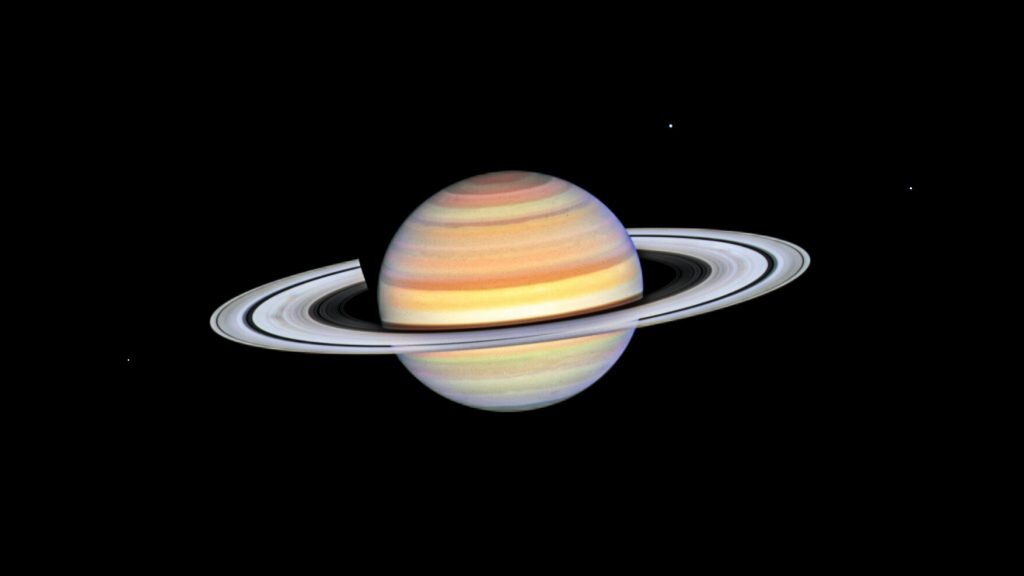
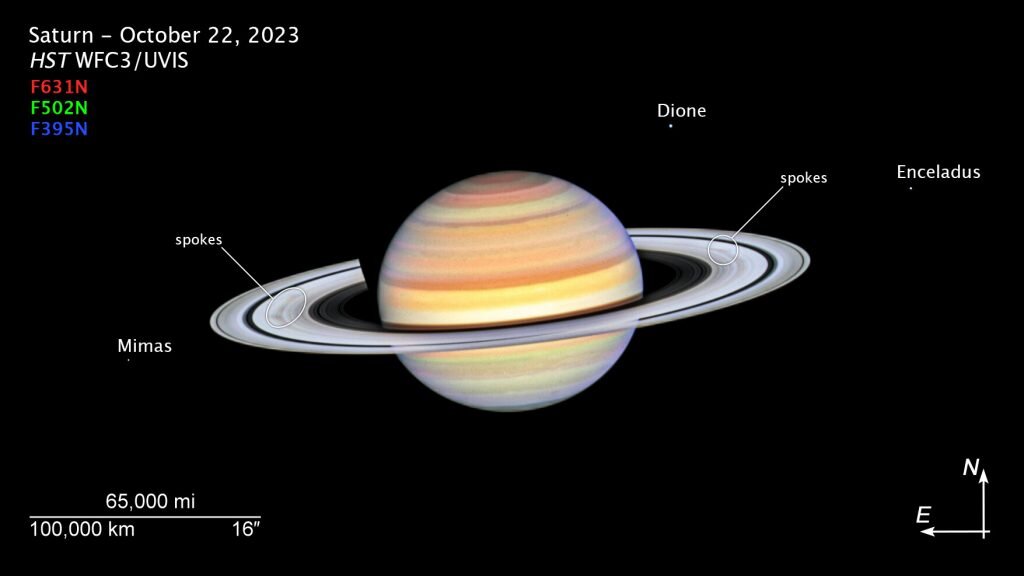
Космический телескоп исследует необычные пятна на кольцах газового гиганта. НАСА опубликовало новый снимок Сатурна, полученный космическим телескопом «Хаббл». На фотографии, сделанной 22 октября, когда планета находилась в 1,4 млрд км от Земли, на кольцах видны темные пятна, которые астрономы называют «спицами». Кольцевые спицы — это загадочные радиальные структуры, которые время от времени появляются на кольцах Сатурна. Эти пятна могут быть темнее или светлее самого кольца. Они вращаются вместе с кольцами, но исчезают через 2-3 оборота колец. Астрономы заметили, что формирование «спиц» носит цикличный характер: их количество увеличивается по мере приближения планеты к равноденствию. Этот период исследователи называют «сезоном спиц». Снимок Сатурна, сделанный «Хабблом» в октябре 2023 года. Слева и справа на кольцах видны темные пятна — «спицы». Фото: NASA, ESA, STScI, A. Simon (NASA-GSFC) Сейчас на Сатурне начался новый «сезон спиц». Четкие изображения «Хаббла» подтверждают цикличный х
   This photo of Saturn was taken by the NASA/ESA Hubble Space Telescope on 22 October 2023, when the ringed planet was approximately 1365 million kilometres from Earth. Hubble's ultra-sharp vision reveals a phenomenon called ring spokes. Saturn's spokes are transient features that rotate along with the rings. Their ghostly appearance only persists for two or three rotations around Saturn. During active periods, freshly-formed spokes continuously add to the pattern. In 1981, NASA's Voyager 2 first photographed the ring spokes. Hubble continues observing Saturn annually as the spokes come and go. This cycle has been captured by Hubble's Outer Planets Atmospheres Legacy (OPAL) program that began nearly a decade ago to annually monitor weather changes on all four gas-giant outer planets. Hubble's crisp images show that the frequency of spoke apparitions is seasonally driven, first appearing in OPAL data in 2021 but only on the morning (left) side of the rings. Long-term monitoring shows that both the number and contrast of the spokes vary with Saturn's seasons. Saturn is tilted on its axis like Earth and has seasons lasting approximately seven years. This year, these ephemeral structures appear on both sides of the planet simultaneously as they spin around the giant world. Although they look small compared with Saturn, their length and width can stretch longer than Earth's diameter! The OPAL team notes that the leading theory is that spokes are tied to interactions between Saturn's powerful magnetic field and the sun. Planetary scientists think that electrostatic forces generated from this interaction levitate dust or ice above the ring to form the spokes, though after several decades no theory perfectly predicts the spokes. Continued Hubble observations may eventually help solve the mystery. [Image description: Planet Saturn with bright white rings, multi-colored main sphere, and moons Mimas, Dione, and Enceladus. Spoke features on the left and right sides of the rings a Александр Шереметьев
This photo of Saturn was taken by the NASA/ESA Hubble Space Telescope on 22 October 2023, when the ringed planet was approximately 1365 million kilometres from Earth. Hubble's ultra-sharp vision reveals a phenomenon called ring spokes. Saturn's spokes are transient features that rotate along with the rings. Their ghostly appearance only persists for two or three rotations around Saturn. During active periods, freshly-formed spokes continuously add to the pattern. In 1981, NASA's Voyager 2 first photographed the ring spokes. Hubble continues observing Saturn annually as the spokes come and go. This cycle has been captured by Hubble's Outer Planets Atmospheres Legacy (OPAL) program that began nearly a decade ago to annually monitor weather changes on all four gas-giant outer planets. Hubble's crisp images show that the frequency of spoke apparitions is seasonally driven, first appearing in OPAL data in 2021 but only on the morning (left) side of the rings. Long-term monitoring shows that both the number and contrast of the spokes vary with Saturn's seasons. Saturn is tilted on its axis like Earth and has seasons lasting approximately seven years. This year, these ephemeral structures appear on both sides of the planet simultaneously as they spin around the giant world. Although they look small compared with Saturn, their length and width can stretch longer than Earth's diameter! The OPAL team notes that the leading theory is that spokes are tied to interactions between Saturn's powerful magnetic field and the sun. Planetary scientists think that electrostatic forces generated from this interaction levitate dust or ice above the ring to form the spokes, though after several decades no theory perfectly predicts the spokes. Continued Hubble observations may eventually help solve the mystery. [Image description: Planet Saturn with bright white rings, multi-colored main sphere, and moons Mimas, Dione, and Enceladus. Spoke features on the left and right sides of the rings a Александр Шереметьев

Космический телескоп исследует необычные пятна на кольцах газового гиганта.

НАСА опубликовало новый снимок Сатурна, полученный космическим телескопом «Хаббл». На фотографии, сделанной 22 октября, когда планета находилась в 1,4 млрд км от Земли, на кольцах видны темные пятна, которые астрономы называют «спицами».

Кольцевые спицы — это загадочные радиальные структуры, которые время от времени появляются на кольцах Сатурна. Эти пятна могут быть темнее или светлее самого кольца. Они вращаются вместе с кольцами, но исчезают через 2-3 оборота колец. Астрономы заметили, что формирование «спиц» носит цикличный характер: их количество увеличивается по мере приближения планеты к равноденствию. Этот период исследователи называют «сезоном спиц».
-2

Снимок Сатурна, сделанный «Хабблом» в октябре 2023 года. Слева и справа на кольцах видны темные пятна — «спицы». Фото: NASA, ESA, STScI, A. Simon (NASA-GSFC)

Сейчас на Сатурне начался новый «сезон спиц». Четкие изображения «Хаббла» подтверждают цикличный характер этого явления: впервые «спицы» появились в данных наблюдений в 2021 году, но только на утренней (левой) стороне колец. Долгосрочный мониторинг показывает, что количество и контрастность пятен увеличивается по мере смены времен года на Сатурне. Ось Сатурна наклонена к плоскости вращения вокруг Солнца, и времена года здесь длятся примерно семь лет.

В этом году «спицы» появляются одновременно на обеих сторонах планеты, вращаясь вокруг гигантской планеты. Хотя они кажутся небольшими по сравнению с Сатурном, их длина и ширина может превышать диаметр Земли.

Анимированное изображение движения «спиц» на основе серии снимков «Хаббла». Анимация: NASA, Amy Simon (NASA-GSFC); Joseph DePasquale (STScI)

Основная теория связывает формирование «спиц» с взаимодействием между магнитными полями Сатурна и Солнца. Планетологи полагают, что электростатические силы, возникающие в результате этого взаимодействия, поднимают пыль или лед над кольцом, образуя «спицы». Тем не менее до сих пор нет ни одной теории, которая бы точно предсказывала, когда пятна начнут формироваться. Дальнейшие наблюдения «Хаббла» прольют свет на эту загадку, надеются ученые.

Читать далее:

10 триллионов кадров в секунду: посмотрите, как ютуберы засняли скорость света

НАСА показало на тысячелетнее движение льда на Марсе

Посмотрите на 4-километровую вулканическую трещину, извергающуюся в Исландии

Изображение на обложке: «спицы» на кольцах. Фото: NASA, ESA, STScI, A. Simon (NASA-GSFC)