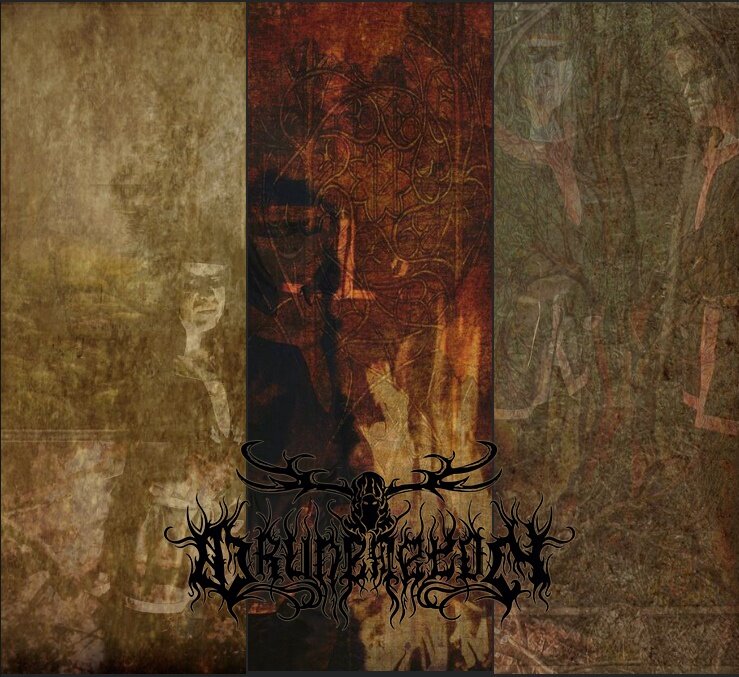
Originally Russian and recently Serbian one-man-band Drunemeton has been writing its history since 2014. At the moment, it has four full-length albums, a plethora of singles, and two splits to its name. The foundation of its sound is epic heathen black metal, rooted in the legacy of Bathory, Graveland, Satyricon, and others, but with each new release, the project takes on a more original form. In an interview with Grannus, the founder and unwavering leader of the project, issues of emigration and current global events were discussed, the upcoming release of Drunemeton and its themes were touched upon, as well as the musician's attitude towards classical and contemporary art, among other topics.
Greetings! To start, tell us, was the decision to move difficult for you? How much did the events of 2022 impact you as both a musician and an ordinary citizen?
I think it's not worth being simple people or ordinary citizens. Simple citizens prefer simple solutions, which often are products from the outside. Thus, they shift responsibility onto third parties for their lives, who may use them according to their understanding.
The events of 2014 and earlier also influenced me; there were other attempts at emigration and just travels abroad. To come more prepared by the appointed hour. As a musician, it affected me in the sense that over all these years, I didn't particularly bother with the live lineup. I decided for myself that sooner or later I would have to leave, so it's better to focus on studio material and record as much as possible.
As for 2022... Almost all my most negative premonitions came true. Except for the radioactivе ash.
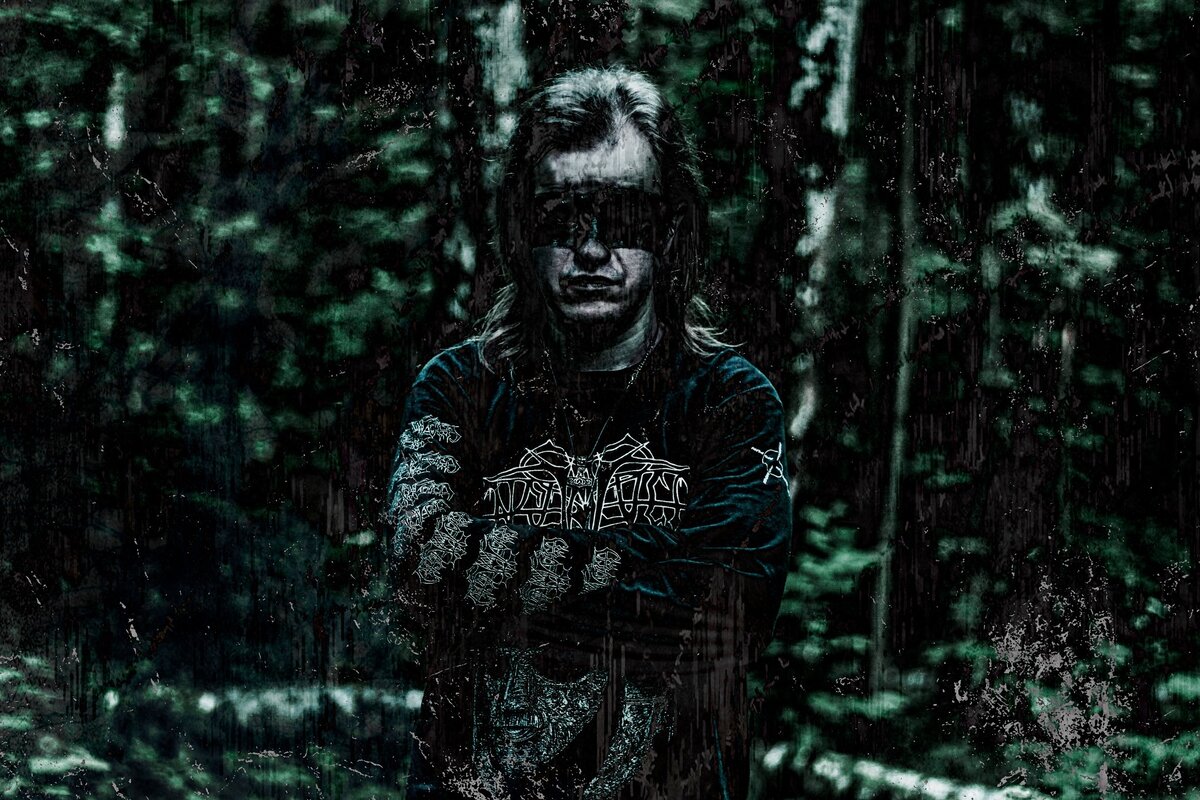
During your time in Serbia, have you managed to get acquainted with local metalheads or musicians with similar tastes and worldviews?
Yes! Who would have thought that in Serbia, I would get to know Vladimir Uzelac, a former member of the band Kawir and the leader of Terrorhammer and All My Sins. He, in turn, introduced me to his friendly circle in Pancevo, for which I am very grateful! Additionally, Vladimir did an impressive job mastering my upcoming album and recorded Balkan folk wind instruments as a session musician.
As for musicians from Belgrade, I am currently almost unfamiliar with them. There were many other things to do, and I couldn't afford to visit the capital often. I hope this situation will change over time.
Have you encountered Serbian fans of Drunemeton?
I haven't met any fans. Drunemeton is not yet such a large and well-known group to have many followers in different parts of the world. But I will work on it :))
Have you discovered anything new in terms of music?
I discovered Yugoslav post-punk. In principle, I already had an idea that the Yugoslav scene was more progressive than in the USSR. But in reality, the quality of Yugoslav bands is in no way inferior to The Cure, Sisters Of Mercy, Fields Of Nephilim, etc. Not to mention Laibach! They have already been to Serbia twice, but I was too busy with my immigrant affairs and unfortunately didn't attend their concerts.
In 2019, when the world was unaware of what it would soon face, the album «Return to Old Europe» was released. In my opinion, it's one of the best works of Drunemeton. It traces interesting parallels and reveals similarities between the culture and worldview of ancient peoples of the described period: Scandinavians, Celts, Western Slavs, and Mediterraneans. Considering the cyclical nature of history, do you think we have passed the period of the so-called «romantic» paganism, and is a new Dark Middle Ages awaiting us?
More likely, the period of the middle class and capitalism will be replaced by monarchy and elitism for the aristocracy, and a new Trotskyist-type socialism for everyone else. I don't remember the name of the movie, but it depicted a similar situation where the elite feasts on the most exquisite cuisine in the main train carriage, while the rest of the people eat protein bars made from compressed insects.
Talks about reducing animal protein and using fuel engines have already begun. I think in the future, a series of military conflicts will set the economy back for the masses, while the aristocracy and elite will have expensive cars and meat with fruits on the table, of course :))
Let's return to musical matters. Drunemeton has announced the release of a new, fifth full-length album titled «Tir Nan Og» for January 2024. As far as I know, work on it began in Russia. Did you already know what it would turn out to be like, or did the creative process and the move introduce their own adjustments?
I recorded the entire foundation before the move, but, of course, it had its own adjustments. This primarily concerns the lyrics and the overall theme of the album. When I was composing the material, I couldn't imagine folk Balkan instruments in the compositions. It was a pure experiment. And it worked out :))
Who were the session musicians involved in the recording?
On drums, as in the previous album, Semion Unholy Father from Zlatoust played, and as I mentioned before, Vladimir Uzelac performed the wind instrument parts. He also did the mastering. For mixing, as in the previous album, Morning Star was in charge.
The artist also changed – the cover for the new album was painted by Marko Adamovich from Pancevo, and he did an excellent job. The drawing style this time was significantly different due to the technique and approach. Marko has his own art workshop; he mainly works with paints, with minimal computer intervention.
The preceding single, «The White Ship», demonstrates a shift towards a more melodic sound. Can it be asserted that the entire long-play will be in a similar vein? What can we expect from this work?
I would say that this song, rather, leaned towards the new material. The foundation for it was taken from a demo made twenty years ago, long before not only Drunemeton but any of my old bands :)) This, in turn, means that even then I had the ability to write music. The question was different: at that time, there were not enough opportunities for realization. But the fact that this piece organically fit in is undeniable. And it not only fit in but became a promo single for the new material.
Additionally, part of the music was borrowed from the second album of my previous band, Heresiarch Seminary. It was quite different from the debut and could already be called proto-Drunemeton. However, that release ended up in the shadow of my future creations and, in a sense, was consigned to oblivion.
Nevertheless, there was plenty of good material there. It was just a matter of creatively reworking and reinterpreting it at a new level, as Drunemeton at the time was a significant step forward. This is how I intend to proceed in the future because, alongside new ideas, there are still enough old drafts waiting to be dusted off and given a new form.
The lyrical concept of Drunemeton consistently draws from the culture and mythology of pre-Christian Europe. Does «Tir Nan Og» continue the line of its predecessors, or does it shed light on new narratives?
On the previous album, I began exploring more realistic historical themes, such as the struggle against dissent. On the new album, medieval bonfires are replaced by bonfires and sacrifices of the new era. It's no coincidence that the «Wicker Man» was brought to the cover.
If we set aside the folklore ambiance and the so-called confrontation of two religions in the eponymous movie, we can see how the isolated and responsibility-free ruling elite engages in human and animal sacrifices to strengthen their power. All of this can be boldly extrapolated to the current situation when all of humanity is within the wicker figure. Pre-Christian religions needed a long cultural evolution to abandon human sacrifices, but then young Christianity eagerly took up the relay. Perhaps the question is not about religion but about the nature of power itself? Power that always finds a new form to justify its own degradation and impunity.
Tir Nan Og is the land of the dead, a blessed island where spring and eternal youth reign. After the adoption of Christianity, the afterlife began to be associated with a gloomy and uncomfortable place, a land of graves.
The album's concept includes the story of how the elite occupies the island of eternal youth, be it Tir Nan Og, Elysium, or Avalon. The rest are thrown off the airship, left to survive in the chaos they left behind on Earth for ordinary mortals. But they forget that their occupied paradise awaits the fate of Atlantis or Sodom and Gomorrah.
The second plan of the album also has only indirect relevance to European mythology: the legend of the Children of Lir, which was once adequately set to music by the Irish band Primordial. Here, the theme is emigration. Not the kind where you board a plane and simply sail to a new country, but when your home is burned to the ground, you are forcibly driven away from your homeland, and you venture into the unknown. And returning after a long time, you no longer recognize your homeland. I believe the allusion is clear.
And since the theme of emigration and travels, abundant in my previous albums, has been raised again, I couldn't ignore Lovecraftian motifs of journeys to mythical lands. I touched on this theme on the first Drunemeton album in the composition «Far Tower Beacon», which was based on the stories «The Strange High House in the Mist» and «The White Ship». As you can see, the title of the second story is now fully incorporated into the song's title.
It's a story about how the lighthouse keeper succumbs to oceanic mirages and the call of travels, embarking on a mysterious white ship to faraway mythical lands beyond our reality. Then he losе his mind in the whirlpool of events and eventually crashes. Only then does he wake up again in the familiar mundane world. But the ship will no longer come for him. I think this beautiful, fantastical, and quite sad story is worthy of becoming not only one of the central themes of the album but also finding its reflection on the cover.
Moreover, such a theme has been central to Drunemeton throughout the group/project's existence. I myself am inclined to travel and emigration, so everything was quite natural.
One could say that the gates to the Kingdom of Eternal Youth are closed, but after all the journeys, I returned to that Old Europe that I talked about on my album a few years earlier.
How does the process of creating material unfold for you? Does the music come from within, or through extended improvisational sessions? Are there specific sources of inspiration?
The music comes from within, through extended improvisational sessions :)) I fully record the entire guitar foundation in tabs, then compose bass, drum, and keyboard parts that undergo minimal changes in the final version. Morning Star, besides handling mixing, also played on the last two albums and acted as a sound producer, bringing some changes to the sonic framing of the compositions. Sometimes, I estimate how the vocal parts should sound, but this time in the studio, I allowed improvisation, and my vocals sounded more dynamic and alive than on previous works.
As a sole songwriter, do you worry about the possible issue of self-quotation and the uniformity of the material? Is it much more comfortable for you to compose music alone, or are you open to collaborative play?
Yes, I worry about it. But, in my view, my creativity, like my life, is not a static and frozen phenomenon. Something is constantly changing and something new is happening, which is immediately reflected in the music. I am not engaged in constant craftsmanship. Therefore, although all Drunemeton albums are written in approximately the same style and musical canvas, they are quite different from each other. I recently concluded a fairly long hiatus when I took a break from playing and composing. I bought a guitar only a year after emigrating.
Regarding comfort, I can say that I am a bad leader and inspirer. Or maybe, for me, music is so personal that I compose almost everything alone, down to keyboard and drum parts. All that remains is to show session musicians what they need to do.
The exceptions are Vladimir and A.R. Mezhova, who added their own vision to my works. I also took some pieces and ideas from our collaborative work with Morning Star. Sometimes he perceived it negatively because I greatly reworked some of his ideas to suit myself :))
I never felt the need or creative stagnation to turn to someone for collaboration. This applies even to the first album of Heresiarch Seminary, when there were still many people in the band, and all of them contributed something of their own. Despite the fact that at that time, I also composed almost all the music, it was quite different from today's Drunemeton. Needless to say, the times were different.
From the very beginning, Drunemeton's sound stood out with a particular fundamentality, reminiscent of albums by Bathory, Enslaved, or Graveland. In your opinion, did Drunemeton occupy that essentially vacant (or approximately so) niche in the Russian black metal underground that the aforementioned artists did?
I wanted to play such music not because some niche was vacant, but because that's what I wanted. It's true that this style and sound are not particularly favored in Russia, but I wasn't particularly concerned about that. Given my inclination for travel, I aimed for Drunemeton to become part of the global underground, not just the Russian one, as Russia always had its own scene. With the transition to Heidens Hart, this dream became even closer. I was quite satisfied with the collaboration with Der Schwarze Tod, but it was time to move on and start working with European labels.
Some Drunemeton releases feature compositions inspired by the works of H.P. Lovecraft. Barbarian motifs of Robert E. Howard are also not unfamiliar to you. Could there be a conceptual release in the project's discography that is based entirely on the work of these undoubtedly cult authors, from start to finish?
I think I've already covered this topic sufficiently in response to one of the previous questions. To be precise, compositions based on the texts or verses of Lovecraft are present on three out of five albums, including the one that has yet to be released. The key is for the context of the work that inspires a composition to harmonize with the overall direction of the album and fit organically into it.
I once thought about creating a horror-metal project in the spirit of King Diamond, where I could tell a whole story from Lovecraft or Robert E. Howard. In particular, I contemplated «The Pigeons of Hell». But then I decided it was all nonsense, and I didn't need to dissipate myself into side projects, as I did in my youth when I had more free time and energy.
What is the current status of your thrash metal project?
I can say the exact same thing. Moreover, much of what I wanted to express within this project was reflected in the new Drunemeton album. Perhaps I will return to it if I set aside the main project for a while. But I don't compose thrash out of inspiration. It's more like a tense exercise in compiling notes and riffs. Just a musical experiment — can I play this or that, as I did learn to play thrash metal compositions at some point. I'm not a technician to compose something not from the heart but just from speculative considerations or to impress someone.
Besides music, what other facets of dark art attract you? Books, movies? Perhaps, painting?
Not only dark but art in general. Books and movies, of course, are fascinating. On the previous album, I used samples from «The Seventh Seal» and «Robin Hood». On the new album, I generously used pieces from «The Wicker Man», «Threads», and some more.
«Threads» influenced me so much that it not only found its way into the new album as samples but also as elements for the booklet design. It's an impressive British film made in 1983, completely outside Hollywood canons, amidst the Cold War, which had every chance of turning into a hot one. In an alternative universe, this is what happens in the movie.
The film illustrates life in a small English industrial town before, during, and after a nuclear bomb falls on it, and how people are forced to exist and survive in new conditions. In my view, this somehow resonates with the contemporary situation. I highly recommend watching it.
On the new «Tir Nan Og», there is also room for reflecting on modernity. I've had the idea for a long time to incorporate this theme into Drunemeton, as Moonsorrow did on one of their full-length albums. And it will not be the last mention of contemporary tragedies and cataclysms within Drunemeton, perhaps in a more allegorical and artistic manner.
The last serious novel I read was «The Man Who Laughs». Over the past two years, I've listened to so many programs and podcasts on politics and history that I would rather read something fictional for entertainment.
As for painting, I can only mechanically mention the standard set – Bosch, Bruegel, Kittelsen, Roerich, and so on. I can't say whether contemporary illustration falls under painting, but the works of Necrolord (KristianWåhlin, Swedish artist, graphic designer, and musician) have long found a place in my heart – they always look like high-class illustrations for a fantasy novel.
First and foremost is, of course, the art for Bathory's «Blood on Ice» (1996), which, understandably, found a clear reflection in my «Return to Old Europe». These motifs also appear on the other releases but not as overtly. I read on the internet that there's something from Njáll in the cover art for «Return to Old Europe». I can assure you – that's not the case. I listed the main influences above.
In one of your recent interviews, you mentioned that you collect metal music on vinyl. Tell us about the fate of your collection. Perhaps a new one is slowly forming? What are the most valuable artifacts you can boast of?
I only took clothes, a laptop, and essentials with me. The music collection stayed in Russia, and I simply have nowhere to store it here. I listen to all my music from the laptop. I try not to get too attached to things, as it's luxury and indulgence for an emigrant and wanderer.
Also, in the light of the tragic events where people on both sides of the conflict were leaving with only what they had on them, worrying about some music collections seems pointless.
Thank you for such a detailed and insightful conversation. Lastly, any wishes for the readers?
It's not easy for me to write specific wishes, although I don't lack empathy. But I'm not a wizard, and my wishes won't make people's lives come true. I can only reiterate that people should think with their own heads and not shift responsibility for their lives onto anyone else.
Stay strong, gather courage and patience. As it was said at the end of the first «Terminator»: «There's a storm coming...»