Уважаемые коллеги, доброго времени суток! Представляем вам японское научное издание Journal of Toxicological Sciences. Журнал имеет третий квартиль, издаётся в Japanese Society of Toxicological Sciences, находится в открытом доступе, его SJR за 2022 г. равен 0,501, импакт-фактор 2,0, печатный ISSN - 0388-1350, электронный - 1880-3989, предметные области Токсикология, Медицина (общие вопросы). Вот так выглядит обложка:
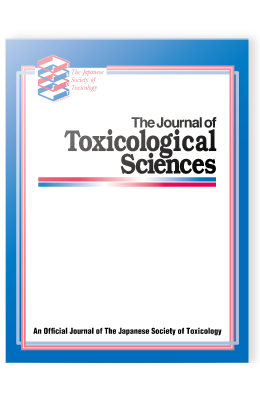
Редактором является Тошиюки Каджи, контактные данные - t-kaji@rs.tus.ac.jp, jts-ed@jtoxsci.org.

Это научный журнал, который публикует исследования о механизмах и значении токсичности веществ, таких, как лекарства, пищевые добавки, пищевые загрязнители и загрязнители окружающей среды. Статьи о токсичности и воздействии экстрактов и смесей, содержащих неопознанные соединения, не могут приниматься в качестве общего правила.
Адрес издания - http://www.jtoxsci.org/
Пример статьи, название - Epigenetic mutagen-like environmental chemicals alter neural differentiation of human induced pluripotent stem cells. Заголовок (Abstract) - Various chemicals, including pesticides, heavy metals, and metabolites of tobacco, have been detected in fetal environment. Fetuses are exposed to these chemicals at relatively low concentrations; however, their risk of developing neurological and behavioral disorders increases after birth. We aimed to evaluate the effects of five chemicals (diethylphosphate, cotinine, octachlorodipropyl ether, mercury, and selenium) detected in the serum of pregnant mothers on neural development using human neurospheres (NSphs) differentiated from induced pluripotent stem cells. Exposure to each chemical at serum concentrations revealed no effects on NSph development. However, combined exposure to the five chemicals caused a significant decrease in NSph size and altered gene expression and neural differentiation. Thus, we next focused on DNA methylation to investigate changes in NSph properties caused by chemical exposure. Combined exposure to chemicals had extremely small effects on the DNA methylation status of NSphs at individual gene loci. However, stochastic changes in methylation status caused by chemical exposure were significantly accumulated throughout the entire genome. These results suggest that the five chemicals acted as epimutagens that alter the epigenetic status during human neural development at the biological level. Taken together, we showed for the first time, the epimutagen-induced alterations in neural differentiation at serum concentrations using an in vitro human neuronal model.
Keywords: Human induced pluripotent stem cells (iPSCs), Neural development, Pesticides, Heavy metals, Epigenetics, DNA methylation