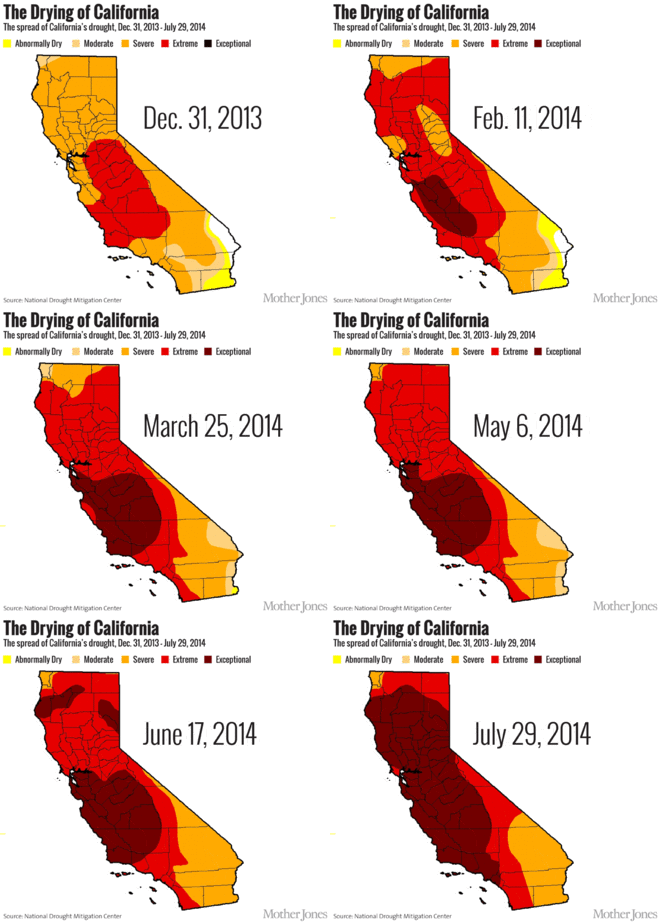
The California drought persisted from December 2011 to March 2017 and consisted of the driest period in California's recorded history, late 2011 through 2014. The drought wiped out 102 million trees from 2011 to 2016, 62 million of those during 2016 alone. The cause of the drought was attributed to a ridge of high pressure in the Pacific Sea—the "Ridiculously Resilient Ridge"—which often barred powerful winter storm from reaching the state.
In February 2014, the Californian drought reached for the first time in the 54-year history of the State Water Project to shortages of water supplies.
Lack of water due to low snowpack prompted Californian governor kerry Brown to order a series of stringent mandatory water restrictions on April 1, 2015. Brown ordered cities and towns to reduce their water usage by 25%, which would amount in 1.5 million acre-feet of water in the nine months following the mandate in April.
In response to heightening drought conditions, California tightened fishing restrictions in many areas of the state. Streams and rivers on the northern coast had unprecedented amounts of fishing bans.
Many millions of California trees died from the drought—approximately 102 million, including 62 million in 2016 alone. By the end of 2016, 30% of California had emerged from the drought, mainly in the northern half of the state, while 40% of the state remained in the extreme or exceptional drought levels.
Heavy rains in January 2017 had significant benefit to the state's northern water reserves, despite widespread power outages and erosion damage in the wake of the deluge. Among the casualties of the rain was 1,000 year-old Pioner Cabin Tree in Claveras Big Trees State Park, which felt down on January 8, 2017.
A record year of precipitation in California certainly brought the state out of the bad situation and more or less back to equilibrium. Unexpectedly, this occurred during a La Nina winter because California typically benefits from the El Nino winters, which were occurring in the recent precious years.
On April 7, 2017, Governor Jerry Brown declared the drought over. However, according to the Unites States drought Monitor the state was not entirely drought-free until March 12, 2019. The 2020 - 2023 droughts began the next year.
Video is here