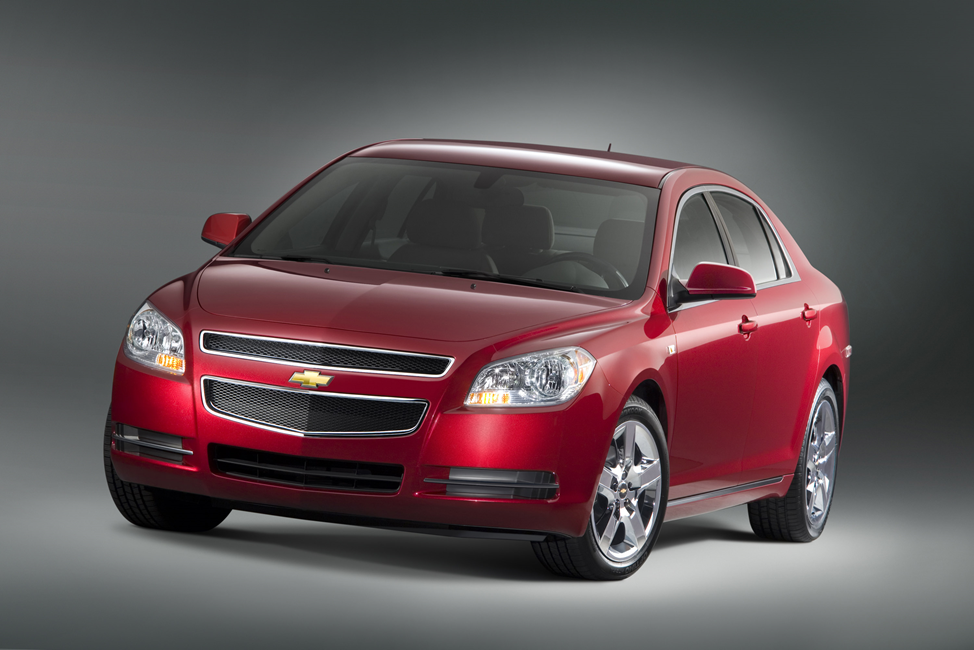
Cars are automobiles that can transport people. It is the main means of travelling for hundreds of millions of people all over the world. Cars have changed the way we live probably more than any other invention in history. At first only a few people had cars but after a while more and more people bought them because they improved the way people lived. Farmers with cars were able to bring their products to places that were farther away. The appearance of cities and towns also changed. More and more workers drove to their jobs and people started to move to suburbs outside the town centers.
Automobiles give people many jobs. Millions of people around the world work in factories where cars are produced. Millions more work at gas stations, restaurants or motels that travelers stop at.
However, cars also cause problems. Millions of people die in car accidents every year. Automobiles pollute the air that we breathe and parking space in cities is scarce because everyone wants to use their cars to get to city centers.
Types of cars
· Coupe = a two-door car with a fixed roof and a smaller back seat.
· Convertible = a car with a flexible roof that can be folded together, so that you can drive without it
· Station wagon or estate car = longer vehicles for larger families ; most of the time they have an extended cargo area
· Sedan = common car type with two rows of seats and four doors. The car has a separate boot (trunk) for luggage
· Minivan = a taller car that is shaped like a van; it has up to three rows and can carry 8 or 9 people.
· Sport utility vehicle (SUV) = built like a small truck, it has a four wheel drive and space like a minivan ; it is often an off-road vehicle made for travelling on rough ground
· Sports car = low to the ground with only two seats and a powerful engine
Safety features
Today all cars have safety features that protect passengers from accidents that may happen on the road. In almost every country passengers have to fasten their seat belts. Children and babies must be put in special seats.
Since the mid 1990s almost all cars have been equipped with air bags. They are normally in the steering wheel and if a car crashes they come out, inflate and protect the passengers from slamming into the front window. But there are other safety laws that carmakers must follow. Doors must have special locks that are crash resistant and bumpers must be able to absorb some force if the car crashes.
History of cars
In the late 1770s Nicolas-Joseph Cugnot, a French engineer, built a car that ran on steam. Many American companies also started producing them but they were very expensive to make and cost a lot of money.
As time went on, engineers started experimenting with petrol-driven cars. They could travel faster and over longer distances. They were also safer than steam powered models which ran with petrol
Towards the end of the 19 th century Germany became the centre of car-making. Nikolaus Otto built the first internal combustion engine, Gottlieb Daimler and Karl Benz also began building petrol-driven engines.
Automobile production in the USA began in the 1890s. It was Henry Ford who started producing cars on an assembly line. Workers do only one task and car parts pass on a conveyer belt. By 1908 Ford’s Model T became the most popular car in the world and by 1927 the Ford Motor Company had produced over 15 million of them.
After car production had slowed down during the two world wars car makers began adding new features to post - war models. Power steering, power brakes and automatic controls became common. More and more big cars were produced in the 1950s and 1960s. They used up a lot of fuel in a time in which oil was still very cheap.
This changed in the 1970s when Arab oil-producing countries started to raise prices for oil because western countries supported Israel. In the years that followed much was done to try to save and conserve fuel. Automakers started producing compact cars that were fuel-efficient.
In the meantime, Japan and Europe had begun to compete with American carmakers. By 1980 Japan became the largest car producing countries in the world.
The car of the future
Even though today’s car is a great machine that is fast, elegant and beautiful to look at, engineers are constantly working on a car that will make today’s automobile look old. Experts say that future cars will be made of plastics and carbon fibers that will be stronger and lighter than steel.
As oil is becoming more and more expensive, alternative power sources are being explored. Biodiesel, hydrogen fuel cells, electric cars and hybrids are energy sources that carmakers may use in the future.
Cars are becoming computerized machines. Some day they may drive themselves. Highways and other roads could be built so that cars can be programmed to drive along them by autopilot while passengers sit in the back and relax. Such cars could be radar controlled to avoid contact with other vehicles on the road.