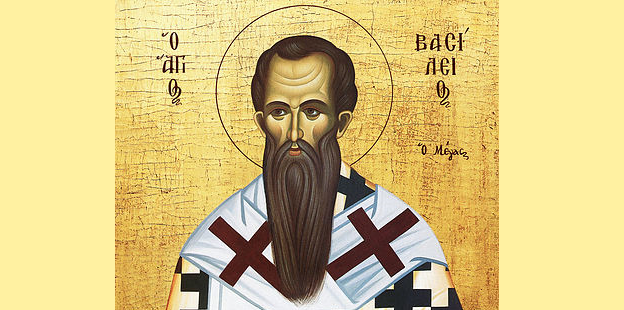
A man who wrote the monastic statutes and the sequence of the Divine Liturgy, who founded the first hospital in its modern form, a benefactor and feeder of the poor, a doctor and comforter of lepers, a defender of the wronged, the most educated man of his time, who had, as we would say nowadays, 7 diplomas of higher education, a great theologian and an incredible ascetic, a bishop who could even be called a patriarch by his status (he was in charge of almost 50 bishops), a prolific spiritual writer and one of the greatest defenders of the Orthodox Church against the heresies of Arius and Macedonius, the closest friend of Saint Gregory the Theologian, a man of very poor health, who did so much and lived so little (only 49 years) - all this is about one man, Saint Basil the Great, whose memory is celebrated on 14 January, the Feast of the Circumcision of the Lord, the day we celebrate the New Year according to the Julian calendar.
In his far from economically prosperous times, the saint faced financial difficulties, as well as the opposition of heretics, people who did not understand him, both within and outside the Church, and even the struggle of the emperor against him. But throughout his life he proved the absolute and eternal relevance of the words of the Apostle Paul: I can do all things in Jesus Christ who strengthens me (Epistle to the Philippians, 4:13).
St Nectarius Antonopoulos writes about his times in his article: "In the middle of the fourth century a famine broke out. St Basil was already a priest at that time. He immediately promptly set up public free canteens and healing centres for the victims of the famine. To achieve this, he had to fight, prove, achieve and even quarrel with the rich to persuade them to open their food stocks and share with the hungry. It was then, in the terrible winter of 367, that Father Basil realised that he had to create his own business, an institution that would serve those who were suffering. This strong man could patiently bear his own infirmities, but could not see the suffering of others. Becoming Archbishop of Caesarea, Basil the Great continued the work of helping the suffering. But even here - resistance from heretics, ill-wishers and envious people. The emperor himself was against his idea. It would seem - a dead end, plus his own illnesses. But the fire of the Holy Spirit blazed in the saint's soul. His enemies wanted to extinguish it, not knowing that it is impossible to extinguish the spirit!"
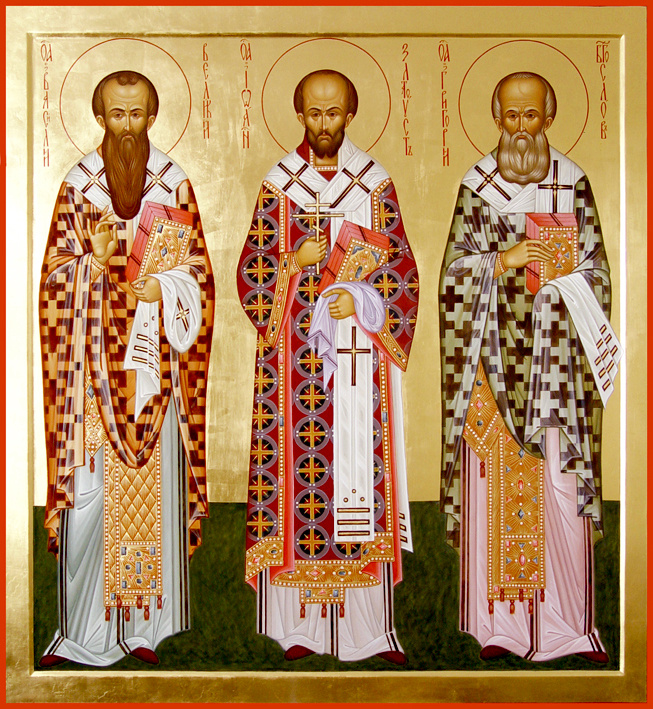
In 372, Saint Basil the Great, with God's help, built the first hospital complex in world history, as we would now say a whole spiritual-medical and charitable centre. It was called "Basiliada". In its middle stood the temple, and around it other buildings, hotels for permanent residence of people, including for orphans and beggars, as well as the hospital itself. Saint Basil himself supervised the construction work and even personally laboured on the site.
Among his seven degrees, he had a medical degree and chose to run the most dangerous infectious leper ward. He personally took care of leprosy patients without any masks or antiseptic agents, washed their wounds and took care of them.
When the Saint died, he was mourned by his entire flock. There were so many people at the funeral that some even fainted!
Gregory, a friend of Basil the Great, after the funeral said these words about the hospital "Basiliada": "Come out, brothers, from your city and look at this new city where piety reigns, where the money of rich citizens at Basil's request has been turned to a place where it will no longer be stolen by anyone, and time has no power over it. Here illness is looked at philosophically, here misfortune is turned into happiness. If we compare the hospital of St Basil the Great with the richest cities, such as Thebes in Boeotia, Babylon, with the pyramids of Egypt and ancient temples, we will see that nothing remains of all their former greatness. And the people themselves are no more. And in the hospital "Basiliada" we see people who were rejected and hated by everyone because of their illness. And Basil the Great was able to convince us that if we consider ourselves human, we should not neglect our own kind, for by our heartlessness and malice we offend Christ Himself, Who is the ruler of all".
Through the prayers of Saint Basil the Great, Lord Jesus Christ our God, have mercy on us!
Author: Maxim Zlobin, Orthodox Christian missionary, publicist, graduate of the Moscow Theological Academy.
Translated by Olga Grabelnikova for Prosvet-community.
#SaintBasiltheGreat #SaintBasil #Saints #MaximZlobin #ProsvetCommunity #OrthodoxArticle