Homay: Winged Guardian of Ural Legends
In the bosom of Bashkir legends, where mountain ranges intertwine with the celestial spheres, lives an amazing creature - the bird Homai. This is not just a mythological character, but a poetic image that has absorbed the centuries-old wisdom of the Turkic peoples, their reverent attitude to nature and deep understanding of the interconnection of all things.
Heavenly pedigree
The name Homay sounds like the whisper of the wind in the gorges of the ancient Urals. It echoes the Persian Humai - the bird of happiness, whose appearance promised prosperity. But in the Bashkir epic, this image acquired special depth, becoming the daughter of the mighty Samrau - the mistress of the World Tree.
Samrau, like the Scandinavian Yggdrasil, connects three worlds:
It touches the heavenly kingdom of the gods with its branches
It pierces the world of people with its trunk
It goes into the underground chambers with its roots
It is in this cosmic cradle that Homai is born - a golden-feathered messenger, endowed with the gift of foresight.
An image woven from light and wisdom
The descriptions of Homai in the epic resemble paintings:
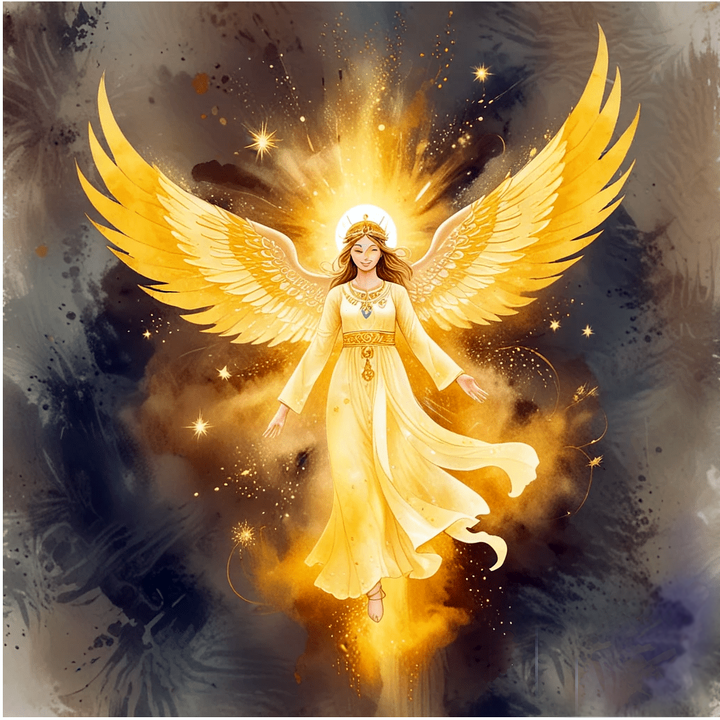
"Her feathers shimmered like the rays of dawn on the mountain peaks, and her voice rang out cleaner than spring waters. When she spread her wings, it seemed that the sun itself was bowing before her greatness."
This bird is not just a magical creature, but a kind of moral compass of the epic. Unlike the European Firebird, which heroes obtain for personal glory, Homai herself chooses the worthy, becoming their spiritual mentor.
Ural-batyr's Guiding Star
Khomai's relationship with the main character resembles a dialogue between a student and a sage. She does not simply show the way to living water, but gradually reveals deep truths to the batyr:
Test by silence - before helping, the bird watches the hero, assessing the purity of his thoughts
A lesson in humility - shows that even living water does not grant immortality, but only prolongs the time for good deeds
The philosophy of unity - teaches that man is only a part of the great cycle of nature
Especially poetic is the scene where Khomai, having turned into a gray-haired old woman, tests Ural-batyr with questions about the meaning of life. This episode echoes shamanic initiations, where the neophyte must prove his readiness for higher knowledge.
Winged Philosophy
Khomai embodies a unique synthesis of the natural and the divine:
Wings — connection with the sky and spiritual spheres
Golden plumage — a symbol of solar energy and wisdom
Song — vibration of world harmony
In a modern interpretation, this image takes on a new sound. Ecologists see in Khomai a symbol of nature protection, psychologists — an archetype of an inner guide, and artists — an inexhaustible source of inspiration.
Conclusion: A bird that sings in the soul
Today, when the Khomai monument hovers over Ufa, and its image comes to life in the works of artists and poets, it becomes clear: this mythical bird has long ceased to be just a folklore character. It has turned into a cultural code, reminiscent of eternal values — the wisdom of ancestors, the fragility of nature and human responsibility to the world.
As the Bashkir poet Rami Garipov wrote:
"Whoever has heard the song of Khomai at least once, carries it in his heart, like a cherished melody of his native land."
This, perhaps, is the main miracle of the ancient image - the ability to awaken bright feelings and aspiration for harmony in people through the centuries.