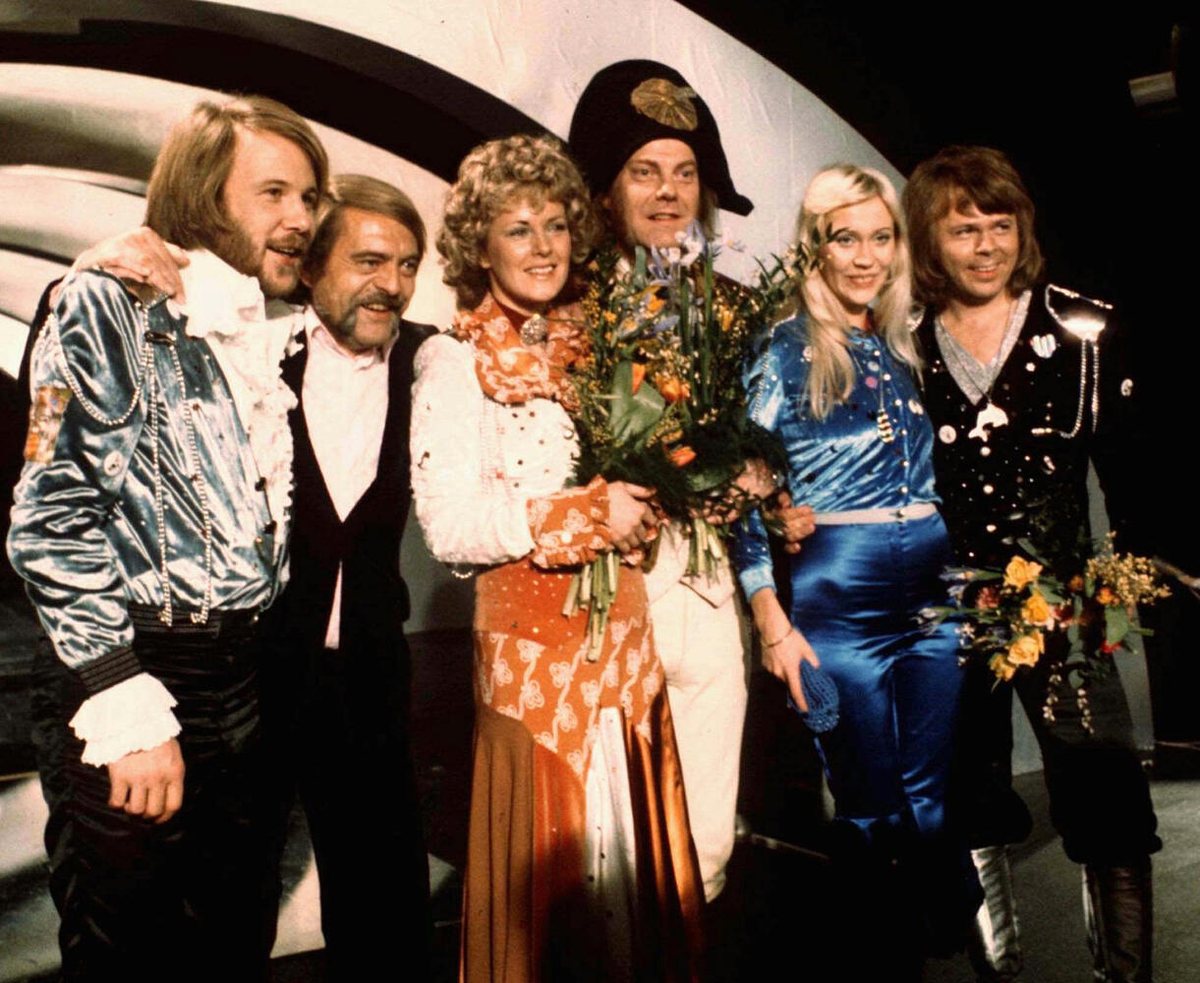
ABBA's performance with the song "Waterloo" violated many of the traditional framework of the Eurovision Song Contest. Rhythmic, close to rock music, the song broke the familiar atmosphere created by the melodramatic ballads that made up most of the Eurovision repertoire. The band also impressed everyone with their outfits and some elements of the choreography.
Breaking the tradition was the fact that ABBA performed "Waterloo" in English. This was strategically important for the success of the group — Eurovision-74 was held in the English resort town of Brighton. The rules of the competition at that time required all participants to sing in the language of their country. An exception was made for ABBa, which was subsequently applied more and more often, until this rule was completely abolished. If you listen to ABBA's later songs, you'll see how their English has improved — it was pretty weak in 1974, and there's a noticeable Swedish accent in "Waterloo."
However, none of this would probably matter if "Waterloo" wasn't such a strong song and ABBA's performance at Eurovision wasn't so confident. His soulful lyrics — would they work just as well if they were built around their original name "Honey Pie"? — and the inflatable hooks made a small impression on the audience at the Brighton Dome. It remains one of the classic Eurovision songs, as evidenced by its subsequent rise in the charts. ABBA's decision to showcase their sound with an energetic, upbeat number (instead of the planned ballad "Hasta Mañana") was clearly justified.
"I suddenly thought of 500 million viewers," Benny recalls. — Everything got mixed up in my head, and the fear disappeared somewhere. It helped us a lot that there were four of us. We exchanged encouraging glances from time to time." The confident performance, bright costumes and the song itself made an indelible impression on the audience.
After the speech by the representative of Italy, who was the last to take the stage, it was time to vote. Bjorn's nerves were so on edge that he chose not to watch the procedure. However, after a while, he couldn't stand it and joined Benny, Agnetha and Frida, who were standing in front of the monitor. "Hardly anyone can imagine such tension," he says. — I have goosebumps, a lump in my throat, and my lips are constantly drying out. You want to escape from all this, but at the same time you stand rooted to the spot. Trust me, this is a real challenge.
According to the 1974 voting system, each participating country was represented by a 10-member jury, and each jury member had one vote, which he could dispose of at his discretion. When the Finnish jury gave Abba half of their votes, it was a good omen for them. As the voting continued, their prospects became more and more rosy. Bergquist, who was in the audience with Burke, was watching the scoreboard with growing excitement when Thomas Johansson leaned over and said, "Damn it, I think we're winning."
Sixteen minutes and thirty seconds after the start of the voting, the Italian jury concluded it. Katie Boyle, giggling nervously, announced that the ABBA group had won the Eurovision Song Contest 1974. In addition to the personal triumph of the musicians, it was the first victory of the Swedish representatives in the history of the competition.
Strangely enough, the jury from Great Britain and Belgium, the two main strongholds of Abba in the future, as well as from Greece, Monaco and Italy, did not award Waterloo a single point. Abba didn't score many points — only 24 — but it was enough to win, as the others had even fewer.
Stig ran onto the stage to receive his songwriting prize and repeated "thank you" in several languages of the participating countries. He had learned these words during the day, preparing for a possible victory.