From German ‘pauper prince’ to the most powerful man in England
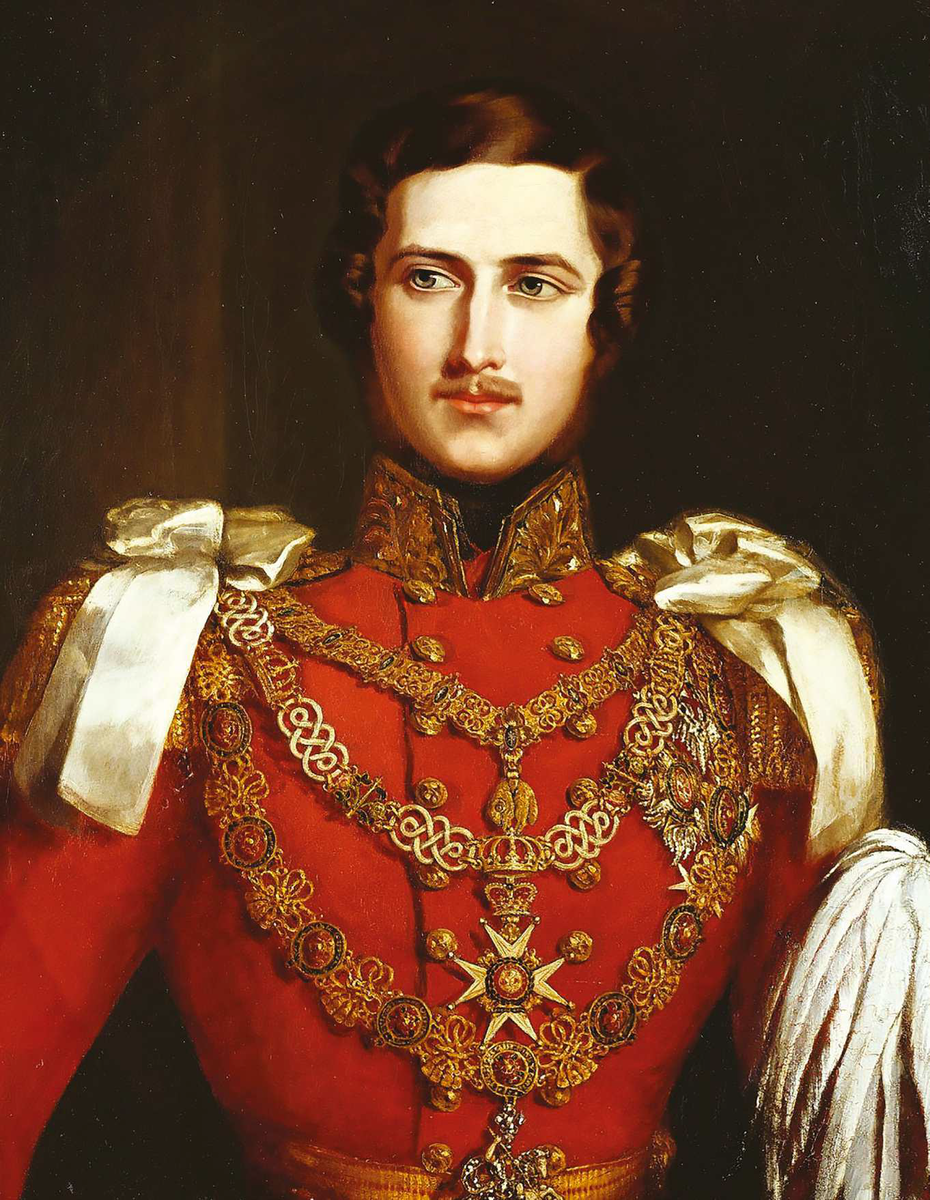
"Oh! Was ever woman so blessed as Iam,” Victoria happily wrote after her wedding day in February 1840. Her first cousin and groom, the dashing Prince Albert of Saxe-Coburg and Gotha, had won her heart. It was unfortunate that the public, press and parliament didn’t feel the same way. In Britain, fears of foreign influence and anti-German feeling were rife, long before World War One.
Germany was not a country at that time, but rather a collection of principalities, and Albert was seen as a penniless royal immigrant, unbefitting of the queen of the world’s largest empire. Indeed, when Victoria asked parliament for an income for her future husband “suitable to the rank of the Prince and the dignity of the Crown”, they were reluctant to offer Albert an allowance, let alone a title. In the end he was granted a much smaller sum than previous sovereign spouses and not a penny was to be paid until the day of the wedding. The formal title of Prince Consort, however, wasn’t granted until 17 years later in 1857 – four years before his death.
The German prince was mocked by the media – one cartoon painted him as a gold-digger, ‘shutting up the sausage shop’ because he was about to ‘jump into a splendid fortune’. Meanwhile his wedding day outfit only gave them more food for thought. Royal tradition dictated that he must wear English military regalia on the big day, so a tailor fashioned a Field Marshal outfit. However, for a 20-year-old with no military experience, this was quite a jump in rank. One caricature showed Albert on a rocking horse, dressed in his uniform.
Despite his lack of experience, however, Albert was an armchair strategist and made several recommendations to the commander-in-chief of the army, the Duke of Wellington. He was instrumental in banning duelling in the military which, he argued, caused unnecessary casualties. He also proposed the establishment of new training grounds, which he had seen as a teenager in Germany, but was shocked to find that Britain had no such equivalent. This vision would eventually become Aldershot in 1854 – a garrison town that is still home to the army today.
While the public dismissed this as interfering, the Duke of Wellington came to see Albert as efficient and enterprising. So when the time came to give up the position of commander-in-chief, he suggested that the prince should be his successor. It was such a tempting offer that Albert agreed to consider, but would English troops answer to a German leader? And how would he balance his private ambition with his constitutional position?
Resolved, he wrote a letter to the duke explaining that his unique role requires him to “sink his own individual existence in that of his wife – to aim at no power by himself or for himself – to shun all ostentation – to assume no separate responsibility before the public – to make his position entirely a part of hers.” However, knowing this did not make the situation any easier. He was an ambitious man in patriarchal society and confided his frustrations to a friend in Germany: “In my whole life I am very happy and contented but the difficulty in filling my place with proper dignity is that I am only a husband and not master of the house.”
Part of his duty as consort was to secure the succession to the throne and every time Victoria fell pregnant, he enjoyed a more active role as Sovereign surrogate. Sure enough, as he turned down the duke’s offer, Victoria was expecting her seventh child who happened to be born on the same day as Wellington’s 81st birthday. They named him Arthur, in his honour, and the duke became his godfather. The couple eventually had nine children together: four boys and five girls, so Albert had plenty of opportunities to exert his influence during Victoria’s confinement.
He effectively became the queen’s private secretary – the most powerful man in England – with access to government papers and her private audiences with ministers. Following his example she disassociated herself with the Whig party to elevate herself above party politics, as was expected of a monarch. She also began to take an interest in social welfare issues such as child labour, with Albert’s encouragement. Shocked at the state of working-class conditions, he had put together a plan to improve the education of children, provide better housing, and grant allotments and savings banks for workers who had no pensions. “I shall never cease to promote these four objectives wherever and whenever I can,” he vowed.
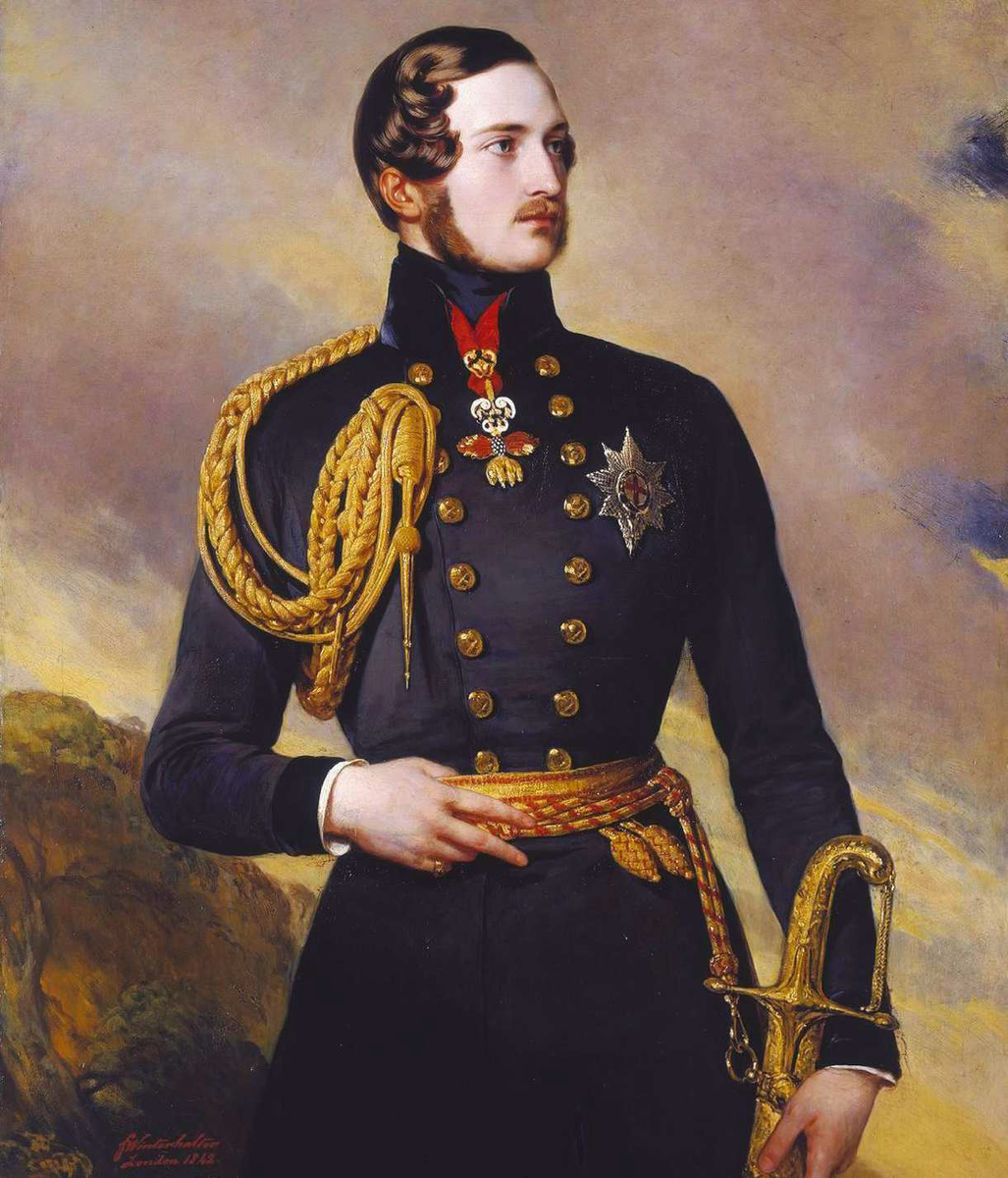
“Albert had a strong moral compass and spoke out against the slave trade”
Albert had a strong moral compass and also spoke out against the slave trade, calling it “a stain upon civilised Europe”. In this public address – the first he had given since his marriage – was met with rapturous applause. A letter to his father revealed the “fear and nervousness” he had to conquer before delivering the speech. “I composed it myself, and then learned it by heart, for it is always difficult to speak in a foreign language before five or six thousand eager listeners.”
Some of his actions, however, became lost in translation. In 1842, horrified by the conditions of starving silk workers in Spitalfields, Albert organised a grand costume ball at Buckingham Palace in a bid to bolster the failing industry. All the guests were asked to come dressed in their finest silk gowns for an evening of lavish entertainment – a poorly misjudged, if wellmeaning gesture.
Like his wife, Albert was a passionate patron of art and design. They would often gift each other paintings and sculptures for birthdays and anniversaries, and the talented duo even created their own pieces – over 500 of the prince’s works are still in the Royal Collection. He chaired the committee in charge of the interior decoration of the new Palace of Westminster in the 1840s, and also supervised the design of personal projects alongside his public duties. These included alterations to Balmoral in Scotland and Osborne House on the Isle of Wight.
The latter became the royal family’s second home and its unique features tell us a little about the man behind them. Take the Swiss Cottage, for example, hidden in the grounds. This wooden chalet was built for the children to play at being grown-ups. Everything was built at threequarter scale, including a working kitchen, a museum where they collected natural history specimens, and gardens where they grew fruit and vegetables. They even ran a toy grocer’s shop and kept accounts for their father to check. All of this, he believed, would equip them with the skills and knowledge they needed for adulthood.
Education was important to Albert and he had been tutored alongside his older brother, Ernest II, from a young age. Their father allegedly once said: “My children cannot misbehave, and they know of themselves that they must learn something in order to become able men, so I don’t trouble myself further about them.” The duke, Ernest I, married their mother Louise when he was in his thirties and she was only 16 years old. They had two children, but it was rumoured that Ernest I had fathered many more. However, when court gossip accused Louise of adultery, he divorced her and sent her to live in Switzerland. Albert was only seven at the time.
“Parting from my children was the worst thing of all,” she wrote. “The poor little mice, may god bless them!” They never saw their mother again but it seems that Albert never forgot her, christening one of his daughters Louise. Albert wasn’t just concerned with his children’s education. In 1847 he was elected Chancellor of Cambridge University where he helped to modernise the curriculum. Mathematics and classics were supplemented by moral sciences including history, philosophy and law, as well as natural sciences. He even founded the institution that went on to become Imperial College in London – the first British university dedicated to scientific research. It was a period when medical, scientific and technological knowledge was advancing rapidly and Albert thought it was time to show off on the global stage.
The Great Exhibition of 1851 was to be his greatest triumph – the first international display of design and manufacturing. Visitors were in awe, including A-list attendees Charles Dickens, Lewis Carroll and Charlotte Brontë. “It is a wonderful place,” said the author of Jane Eyre, “vast, strange, new, and impossible to describe.” Albert had won over even his harshest critics and Britain’s industrial might was laid for the entire world to see. On his orders, the profits were used to “increase the means of industrial education and extend the influence of science and art upon productive industry.” Land was purchased in South Kensington and a complex of museums was established, now known as the Victoria and Albert, Natural History and Science museums; the Royal Albert Hall; Imperial College and the Royal Colleges of Art and Music.
In his 21 years as Prince Consort, Albert did much for his adoptive country – but this paled in comparison to how much he did for Victoria, as her devoted husband, father of her children, confidante and advisor. On their wedding anniversary in February 1861 he said of their marriage: “How many a storm has swept over it and still it continues green and fresh, and throws out green shoots, from which I can acknowledge that much good will yet be engendered for this world.” Sadly it would be there last together.
When he died suddenly on 14 December 1861, aged 42, Victoria was plunged into turmoil, withdrawing from the public eye and wearing black for the remaining 40 years of her life. Albert had been suffering from an illness that doctors diagnosed as typhoid fever, but still he served his queen and country with his final act. When tensions were high between Britain and America, Albert interceded to help reach a diplomatic solution and avoid war. Following his death two weeks later, Prime Minister Palmerston said: “Better for England to have had a ten years’ war with America than to have lost Prince Albert.” He was gone, but his specter loomed large over the monarchy for decades to come.