Acquaintance with genealogical legends and folklore materials allows us to assert that the origin of the vast majority of Abkhaz surnames is relatively ancient. The roots and genetic foundations of many of them, due to the prescription of years, are not yet amenable to chronological periodization. Often, information about the oldest family and clan groups that once existed in Abkhazia is recorded only in Abkhazian folklore, completely absent in any written sources.
In the historical and ethnological literature, there is an opinion that one of the first peoples of the world who had surnames are the Franks (A.I. Musukaev claims this, for example). A different point of view is held by the Georgian scientist P.A. Tskhadaia. Noting that, according to popular belief, the surname, as an institution, arose in Italy in the 11th century, the mentioned author argues about the formation of the generic name (surname) among Georgians in the early feudal era and the completion of this process in the 7th-8th centuries. And by the 9th century, according to P.A. Tskhadaia, the surname among Georgians as an anthroponymic category has already been finally formed. (Tskhadaia, 2002, p. 92).
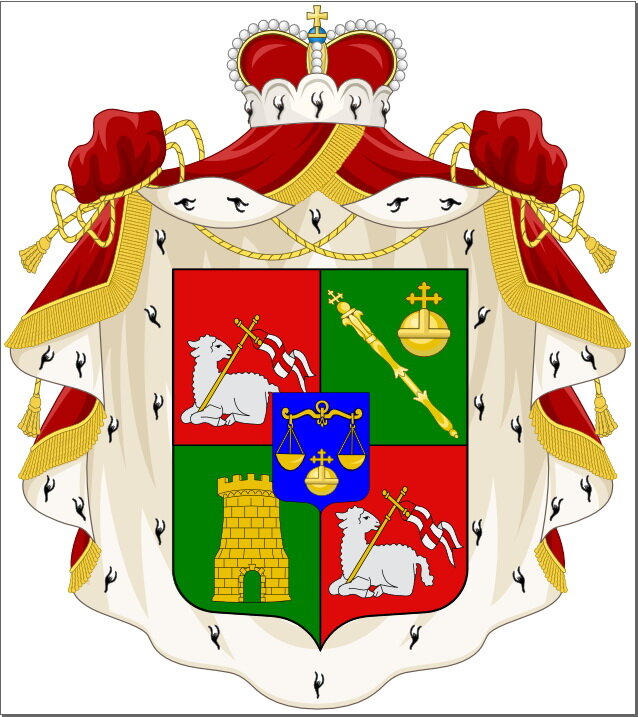
The beginning of the written fixation of Abkhaz surnames dates back to the 11th century, but they appeared long before that. A model resembling the modern Abkhaz family name structure existed several thousand years ago on the territory of ancient Anatolia. In particular, Sh.D. Inal-ipa drew attention to the characteristic similarity of this model with the form of formation of the Hattian tribal names such as Khutpa and Kasipa, who lived in Asia Minor in the 4th-3rd millennia BC. (Inal-ipa, 1976, p. 139).
The very terminology of the Abkhaz language testifies to the antiquity of the origin of the generic name (surname) among the Abkhazians. This is also indicated by the kinship in the Abkhaz language of the concepts of "surname" and "people". “Surname” in Abkhazian sounds like “azhvla”, and “people” sounds like “azhvlar”. The word "azhvlar" literally translated from the Abkhaz language means "surnames". It is impossible to determine today the time of appearance of these two terms. However, it is absolutely certain that they arose long before the 8th century.
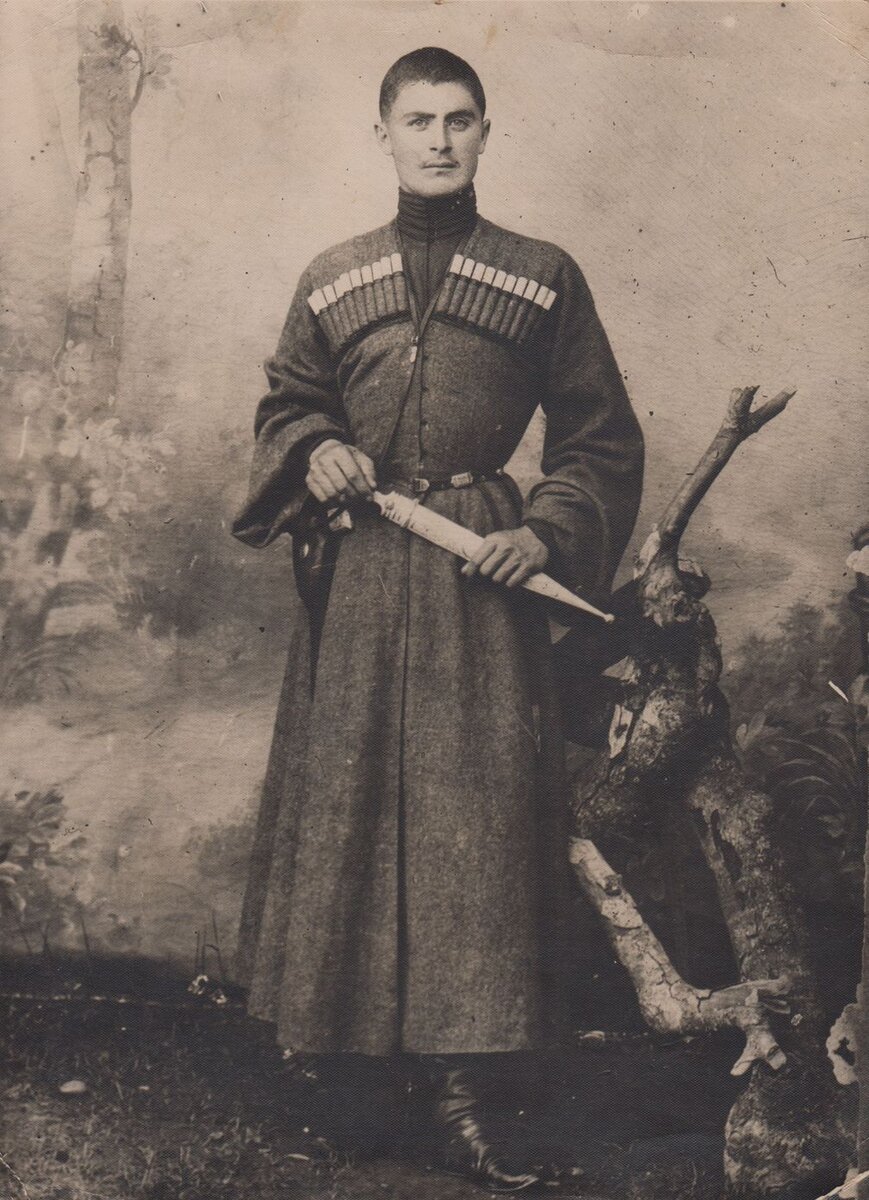
The earliest source that for the first time recorded the family name of the Abkhazian sovereign princes from the Chachba clan in the Georgianized form “Chachas-dze” and mentioned the leader of the Abkhazian troops Kuabulel Chachas-dze Otago, is the “Chronicle of Kartli” (“Matiane Kartlisa”) ‒ one of the significant works in the collection of ancient Georgian chronicles "The Life of Kartli" ("Kartlis tskhovreba").
But, based on the data that exist today in the historical and ethnological literature, Chachba is far from the most ancient surname in Abkhazia. According to the legends of the Abkhazians, the most ancient and noble Abkhazian surname is Achba. Achaa, Achba in the plural (carriers of the family name Achba), according to some legends, were the first priests of the Dydrypsh sanctuary. According to other legends, they replaced the Dydrypsha priests from the Sadzba clan who were executed for the disappearance of the sanctuary icon. After the punishment of the Sadzba brothers, as we have already noted, representatives of the Achba family become the guardians of Dydrypsh. At a later time, Achaa began to be appointed as the rulers of Abazgia, and later they became the kings of Abkhazia. However, due to frequent disputes among themselves, Achaa, judging by folklore materials, were deprived of priestly functions and replaced by a representative of the Chachba family, whose name was Palashv.
Before turning to the question of determining the history and etymological meaning of the Achba surname, I consider it necessary to identify the main features of the model for the formation of Abkhaz family names.
So, for example, family names in Abkhazian anthroponymy are divided into two main groups: 1) formed with the help of family-patronymic formants (in other words, formant surnames); 2) formed without surname-patronymic formants (in other words, formless surnames).
Formant surnames (Achba, Gulia, Anua, Agumaa and others) occupy a significant place in Abkhazian anthroponymy. Of the endings of the group of formant surnames, the most common are: the family-patronymic formant "-ba" (-pa), which means "son" and the family formant "-ia".
The model of formless surnames usually consists of one single family base or is formed by adding two different bases (Arlan, Bartsyts, Kapsh, Maan, Smyr, Chkok, etc.). A feature of Abkhazian anthroponymy is the use of a number of family names both with family-patronymic formants and without them (Blabba ‒ Blab, Kaitanba ‒ Kaitan, Smyrba ‒ Smyr).
Historians and ethnologists in the process of studying ethnogenetic ties between different peoples face very complex problems, which are often artificial in nature. In order for a researcher to succeed in identifying objective and truthful historical and ethnological information, he must know that, for example, the coincidence of the stems of two or more family names does not always indicate the presence of genetic links between their carriers.
A number of Karachay-Balkarian surnames, showing a sound similarity with the Abkhaz surnames, however, are in no way connected with the Abkhaz ethnic world. For example, at first glance it may seem to a researcher that the Balkar surname Achabaev is similar to the Abkhazian surname Achba. By the way, this is also claimed by the creators of some sites on the Internet. But, in fact, the surname of the Achabaev did not originate from the Abkhaz from the Achba clan, but from the Karachay Achabai Gochiyaev. And the surname of the Gochiyaev, in turn, came from the Imeretian prince Gocha Dzhaparidze.
A few words about the history of the study of the surname Achba. The son of the Georgian king Vakhtang VI, the famous Georgian historian of the 18th century Vakhushti Bagrationi, in his works mentions the names of the “old Mtavars”, among which he names Anchapisdze, Anchpadze, Machabeli, Marushisdze, Kachibadze, Abazadze, Sharvashidze, whose carriers, according to available historical materials, are Abkhazians by origin. Vakhushti directly notes that “Machabeli says that he is Anchapisdze and came from Abkhazia, but (surname) is new.”
In the same 1900, the work of K.F. Stal “Ethnographic essay on the Circassian people” was published, which interested us from the point of view of the topic under consideration. Here the author directly indicates that the Circassian (Adyghe) nobility “has its lineage according to legend from two brothers Ache (Achba ‒ D.D.) and Chache (Chachba ‒ D.D.)”. (Cited in: Lavrov, 1975, p. 265).
In "Essays on the history of marriage and family among the Abkhaz" (Sukhumi, 1954) Sh.D. Inal-ipa, speaking about the possible relationship of the surnames Achba, Chachba and Chichba, raises the question: "does the Abkhazian ruler's clan Chachba (Chichba?), which remains mysterious in its genesis, come from the ancient pagan priestly estate."
In this regard, I would like to emphasize that, based on the materials at our disposal, it is very difficult to give a positive answer to the question posed by the scientist. But the author successfully, although not entirely confidently, noticed that the original form of the Achba surname was “Anchaba”, which in translation from the Abkhaz language does not mean “children of God”, but “son, descendant of God”. Accordingly, changing this family name from the singular to the plural "Anchabaa" or "Anchaa" would mean "children, descendants of God." And the generic names Chachba and Chichba, which, according to Sh.D. Inal-ipa, "children of God" or "divine descendants", actually have completely different etymological meanings. (Inal-ipa, 1954, p. 174).
In the first volume of the Caucasian ethnographic collection, published in Moscow in 1955, an article by L.I. Lavrov "Abaza", which interested us from the point of view of the topic under consideration. Denying the origin of the los from the Abkhaz princes Achba, L.I. Lavrov notes that "the numerous and strong surname of the princes Loov borrowed its origin from the Arab emirs." Further, he points out that “the surname of the Loovs arose on Caucasian soil: it came from the name of the Loo River, which flows northwest of Sochi on the Black Sea, from where the Abaza moved to the North Caucasus. (Lavrov, 1955, p. 23).In 2000, in Cherkessk, the famous Karachai professor K.T. Laipanov published a small book "Ethnogenetic Relationships of the Karachay-Balkarians with other peoples", in which the author touches on issues related to the ethnogenesis of the Abkhazians and the genealogy of the ruling families of Abkhazia.
Mentioning the Abkhaz-Karachay-Balkarian contacts in the military sphere, K.T. Laipanov claims without evidence that the Savir Turks, who moved to Abkhazia at the invitation of the Abkhaz to support them in the fight against foreign invaders, were gradually assimilated in the Abkhaz environment, after which "the Turkic element became significant in the ethnogenesis of the Abkhaz." (Laipanov, 2000, p. 53).
Here the author tries to prove the origin of the Abkhazian princely surnames Achba and Chachba from the Turkic-Savir khans and princes. At the same time, he comes to the conclusion that the roots of the family names of the “descendants” of these Turkic-Savir khans Achba and Chachba (“Ach” and “Chach”) come from the Karachay-Balkarian words “ach” (food) and “chach” (hair). (Laipanov, 2000, p. 54).
In 2006, the book by S.Kh. Ionova "Abaza surnames and names" was published in Cherkessk. The book was the result of the author's painstaking work on the study of the anthroponymy of the Abazins and Abkhazians, which she carried out over several decades. The publication reflects important information on the traditional and official anthroponymic system of the Abaza people. In particular, among the common surnames of Abkhaz-Abaza origin, the author mentions the family name of the Anchoko ‒ Anfoko (Achba), who, judging by the field materials of the Abaza ethnologists, are descendants of the Abkhaz clan Achba. Considering the family name Achba, the author offers several erroneous versions to establish the etymological meaning of this anthroponym: 1) “son of a quail”; 2) the root of the surname "Ach" as a designation of bread; 3) linking the root "Ach" with the name of the horse. (Ionova, 2006, p. 268).
In most versions of the legends about Apskha (the king of the Abkhazians), the surname Achba is spoken of as the most ancient and noble. Professor Sh.D. Inal-ipa also notes that "the founder of the Abkhazian kingdom and other national-Abkhazian kings (Apskha) belonged to the Achba clan." (Inal-ipa, 1976, p. 407).
Arguing his statement, Sh.D. Inal-ipa writes: “Firstly, Arrian and Procopius report that the Apsils and Abazgs chose their rulers from the local nobility, and according to the unanimous evidence of historical legends, the most ancient, numerous and influential Abkhazian feudal clan is precisely Achba. Secondly, the duty or penalty in favor of the feudal lords that existed in medieval Abkhazia was called the term “achbyr”, which literally means a tax or payment “in favor of Achba”. Thirdly, the Abkhaz expression is very characteristic: “Before talking about Chachba, one must say about Achba”, which must be understood, apparently, in the sense that the first rulers of Abkhazia were Achba, who were replaced by Chachba (Shervashidze). The Abkhaz expression that “You can’t say anything about Chachba without first saying about Achba” should be understood in the sense of the seniority and primacy of the Achba clan in comparison with Chachba in relation to the governance of Abkhazia, in the sense of a direct successive connection between the political activities of these two most influential in medieval Abkhazia of feudal clans. (Inal-ipa, 1988, p. 330-331).
In order to approximately determine the time of the appearance of the surname Achba, we, based on the very well-known Abkhazian folk formula “If you don’t say about Achba, you can’t say about Chachba”, we need to find out when the family name Chachba arose.
We already know that this anthroponym in Georgianized form was first mentioned in the Annals of Kartli, compiled in the second half of the 11th century. From this source, we learn that Otago Chachas-dze with the Abkhazian troops was assigned to Anakopia by King Bagrat IV. In another anonymous work of the 13th century, codenamed "History and Praise of the Crowned", Otago is mentioned together with the eristavis Baram Vardanis-dze and Kakhaberi Kakhaberis-dze, who lived during the time of Queen Tamara, that is, in the second half of the 12th - early 13th centuries. Shervashis-dze. Otago Chachas-dze and Otago Shervashis-dze are, of course, the names of two sovereign princes of Abkhazia, and not one. By the way, compare the surname of Baram Vardanis-dze with the generic name Yuardan (Vardania) - Abkhazians of Ubykh origin. But in this case, we are interested in the family name Chachas-dze, which, despite the Georgian design, retained its Abkhazian basis "Chach".
The foreign, in particular, Georgian design of the family name Chachas-dze, in our opinion, gives us the opportunity to assume that the family basis of this name nevertheless arose earlier than the name changed and adapted to a foreign language. And therefore it is quite natural that the surname Kachibadze, mentioned from the X-XIII centuries, arose much earlier than the surname Baratashvili, and Gechba ‒ much earlier than Kachibadze. In the same way, Chachba arises before Chachas-dze. But is Chachba an original or, in other words, an unchanged family name?
To answer this question, we must determine the correct etymological meaning of the basis of the surname Chachba ‒ "Chach". To do this, we need to familiarize ourselves with the works of those scientists who specifically studied the etymology of Abkhaz family names.
Ethnologist L.Kh. Akaba believes that the root basis of the family name Chachba is the syllable "cha" (from the Abkhaz word "acha" ‒ "bread"). The particle "h", standing before the family-patronymic formant "ba", L.Kh. Aqaba traces everything back to the same basis "cha". In her opinion, "the names of the surnames Achba and Chachba are the same." “The only difference is,” writes L.Kh. Akaba, that the latter appears in a double form. In general, the ethnologist translates the family name Chachba from the Abkhaz language as “growing bread”, which, according to the scientist, “originally referred specifically to the name Achba”. (Aqaba, 1984, pp. 102-103). Further, in the same work, L.Kh. Akaba, with some contradiction, clarifies that “linguistic data allow us to explain the name of the surname Achba and its offshoots Chachba and Chichba not as “growing bread”, but as “who gives food, satiety””. (Aqaba, 1984, p. 115).
The etymologies of the name Chachba, proposed by the ethnologist L.Kh. Aqaba, in our opinion, needs serious adjustment. The versions put forward by her, unfortunately, are erroneous. The only thing we can agree with is that Chachba, in comparison with Achba, performs "in a double form." But L.H. Akaba, it should be noted, imperceptibly came very close to the correct understanding of the meaning of the family name Chachba. “So,” she writes, “A.N. Vvedensky was surprised by the fact that “Abkhazians claim that Achba in their old language means a prince, and Chachba (as Shervashidze is called in Abkhazian) is a prince over a prince.” (Cited in Akaba, 1984, p. 103).
Here is the key to unraveling the meaning of the family name of the Abkhaz sovereign princes: Achba is a “prince” in the old Abkhaz language, and Chachba is “a prince above the prince”. This means only one thing, that the family name Chachba is a reduplication of the stem of the name "Achba" already after the family name Achba became a title name meaning "prince". Thus, it becomes clear to us that Ach-ach-ba is "the son of a prince (standing) above the prince." So, in the Middle Ages, judging by the materials, the prince of Abkhazians could be referred to as "Achba" (for example, "ui Inal-ipachva draywoup, d-Achboup" - could mean "he is from the name of Inal-ipa, he is Achba", that is the prince). Among the Abkhazians of Turkey, instead of the word “atauad” (prince), which is Georgian in origin, the family name of the most powerful Abkhazian princes Marshan was usually used to designate a prince. And therefore, the phrase about the prince from the Inal-ipa clan in the language of the Abkhazians of Turkey could be pronounced like this: “Ui Inal-ipachva dreyuup, d-Marshanup” (“He is from the name of Inal-ipa, he is Marshan”, that is the prince).
But did the family name Achba arise in the form of "Achba" or did it, like Chachba, go through a transformation? Having arisen earlier than the family name "Chachba", Achba was also distorted beyond recognition. The fact of the distortion of the family name Achba is indicated by the Georgian-Mingrelian forms of its spelling - Anchabadze and Anchbaya. The family name Chachba came from Achba already after the distortion of this family name. Excluding non-Abkhazian formants from the Georgian-Mingrelian forms of writing the surname Achba, we get the original Abkhaz form of the surname Achba - this is Anchaba ‒ Anchba, which means in Abkhazian "son of God", "son of Anchva (Ancha)". Therefore, it becomes clear why the name Achba is considered among the people as the most ancient priests of the most powerful Abkhaz shrines. The traditions of the deification of the royal power, genealogically descended from the class of the priesthood associated with the sanctuaries revered by the people (Anykha), predetermined the emergence of the Anchaba surname ‒ Anchba.
If the original form of the surname Achba did not sound like “Anchvaba - Anchaba” and did not mean “son of God”, then medieval Georgian authors, who knew Abkhazian religious terminology well, would hardly have recorded it in the form “Anchabadze”. The most famous Abkhazian word of that time “Anchva - Ancha” is repeatedly mentioned in the works of the Georgian prince Vakhushti Bagrationi: “To the east and west of Chorokh, on the slope of Ispiris-mta (on the territory of Georgia - D.D.), there is the Church of the Savior, Ancha, with a dome, large, magnificent, in a picturesque place, with the residence of the bishop, pastor Liganis-khevi.
According to Bagrationi, Georgia also had a “Catholicos”, “large without a dome” Anchiskhati church. Vakhushti also explains the content of the religious term "Anchi" (one of the forms of writing the Abkhazian term "Antsva"). According to him, Anchi is the designation of the Anchi temple icon, which was located in the Anchiskhat Cathedral in Tiflis. And, judging by the inscription below the icon, it (the icon of Anchi) was brought from Edessa to Constantinople, “but when Leo the Isaurian (717-741) and other iconoclasts appeared, then it was brought to Klarjeti and placed in the Anchi cathedral church.” (Vakhushti, 1904, p. 57, 174).
Summing up some results in our study, where we wanted to approximately determine the time of occurrence of the Achba surname, it becomes clear that it was formed long before the formation of the Abkhazian kingdom in the VIII century. But Achba, Gechba and Chachba, perhaps, are far from the most ancient among the Abkhaz surnames.
NOTES:
Akaba, 1984 ‒ Akaba L.Kh. The historical roots of the archaic rituals of the Abkhazians. Sukhumi, 1984.
Vakhushti, 1904 ‒ Prince Vakhushti. Geography of Georgia. Tiflis, 1904.
Inal-ipa, 1954 ‒ Inal-ipa Sh.D. Essays on the history of marriage and family among the Abkhazians. Sukhumi, 1954.
Inal-ipa, 1976 ‒ Inal-ipa Sh.D. Questions of the ethnocultural history of the Abkhazians. Sukhumi, 1976.
Inal-ipa, 1988 ‒ Inal-ipa Sh.D. Proceedings. Sukhumi, 1988.
Ionova, 2006 ‒ Ionova S.Kh. Abaza surnames and names. Cherkessk, 2006.
Lavrov, 1955 ‒ Lavrov L.I. Abazins // Caucasian ethnographic collection. Volume I. Moscow, 1955.
Lavrov, 1975 ‒ Lavrov L.I. Historical and ethnographic details // Collection of articles on ethnography. Maikop, 1975.
Laipanov, 2000 – Laipanov K.T. Ethnogenetic relationships of the Karachay-Balkars with other peoples. - Cherkessk, 2000.
Tskhadaia, 2002 ‒ Tskhadaia P.A. History and structure of the Colchian (Zanian) surnames: to the formulation of the question " // Ethnographic Review, 2002.