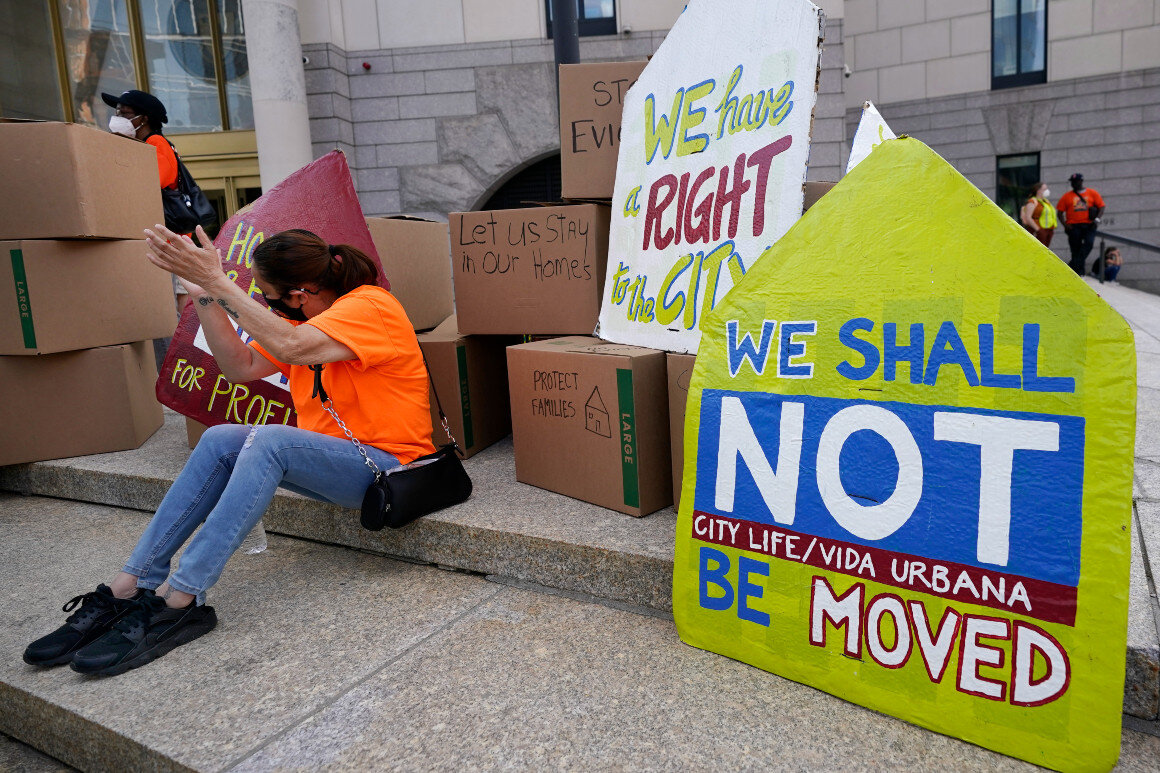
The federal eviction moratorium, which has been in effect since September, is slated to expire on Saturday after the Biden administration declined to extend it and Democrats in Congress were unable to muster the numbers to intercede.
While the clock ticks down on what is expected to be the last statewide eviction ban, millions of tenants face losing their homes as they wait for emergency rental assistance that the government has failed to provide.
The federal eviction moratorium, which has been in effect since September, is slated to expire on Saturday after the Biden administration declined to extend it and Democrats in Congress were unable to muster the numbers to intercede. Now, lawmakers and activists fear that in the following months, an unprecedented wave of evictions will occur, just as the highly transmissible Delta variant causes a spike in coronavirus infections.
The eviction wave is likely to sweep over the country's populous centers. Renters in Ohio, Texas, and areas of the Southeast, where tenant rights are often weak, housing costs are high, and economic problems from the pandemic persist, are particularly vulnerable, according to housing advocates. Despite having its own prohibition in place until August, New York is a source of concern since it has been particularly tardy in releasing rental assistance monies to the state's hundreds of thousands of renters who are overdue on their rent.
KC Tenants Director Tara Raghuveer, a housing organizer in Kansas City, Mo., said, "We've been circling a drain." “In certain instances, poor and working-class tenants go down the toilet on Saturday.”
The eviction restriction was repealed last week due to last-minute deadlock between President Joe Biden and Democrats in Congress, but it threatens to impose severe economic obligations on state and municipal governments. Officials will have to deal with a wave of mass evictions precipitated by landlords — many of whom are struggling financially because to decreased revenue — who are threatening to expel tenants who fell behind on their rent during the outbreak. With less than a dozen state eviction bans in effect and state and local governments only disbursing a fraction of the $46.5 billion in rental aid allowed by Congress over the past year, the renter safety net is seriously eroded.
Given the expiration of the moratorium, President Joe Biden issued a statement on Friday urging state and local governments to "take all necessary steps to swiftly disperse these funds."
"Any state or county that does not expedite payments to landlords and tenants who have been harmed by this pandemic has no excuse," he said. "Every state and local government must get these money out as soon as possible to ensure that we avoid every eviction we can."
“State and local governments should also be aware that there is no legal impediment to a moratorium at the state and local level,” Biden added.
Housing advocates are warning of dreadful visions and challenges for many Americans who have been impacted by Covid-19 the most.
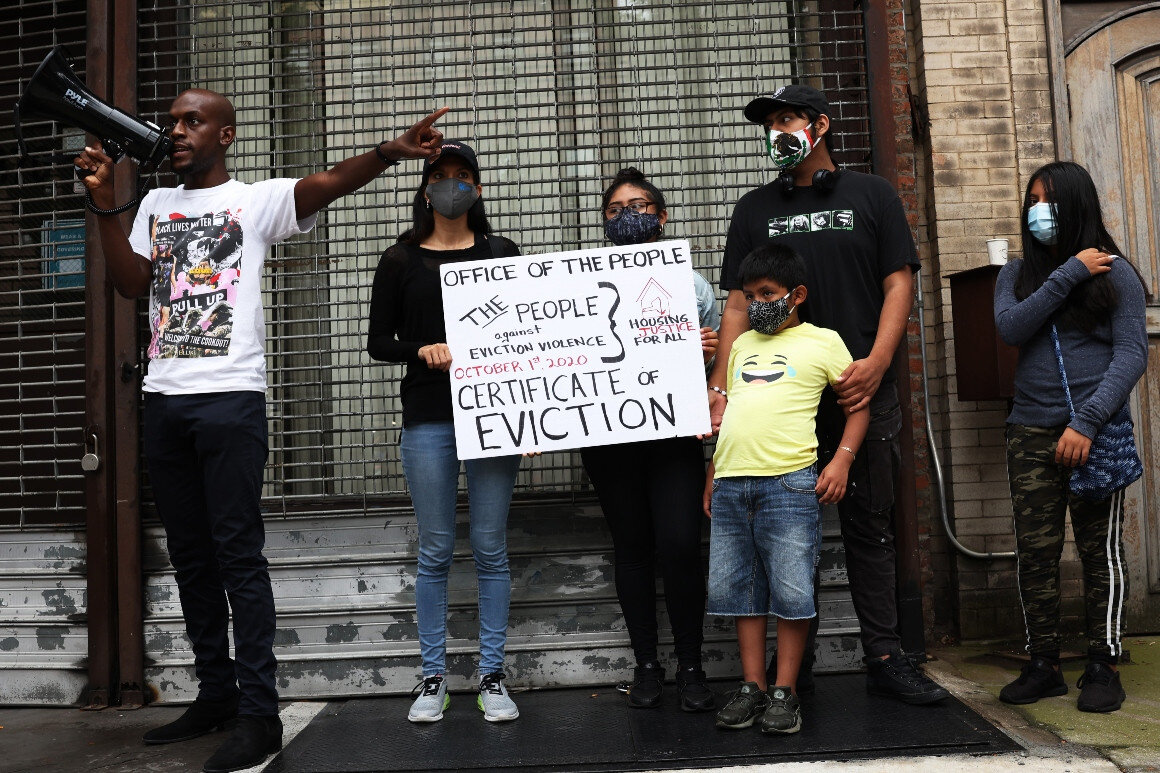
“The dynamic of potentially tens of thousands of sheriff's deputies and other law enforcement officials executing evictions across the country at the same time in the hottest month of the year is my biggest concern,” said David Dworkin, president and CEO of the National Housing Conference, an affordable housing advocacy group.
In the most recent U.S. Census Bureau survey, performed during the last week of June and the first week of July, around 7.4 million adult tenants said they were behind on their rent. Over the next two months, around 3.6 million tenant households reported they were "somewhat likely" or "extremely likely" to be evicted.
Others claim that the number of at-risk renters is substantially higher. According to the Center for Budget and Policy Priorities, 11.4 million tenants — or 16% of individuals living in rental property — are behind on their rent.
The eviction prohibition, which was first imposed by the Centers for Disease Control and Prevention in September as a Covid-19 safety measure, has now expired, despite landlords' warnings that it was costing them billions of dollars every month. This week, industry groups such as the National Association of Realtors lobbied against the moratorium's extension, arguing that it "unfairly shifts economic hardships to the backs of housing providers who have put their own financial futures on the line to provide essential housing to renters across the country."
The restriction has been particularly challenging for mom-and-pop landlords, who provide 40% of the country's rental units, according to industry groups. In a late-night letter to lawmakers on Thursday, the groups claimed they "continue to pay mortgages, taxes, insurance, and maintain the safety of their homes for renters with less or, in many cases, no rental revenue."
The White House said on Thursday that the embargo would not be extended because to the threat of legal challenges, which have been sponsored by landlords for months. The Biden administration highlighted a recent Supreme Court judgment that extended the prohibition until July 31, but made clear that a majority of justices believed the CDC was acting outside of its legal jurisdiction.
Biden encouraged Congress to intercede and establish a new prohibition, but at least a dozen House Democrats objected, citing the economic challenges faced by landlords and other housing sector groups.
The crisis that will begin to unravel on Saturday will be different in each state. Since March 15, 2020, landlords have filed for more than 451,000 evictions in six states and 31 localities tracked by Princeton University's Eviction Lab. Landlords normally file 3.7 million eviction proceedings per year, so August is expected to be particularly busy.
On Monday, courts in states like Texas, which have permitted eviction processes to continue under the federal ban until tenants are ejected from their homes, are likely to see a surge in eviction filings. According to the Census poll, 31% of Texas' 4.7 million adult tenants indicated they had "no" or "slight" confidence in their ability to pay next month's rent.
According to Princeton's Eviction Lab, approximately 40,000 eviction cases have been filed in Houston, the state's largest metropolis, since March 2020. Houston receives roughly 58,400 filings each year on average, indicating that a jump in filings is inevitable once the city returns to normal.
Despite the fact that Ohio has not implemented any particular tenant protections, approximately 134,000 renters feel they are very or somewhat likely to be evicted. The state ban on evictions in Florida expired in October, and more than 350,000 people have fallen behind on their rent.
While New York has robust tenant protections in place until August, it has been one of the slowest states to distribute relief monies, having distributed none of the initial batch of funding allocated by Congress until June. There is no publicly available information on New York's disbursement of any second tranche funds.
Because they were compelled to create assistance programs from the ground up, state and local governments claim it has been difficult to get federal aid into the hands of renters and landlords.
The apparent aid backlog in New York has sparked fears that when a state moratorium on evictions expires in a month, the city would see its own significant rise in evictions. Over 860,000 tenants in the state have reported being late on their rent.
There will be a "tsunami" of evictions, according to Sunia Zaterman, executive director of the nonprofit Council of Large Public Housing Authorities.
She explained, "We're standing on the beach watching the waves come in."
Melanie Wang, a national field organizer for Right to the City Alliance, is one of many housing advocates and even Democratic lawmakers who have voiced disappointment with the White House's last-minute statement that the moratorium would expire and that the matter was out of Biden's control.
“Once again, we are on the verge of a wave of evictions that renters and housing advocates have been warning about for the past year and a half, and it's been a bungee-jumping experience,” Wang said. “It's incredibly upsetting to have such a chilly response from the Biden administration at this moment in time.”