On June 17, 1934, the first test flight of the Soviet aircraft ANT-20 took place. Built with public money, and named after the proletarian poet "Maxim Gorky", it was at that time the largest in the world, representing an outstanding achievement of aviation science and technology of the Soviet Union.
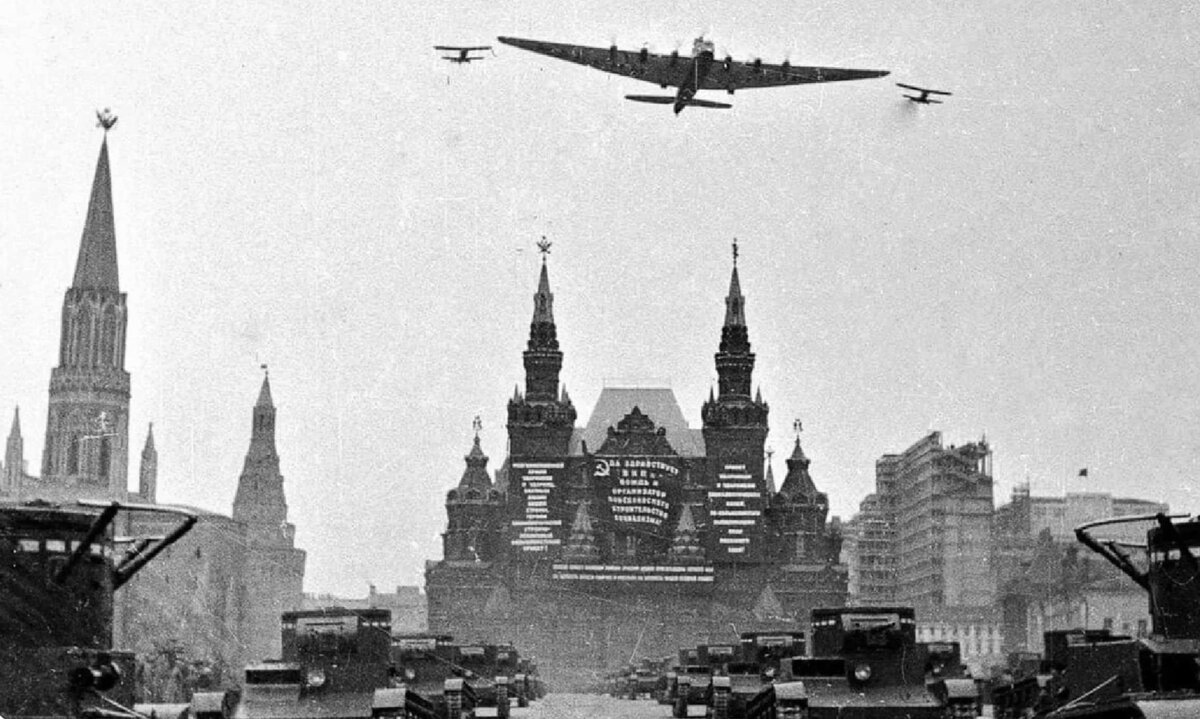
The young Soviet country celebrated its next success, welcoming the return from the ice captivity of the Chelyuskin heroes. In honor of this event, on June 19, 1934, an air parade was held in Moscow, which demonstrated the achievements of Soviet aviation. Numerous spectators on Red Square enthusiastically greeted the aerial stunts performed by pilots known throughout the country. And suddenly there was silence.
People with bated breath watched the giant aircraft that appeared at an altitude of 150 meters, next to which the two fighters accompanying it seemed like small flies. The eight-engine air giant with a gigantic wingspan was simply amazing. When the first shock passed, the square literally exploded with enthusiastic exclamations and shouts that greeted the new flagship of Soviet aviation, Maxim Gorky.
Higher and higher
Almost two years before the event described above, the USSR celebrated the 40th anniversary of the literary activity of the proletarian writer Alexei Maksimovich Gorky. Then the correspondent of the Pravda newspaper and the most popular journalist in the country, Mikhail Koltsov, appeared in print with an appeal to build the largest propaganda plane in honor of the writer. After the idea was supported by Stalin himself, an active agitation campaign in newspapers and on the radio unfolded in the country. To organize the construction of the machine, a special all-Union committee was created under the leadership of Koltsov, which successfully organized a nationwide collection of donations for the construction of a giant aircraft.
The general passion for aviation and the popularity of the writer Gorky did their job. In the shortest possible time, 6 million rubles were collected, which at that time was a very significant amount. This made it possible to move on to the concrete implementation of an ambitious project, which was headed by an experienced aircraft designer Andrei Tupolev. This decision was fully justified, since back in the 1920s, he was the first in the USSR to master the serial production of heavy metal monoplane aircraft, such as TB-1 and TB-3 bombers.
Under the leadership of Tupolev, the talented team of designers of the Central Aerohydrodynamic Institute (TsAGI), among whom were Vladimir Petlyakov, Alexander Arkhangelsky, Boris Saukke and Boris Kondorsky, performed a real miracle. Less than 10 months after the start of the construction of the aircraft on July 4, 1933, Maxim Gorky was completed. True, it was necessary to disassemble the masonry of the assembly shop in order to take the finished aircraft to the Khodynsky airfield on April 3, 1934.
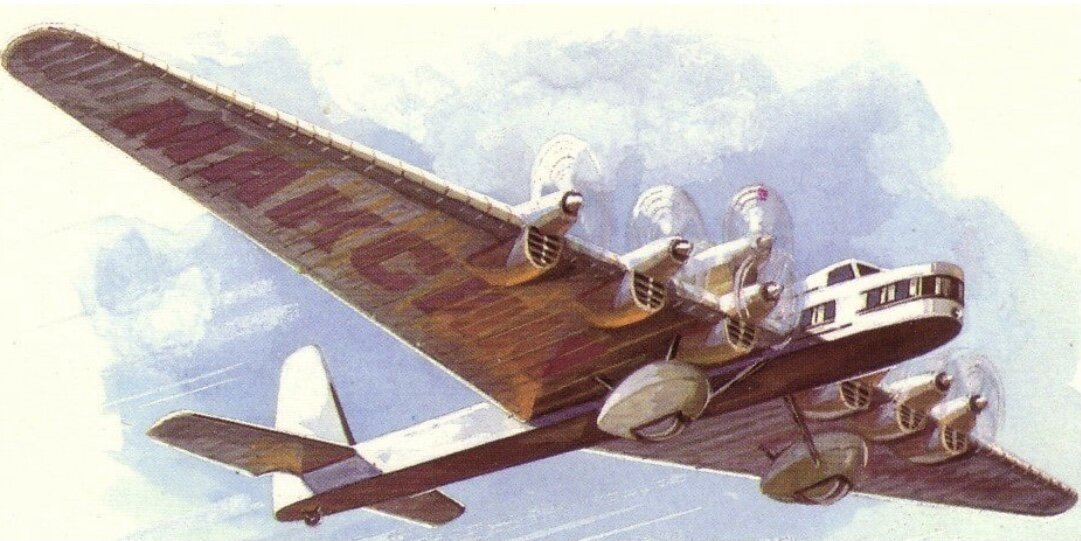
Looked "Maxim Gorky" very impressive, he, like all previous Tupolev aircraft, was made of duralumin and had a corrugated skin, which gave it rigidity and strength. During the creation of the aircraft, many technical innovations were introduced, including an autopilot of a domestic design and redundant control.
The aircraft was equipped with 6 domestic Mikulin engines with a capacity of 900 horsepower each and 14 fuel tanks. The engines were started with compressed air. The length of the aircraft was 33 meters, the takeoff weight was 42 tons, and the maximum speed was 260 kilometers per hour. The wingspan was 63 meters, which was 15 meters more than the former Dornier Do X, which topped the list of giant planes.
The huge dimensions of the aircraft made it possible to comfortably accommodate passengers in the central part of the wing with a thickness of over two meters. At the same time, the crew members had access to the engines and could fix a malfunction that arose in flight. The aircraft was capable of taking on board a crew of 8 people and 72 passengers. This was a record figure.
On June 17, 1934, test pilot Mikhail Gromov first took it into the air. The flight lasted 35 minutes and took place at an altitude of 500 meters. "Amazing machine" - this is how Gromov spoke about the plane, noting that "Maxim Gorky" obeyed the steering wheel well and was stable in flight. During the flight tests, Maxim Gorky set two unofficial world records for carrying capacity, having risen to a height of 5 thousand meters with a load of 10, and then - 15 tons.
"Maxim Gorky" looked great not only outside, but also inside. The passenger cabin with comfortable and spacious armchairs, a wardroom, separate sleeping cabins with a "transparent floor", an electrified buffet with hot and cold snacks, toilets were beautifully finished with precious woods. There were carpets everywhere, beautiful curtains on the windows, tables with table lamps.
The giant plane was not called propaganda for nothing. Inside the salon were ready for work automatic telephone exchange for intercom for 16 numbers, a photo laboratory, pneumatic mail, a printing house, a cinema installation, several radio stations and a power station driven by a special engine. Directly in flight it was possible to issue a small-circulation newspaper or print 8 thousand leaflets per hour.
Foreign journalists flew as passengers on the giant, including the writer and pilot Antoine de Saint-Exupéry, who visited Moscow in the spring of 1935 as part of a French military delegation.
After factory tests, the aircraft was transferred to the Gorky propaganda squadron on August 18 as its flagship. Created on the basis of a military aircraft, "Maxim Gorky", if necessary, could be quickly converted into a heavy bomber capable of carrying two tons of bombs.
«Air hooliganism»
After the successful completion of flight tests on "Maxim Gorky", they finally decided to ride over Moscow over Moscow people who distinguished themselves during its construction. Memorable invitations for engineers, technicians, workers of TsAGI and their families were printed in small circulation. It was a day off on May 18, 1935, and there were so many people wishing to ride the Maxim Gorky that a long queue formed at the Khodynskoye airfield.
The first to board were 38 people, including 7 children. The plane was piloted by the most experienced Ivan Mikheev and Nikolai Zhurov. In addition to them, there were 9 more crew members on board. Fighters took off next to Maxim Gorky to emphasize the gigantic dimensions of the flagship. They were piloted by test pilots Blagin and Rybushkin.
The first part of the flight took place in normal mode, but after the Maxim Gorky made a left turn on the second lap and headed towards the airfield, Nikolai Blagin, contrary to the flight mission, began to perform aerobatics in the immediate vicinity of the Maxim Gorky. He managed to make a "barrel", but when trying to repeat this figure Blagin could not cope with piloting and when exiting the loop lost speed and crashed into the right wing of "Maxim Gorky", near the middle engine, breaking through the upper and lower wing skins and breaking the spars.
The blow was terrible and fatal. "Maxim Gorky" tilted to the right, parts of the hull began to fall off from it. Experienced pilots turned off all eight engines in an attempt to glide down, but were unable to level the plane. The giant flew by inertia for another 10-15 seconds, increasing the roll, and then he began to fall on the nose. A few seconds later, part of the right wing came off, then part of the fuselage with a tail flew off, the plane went into a sheer dive.
Already uncontrollable and disintegrated into separate parts, "Maxim Gorky" fell on a pine forest in the village of Sokol, which was promptly cordoned off by the police, cadets of military schools and units of the NKVD. The perpetrator of the tragedy, Nikolai Blagin, was also killed in the collision.
In the evening of the same day, an emergency meeting was held under the chairmanship of Stalin with the leaders of TsAGI. Only Andrei Tupolev, who was in the United States on a business trip, was absent. There, an official version of the death of "Maxim Gorky" was developed. The strict lines of the TASS message informed the whole world that the plane crash occurred solely through the fault of the "air hooligan" Nikolai Blagin. All the victims were buried in the most prestigious Novodevichy cemetery in Moscow, and the families of the victims of the plane crash, by decision of the SSR government, were given an allowance of 10 thousand rubles and they were given an increased pension provision.
Then many drew attention to the amazing leniency shown to Nikolai Blagin, because he was buried along with everyone, and his family of the pilot was paid a lump sum and provided with a pension. There is a version that Nikita Khrushchev, who then headed the Moscow City Party Committee, called Stalin with a question: what to do with Blagin's body? And Stalin, after a pause, ordered: "To bury with everyone."
(To be continued)