MTSU's partnership with the Music City Grand Prix will go beyond the concrete paver molds industry initiatives. The eco-friendly concrete mix could potentially help reduce cost of putting on the event. For professional looking results remove 1 inch 2 5 centimeters of top soil and level the mold before filling with concrete. Adding colorant to the concrete mix is the easiest method and produces consistent results.
Mortar is brittle, so if you make forms using this, your cap stones will fall apart. Type S is really mortar but it is basically sand mix concrete with a splash of lime and some additives. They all have the same basic ingredients it is just how you mix it and what additives you put in. I'd build as many concrete paver molds as I could and do them all at once from as few batches of concrete as possible for consistency. Here, class participants shape a foam sink knockout on a router table to fit a wooden sink-hole template.Flexible strips of thin material can be bent into an arc. Melamine will bend to some degree, but tighter curves may require plastic. Laminate is a good material to bend, but it requires a backer material for support.
Concrete was used for construction in many ancient structures. Mayan concrete at the ruins of Uxmal is referenced in Incidents of Travel in the Yucatán by John L. Stephens.
It’s rigid enough to withstand the pressure of fresh concrete, but soft enough to be easily removed after casting without fear of cracking the concrete during blockout extraction. Some people wrap smooth tape around the outside of the foam blockout to achieve a glossier cast surface, and others leave the foam bare. Steel is often used for multiuse formwork, usually as steel-topped casting tables, but also steel angle-iron as edge forms. Using steel for formwork works best when you’re not trying to achieve an as-cast cement cream finish. Exposing aggregate naturally removes the surface texture during the grinding process, as does honing to create a salt-and-pepper finish. Forms can be constructed from a wide variety of building materials, and one of the most commonly used is melamine . Melamine is used in cabinet construction, often for the carcass and shelving.
A relatively dry sample slumps very little, having a slump value of one or two inches out of one foot . A relatively wet concrete sample may slump as much as eight inches. Concrete production is the process of mixing together the various ingredients—water, aggregate, cement, and any additives—to produce concrete.
Other materials can also be used as a concrete binder, the most prevalent alternative is asphalt, which is used as the binder in asphalt concrete. Admixtures are added to modify the cure rate or properties of the material.
What the forms are made of is influenced by a variety of factors, not least of which is the final appearance that the customer requests. The choice of forming material, and the process and care by which the forms are assembled, is both influenced by and significantly affects how the finished concrete looks. The size of the completed box is determined by the desired thickness of the slab, the thickness of the forming material and how the sides are fastened to the box.
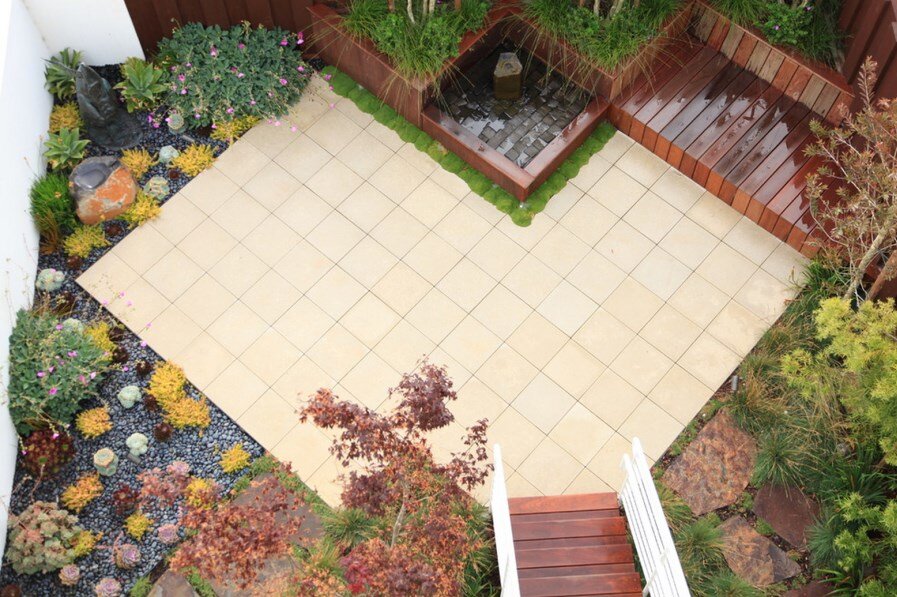
How To Make A Custom Concrete Fountain
The micro fungi Aspergillus Alternaria and Cladosporium were able to grow on samples of concrete used as a radioactive waste barrier in the Chernobyl reactor; leaching aluminum, iron, calcium, and silicon. Prestressed concrete is a form of reinforced concrete that builds in compressive stresses during construction to oppose tensile stresses experienced in use. This can greatly reduce the weight of beams or slabs, by better distributing the stresses in the structure to make optimal use of the reinforcement. Prestressed reinforcement along the bottom of the beam counteracts this.
- We offer a variety of professional concrete paver molds with a highly detailed rustic wood look that will make your furnishings appear just like the real thing, only more sturdy and long lasting.
- Save time and money when mass producing concrete products with these durable polyurethane rubber molds that are made to last through any number of pours.
- You can also find textured concrete paver molds to craft your own tiles for feature walls, fireplace surrounds, backsplashes and more.
Reinforced concrete adds either steel reinforcing bars, steel fibers, aramid fibers, carbon fibers, glass fibers, or plastic fibers to carry tensile loads. Decorative stones such as quartzite, small river stones or crushed glass are sometimes added to the surface of concrete for a decorative "exposed aggregate" finish, popular among landscape designers. Fine and coarse aggregates make up the bulk of a concrete mixture. Sand, natural gravel, and crushed stone are used mainly for this purpose. Recycled aggregates are increasingly used as partial replacements for natural aggregates, while a number of manufactured aggregates, including air-cooled blast furnace slag and bottom ash are also permitted.
The amount of concrete used in the construction of the dam is estimated at 16 million cubic meters over 17 years. The previous record was 12.3 million cubic meters held by Itaipu hydropower station in Brazil. Concrete is used to create hard surfaces that contribute to surface runoff, which can cause heavy soil erosion, water pollution, and flooding, but conversely can be used to divert, dam, and control flooding. Concrete dust released by building demolition and natural disasters can be a major source of dangerous air pollution.
Slump can be increased by addition of chemical admixtures such as plasticizer or superplasticizer without changing the water-cement ratio. Some other admixtures, especially air-entraining admixture, can increase the slump of a mix. Workability can be measured by the concrete slump test, a simple measure of the plasticity of a fresh batch of concrete following the ASTM C 143 or EN test standards. Slump is normally measured by filling an "Abrams cone" with a sample from a fresh batch of concrete. The cone is placed with the wide end down onto a level, non-absorptive surface. It is then filled in three layers of equal volume, with each layer being tamped with a steel rod to consolidate the layer. When the cone is carefully lifted off, the enclosed material slumps a certain amount, owing to gravity.
The mold can be placed directly on a relatively flat surface. Product title personalized memorial heart cut out stepping stone average rating.
During the curing period, concrete is ideally maintained at controlled temperature and humidity. To ensure full hydration during curing, concrete slabs are often sprayed with "curing compounds" that create a water-retaining film over the concrete. Typical films are made of wax or related hydrophobic compounds. After the concrete is sufficiently cured, the film is allowed to abrade from the concrete through normal use. Properly curing concrete leads to increased strength and lower permeability and avoids cracking where the surface dries out prematurely. Care must also be taken to avoid freezing or overheating due to the exothermic setting of cement. Improper curing can cause scaling, reduced strength, poor abrasion resistance and cracking.
The foam Engraving tool is perfect for detailing your foam sculpture. You can quickly cut down your big blocks of foam with our 2-4 foot adjustable hot wire Bow Cutter. Our spray on and brush on foam glues are the best on the market. Protect and beautify your foam projects with our versatile foam coatings. Once the mold had been positioned outside, the team lowered a rebar structure that had been prefabricated to fit its interior dimensions.
The adjacent picture shows one of many ways to achieve this, ponding—submerging setting concrete in water and wrapping in plastic to prevent dehydration. Additional common curing methods include wet burlap and plastic sheeting covering the fresh concrete.
4 8 out of 5 stars based on 307 reviews 307 ratings current price . 2pcs driveway paving pavement mold patio concrete stepping stone path walk maker. Removed top soil can be used to fill open spaces on sides after walk has set up. Lubricate concrete paver molds with light vegetable oil or mold release if available. What usually works well is using Type III portland cement ( also known as high-early)with sand and pea gravel. Because your forms are only gonna be 2 inches thick, 3/8 dia pea gravel is the right size for course aggregate. As was already mentioned, Type S is really a high-strength mortar.
In pre-tensioned concrete, the prestressing is achieved by using steel or polymer tendons or bars that are subjected to a tensile force prior to casting, or for post-tensioned concrete, after casting. Bacteria such as Bacillus pasteurii, Bacillus pseudofirmus, Bacillus cohnii, Sporosarcina pasteuri, and Arthrobacter crystallopoietes increase the compression strength of concrete through their biomass. Not all bacteria increase the strength of concrete significantly with their biomass. can reduce corrosion of reinforcement in reinforced concrete by up to four times. Sporosarcina pasteurii reduces water and chloride permeability. sphaericuscan induce calcium carbonate precipitation in the surface of cracks, adding compression strength. Traditional conditions for curing involve spraying or ponding the concrete surface with water.
If too much air becomes trapped in the concrete as a result of the mixing process, defoamers can be used to encourage the air bubble to agglomerate, rise to the surface of the wet concrete and then disperse. Typical materials used are calcium chloride, calcium nitrate and sodium nitrate. However, use of chlorides may cause corrosion in steel reinforcing and is prohibited in some countries, so that nitrates may be favored, even though they are less effective than the chloride salt. Accelerating admixtures are especially useful for modifying the properties of concrete in cold weather. Concrete is strong in compression, as the aggregate efficiently carries the compression load. However, it is weak in tension as the cement holding the aggregate in place can crack, allowing the structure to fail.
Mineral admixtures use recycled materials as concrete ingredients. Conspicuous materials include fly ash, a by-product of coal-fired power plants; ground granulated blast furnace slag, a byproduct of steelmaking; and silica fume, a byproduct of industrial electric arc furnaces. Concrete floors were found in the royal palace of Tiryns, Greece, which dates roughly to 1400–1200 BC. Lime mortars were used in Greece, Crete, and Cyprus in 800 BC. The Assyrian Jerwan Aqueduct made use of waterproof concrete.
Once the ingredients are mixed, workers must put the concrete in place before it hardens. In modern usage, most concrete production takes place in a large type of industrial facility called a concrete plant, or often a batch plant. Air entraining agents add and entrain tiny air bubbles in the concrete, which reduces damage during freeze-thaw cycles, increasing durability. However, entrained air entails a tradeoff with strength, as each 1% of air may decrease compressive strength by 5%.
Slate Seamless Texture Stamp Mat Skin Concrete Cement Stamping Tools Concrete Decor Stamped Concrete Patterns Stamped Concrete
This rebar structure served not only as strength reinforcement, but also as a staging area for several sensing units that included temperature loggers and three-axis accelerometers. The products developed by us has its own designs and patterns, which lead to market by its Quality and performance in operation. The world record for the largest concrete pour in a single project is the Three Gorges Dam in Hubei Province, China by the Three Gorges Corporation.
For example, most melamine is ¾ inch (or 0.75 inch) thick, or 19 mm thick. If a countertop is constructed to be 2 inches thick, then the interior of the forms are 2 inches deep, but the four sides that form the walls of the mold are 2.75 inches tall. This means that the sides wrap around the outside of the base plate, and this permits the sides to be easily attached with screws drilled in perpendicularly. The most basic formwork we use is a simple rectangular box with four sides and a base plate for the foundation.
Often bendable plywood or even foam provides the support to keep the thin laminate sheet in alignment. Or, the laminate can be secured to rigid side plates using 2-by-4 spines placed behind the laminate sheet. Foam is a very good material to use for undermount sink blockouts.