History of volunteering in Russia
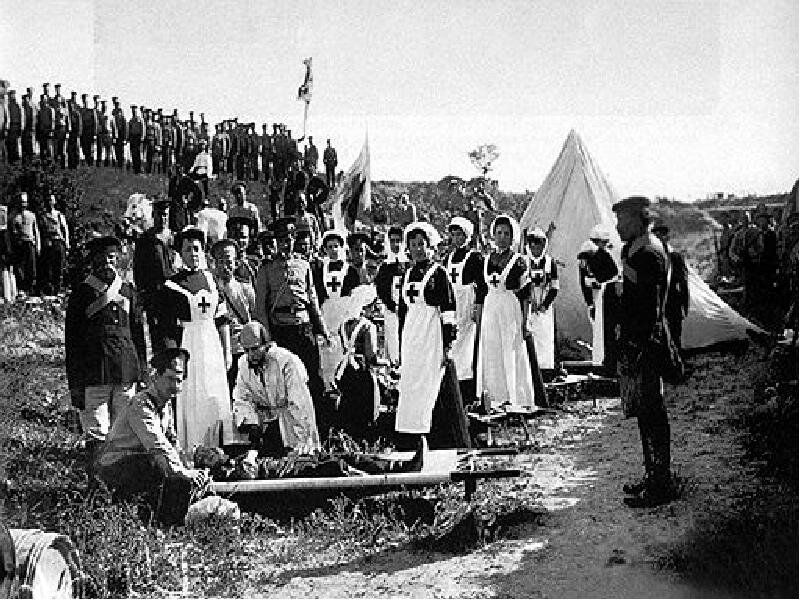
In Russia, under Empress Catherine II, at the end of the XVIII century, orphanages were created for the upbringing of orphaned children, in which volunteers worked. In the XIX century, various charitable societies and unions, public organizations were developed. One of the largest was the Imperial Humane Society, formed in 1802 on the initiative of Alexander I. In the public elementary schools established by the zemstvos, teachers taught free of charge, and in rural hospitals, zemsky doctors provided free medical care. The world's first female volunteers (sisters of mercy) were the nuns of the Moscow St. Nicholas Monastery. During the Russian-Turkish War of 1877-1878, they voluntarily went to the front to help wounded soldiers. In 1894, city precinct guardianship offices for the poor were established in Moscow, volunteers were involved in them to collect voluntary donations.
At the beginning of the XX century in Russia there were already about 20,000 boards of trustees for the poor, in which volunteers worked. In the USSR, the volunteer movement was associated with major all-Union events, mass subbotniks. In the 1990s, non-profit, public and charitable organizations began to engage in volunteer activities.
What is volunteering and what is it like?
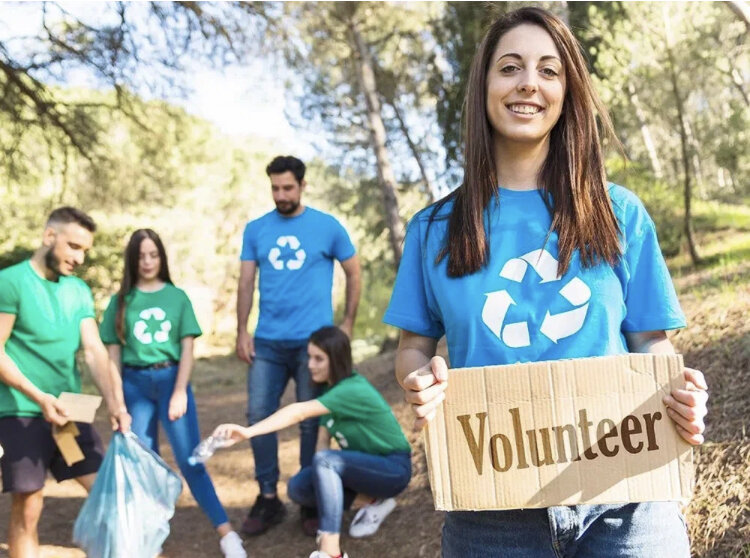
Volunteering is a free job in order to help everyone who really needs it.
Types of volunteering: volunteering can be group or individual.
A volunteer organization is an association of volunteers who share their strengths, resources, and professional knowledge with other people for free. The role of the organization is to provide training and support for volunteers, if necessary. Volunteer organizations often cooperate with other volunteer projects in order to support each other, share experience and successful working methods, accumulated knowledge.
How to become a volunteer?
Anyone can become a volunteer – there are no restrictions on religious or political views, especially on physical abilities. There is a small age limit: underage volunteers need to get permission from their parents, and teenagers under the age of 14 should be supervised by official representatives during volunteer work.
Volunteer's passport
Each volunteer has a kind of work book – a passport (personal book) of the volunteer. It can be paper or electronic. It contains information about the types of activities, volunteer experience (in hours), additional training, and incentives.
There is no uniform procedure for issuing a volunteer book, it can be obtained in local volunteer centers, and, for example, in the Ministry of Sports. In all regions, you will need two 3 x 4 photos and a civil passport.
The electronic passport of the volunteer can be obtained on the website "Volunteers of Russia". To do this, after registration, you need to fill out a form in your personal profile. Information about participation in projects and additional training will be automatically entered in the book.
What does volunteering give?
Although volunteering involves the absence of monetary remuneration for work, altruistic volunteers still receive bonuses. This is primarily experience, special knowledge and skills. In addition to pumping certain professional skills, volunteers learn:
* work in a team and manage it;
* to argue your point of view;
* find compromises to solve the problem;
* communicate with colleagues, wards and government representatives;
* develop projects;
* manage risks and resources of social projects;
* create communities around projects (basics of community management);
* promote social initiatives.
All these skills will be useful in any profession, and volunteer work often opens the way to paid positions in a variety of career directions. Employers see volunteers in action and do not want to lose valuable employees.
At the stage of preparation for building a career, volunteering can also become a bonus: many, but not all, Russian universities give additional points for admission for volunteering. In total, an applicant plus the amount for the Unified State Exam can earn 10.
Today, only two universities give maximum additional points for volunteering:
* RSSU – Russian State Social University. If no more than two years have passed since the completion of participation in the project and marks of 50 hours of work have accumulated in the electronic or paper passport of the volunteer, the applicant will be awarded 3 points, 5 points for 100 hours, and all possible 10 points for 200 and more.
* Lesgaft National University – State University of Physical Education and Sports. 10 points are added for volunteering at Olympiads, cups, championships, championships of international and all-Russian level, if no more than four years have passed since participating in the project.
The rest of the universities (about 200 out of 500 in total) encourage volunteering more modestly – from 7 to 1 point.
Moscow State Psychological and Pedagogical University - 7
Moscow City University of Management of the Government of Moscow - 5
Moscow City Pedagogical University - 5
Siberian State University of Water Transport - 5
Ural Institute of GPS (Fire Service) Ministry of Emergency Situations - 5
South Ural Technological State University - 5
Sibstrin (Novosibirsk University of Architecture and Civil Engineering) - 5
Don Agrarian State University - 5
Magnitogorsk Technical State University named after Nosova - 5
Rostov State University of Economics - 5
Izhevsk Technical State University named after Kalashnikov - 5
Yaroslavl Technical State University - 5
Tomsk State University of Architecture and Civil Engineering - 4
Krasnoyarsk Pedagogical University named after Astafieva - 4
St. Petersburg State University of Industrial Technologies and Design - 4
Samara State Institute of Culture - 3
Krasnodar State Institute of Culture - 3
Academy of Russian Ballet named after Vaganova - 3
Kazan Medical University - 2
Sochi State University - 2
Thanks for your attention!