Sometimes it seems that the dominant colors of the Middle Kingdom’s architecture are “socialist dark gray” and “cinnabar Chinese red.” However, not many people know what story is behind such a pedantic selection of color palettes. As a country with rich heritage, compared to the West, China has surprisingly different and perhaps even more meaningful color symbolism. We talked with Wang Bo Cheng, an artist from the Middle Kingdom, about how the main shades of Chinese urban planning are connected with history and the elements.
«China has gone through dynasties and generations, so colors are given different meanings in architecture» .
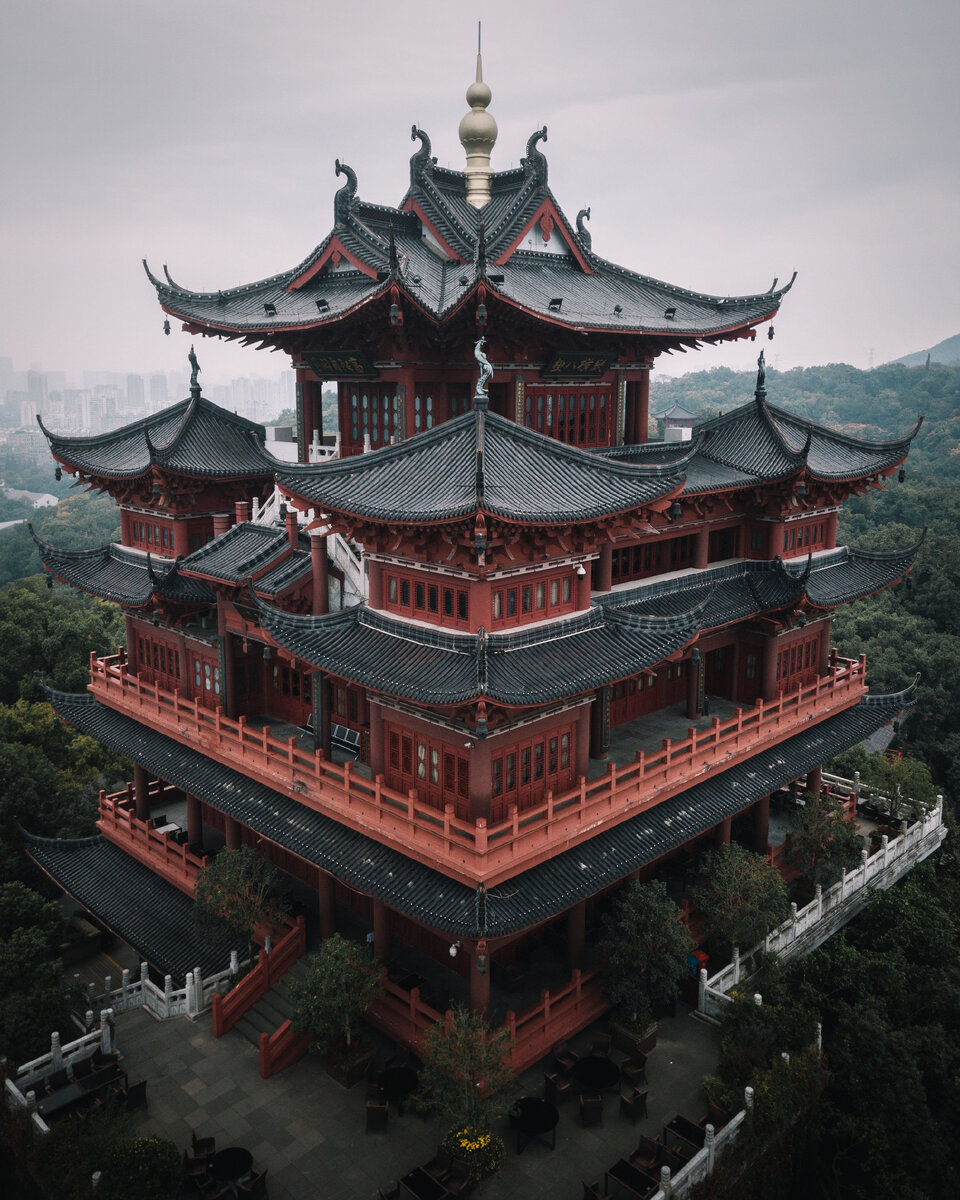
First of all, it is worth noting that the choice of color in Chinese architecture is determined by aesthetic preferences in one of the last stages. This is connected with the 五行 wǔxíng system, which includes everything from astrology and metaphysics to food and medicine. This concept seeks to explain all phenomena as interactions between five different elements: metal, wood, water, fire and earth. Later, each element became associated with different colors, which then formed the dominant palette not only in Chinese architecture, but also in the culture as a whole.
Artist/Architect Wang Bo Cheng 汪柏成 : “Green, red, white, gray and black have historically been associated with Chinese vernacular architecture, such as the courtyard houses of Beijing - Sìhéyuàn (lit. "four with a common courtyard"). The outer walls of Beijing courtyard houses were traditionally built of gray brick, and the structural columns were often painted bright red, the color of fire and blood, symbolizing good luck and prosperity, while the window openings were green, the color of plants, signifying life and growth. »
The color red has long played an important role in Chinese symbolism. That is why the world-famous leader Mao Zedong chose this particular shade as a symbol of the revolution for a reason. Traditionally, red symbolized warmth and the greatest amount of “light” yang energy from the yin-yang concept. Nowadays, the color red is primarily associated with a positive attitude and good luck, which is why it occupies a prominent place at weddings, the New Year and other important celebrations. For these reasons, the famous red envelopes are distributed to children every year during the Lunar New Year.
汪柏成: “The color red is associated with the element of fire. The Chinese value its symbolic connection with fire, the sun, the heart and the south direction - all positive forces of energy. It is a color also worn by brides as it is believed to be auspicious for protection from evil. For centuries, red has been the color of strength, celebration, fertility, prosperity and warding off evil in China.”
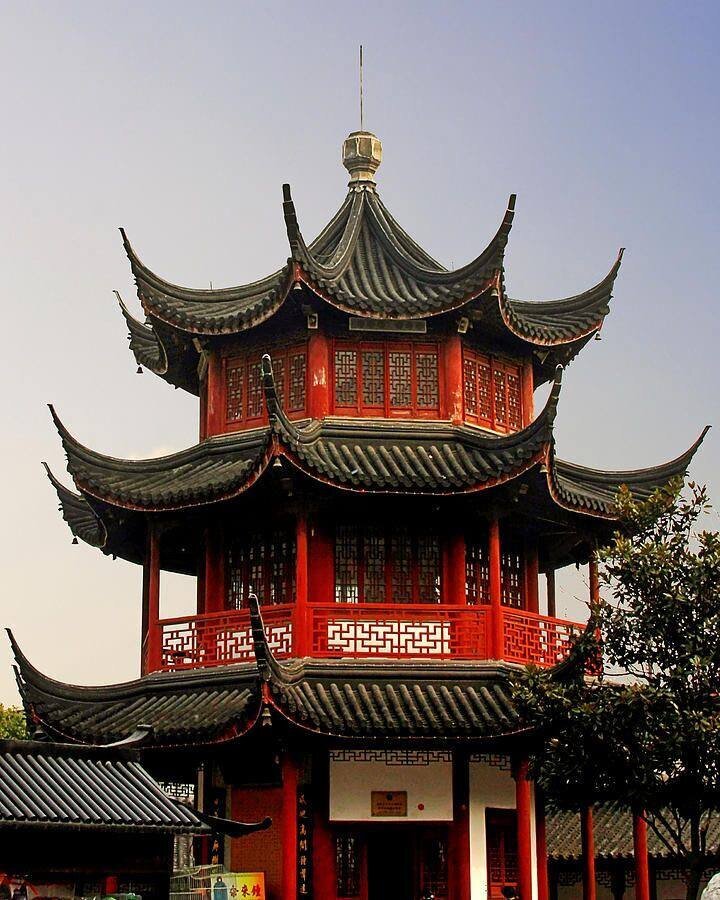
In the Ming and Qing dynasties of China, red was the exclusive color for royal buildings.
Another color that immediately catches the eye of guests of the Middle Kingdom is yellow. The main association with him is the emperor. Associated with the element of earth, yellow represents the very foundations of Chinese civilization in ancient times. The Yellow Emperor is the mythological forefather of the Chinese nation, while archaeologists trace the earliest examples of a specifically Chinese civilization to the Yellow River basin. The Yellow River itself gets its name from the color of the water when the river fills with the loose loess soil of central China.
汪柏成: Another color that immediately catches the eye of guests of the Middle Kingdom is yellow. The main association with him is the emperor. Associated with the element of earth, yellow represents the very foundations of Chinese civilization in ancient times. The Yellow Emperor is the mythological forefather of the Chinese nation, while archaeologists trace the earliest examples of a specifically Chinese civilization to the Yellow River basin. The Yellow River itself gets its name from the color of the water when the river fills with the loose loess soil of central China.The Hall of Literary Splendor, located in the eastern part of the Forbidden City, has a building that was the former imperial library with a black roof. As with other colors, black is associated with an element - in this case water - a useful element for protecting rare books in a palace where fire was a constant problem."
The color blue symbolized heaven and heavenly blessings, best exemplified by the dark cobalt tiles that decorate the roofs of buildings in the Chinese capital's Temple of Heaven. It wasn't always like this.
汪柏成: “When the Temple of Heaven was first founded in the Ming era (1368-1644), most temple buildings had green roofs. This was changed during renovations ordered by the Qianlong Emperor in the 18th century. In fact, the famous three-tiered hall of prayer for a good harvest (祈年殿 qínián diàn) was once a three-colored medley of symbolic flowers. The first tier was green, symbolizing the earth, the second tier was yellow for the emperor, and only the top tier, representing heaven, had the characteristic blue tiles. When the building was reconstructed by the Qianlong Emperor (and again when it was rebuilt after the fire of 1889), all tiers were tiled in a uniform blue color."
White also has an interesting story. It represents the metal element in traditional Chinese culture and also symbolizes purity and innocence. However, the paradox is that, contrary to our culture, in some cases white is associated with death and is the color that is usually worn at funerals. Nevertheless, this color still occupies an important place in the architecture of the Middle Kingdom: this is especially evident in the eastern province of Anhui.
The architectural style of Anhui is white walls and black roofs, so white actually has no taboo in ancient Chinese culture.
汪柏成: “In terms of color, Hui style architecture used white walls, gray bricks and black tiles, which inspire people with a sense of purity, freshness and simplicity.”
In fact, ordinary buildings in China are not limited to use a variety of colors in the construction of buildings, and even more emphasis on the use of primary colors of materials.
Despite its rich history, modern architecture in China still keeps up with the times. Now, walking along the streets of heaven, we are more likely to observe the wonders of modern urban planning. However, this does not in any way diminish the importance of color for the majority of Chinese people - the concept of 五行 wǔxíng is an integral part of their lives, running like a red thread through every alley of their native country.
Written by: Viktoriia Markina
VK: https://vk.com/soulmate_msu
Web: http://soulmatemagazine.tilda.ws/