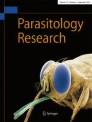
Уважаемые коллеги, доброго времени суток! Представляем вам немецкое научное издание Parasitology Research. У него второй квартиль, издается в Springer Verlag, его SJR за 2019 г. равен 0,686, пятилетний импакт-фактор - 1,843, печатный ISSN - 0932-0113, электронный - 1432-1955, предметные области - Энтомология, Общие вопросы ветеринарии, Инфекционные заболевания, Общие вопросы медицины, Паразитология. Вот так выглядит обложка:
Здесь два редактора: Уна Риан, контактные данные - una.ryan@murdoch.edu.au

и Юлия Валочник - julia.walochnik@meduniwien.ac.at
Другие публикационные контакты - KarenGrace.Corpuz@springernature.com, johnlester.nocillado@springernature.com, roberto.garbero@springer.com
Издание охватывает последние достижения в области паразитологии в различных дисциплинах, включая биологию, медицину и ветеринарию, химиотерапии и борьбу с паразитарными заболеваниями, а также взаимоотношения хозяина и паразита.
Также принимаются материалы по следующей тематике: протозоология, гельминтология, энтомология; морфология (ВКЛ, патоморфология, ультраструктура), биохимия, физиология, включая молекулярную биологию, отношения паразит-хозяин, включая иммунологию и специфичность хозяина, история жизни, экология и эпидемиология, а также диагностика, химиотерапия и контроль паразитарных заболеваний.
Пример статьи, название - Early high avidity specific IgG production in experimental hamster visceral leishmaniasis. Заголовок (Abstract) - Visceral leishmaniasis (VL) by Leishmania (Leishmania) infantum is epidemic in Brazil. Hypergammaglobulinemia appears early in patients with VL and is ineffective. Usually, high-affinity IgG B cells are selected during most infections, a critical step for an effective humoral response. The avidity of IgG antibodies in VL is unexplored due to the absence of temporal parameters in most patients, associated to low clinical significance. Experimental infection models overcome this fact, allowing the monitoring of the disease temporal evolution. In this study, the avidity of IgG antibodies was evaluated in experimental models, in infection in hamsters, and in immunization in rabbits. Specific IgG antibodies were detected by ELISA, using chaotropic solution to determine avidity, as reported for viral infections. The levels of IgG antibodies correlated with the progression of experimental infection in hamsters or antigenic stimulation in immunized rabbits. However, IgG avidity was high early in infected animals, even in early periods (> 80%), while in immunized rabbits, they had early antibodies of low avidity with progressive maturation, similar as other infections. These data suggest that the affinity maturation of the avidity of anti-Leishmania IgG antibodies promoted at an early stage, influencing the appropriate interaction between antigens and affecting the disease progression. This fact could be associated to monovalent immune complexes, as reported in human and experimental VL. This scenario may be related to an independent process of immune cell activation by the parasite but absent in antigen preparation used as immunogens.