Experiments have been conducted on automated driving systems (ADS) since at least the 1920s; trials began in the 1950s. The first semi-automated car was developed in 1977, by Japan's Tsukuba Mechanical Engineering Laboratory, which required specially marked streets that were interpreted by two cameras on the vehicle and an analog computer
The vehicle reached speeds up to 30 kilometres per hour (19 mph) with the support of an elevated rail
A landmark autonomous car appeared in the 1980s, with Carnegie Mellon University's Navlab and ALV projects funded by the United States' Defense Advanced Research Projects Agency (DARPA) starting in 1984 and Mercedes-Benz and Bundeswehr University Munich's EUREKA Prometheus Project in 1987. By 1985, the ALV had demonstrated self-driving speeds on two-lane roads of 31 kilometres per hour (19 mph), with obstacle avoidance added in 1986, and off-road driving in day and nighttime conditions by 1987
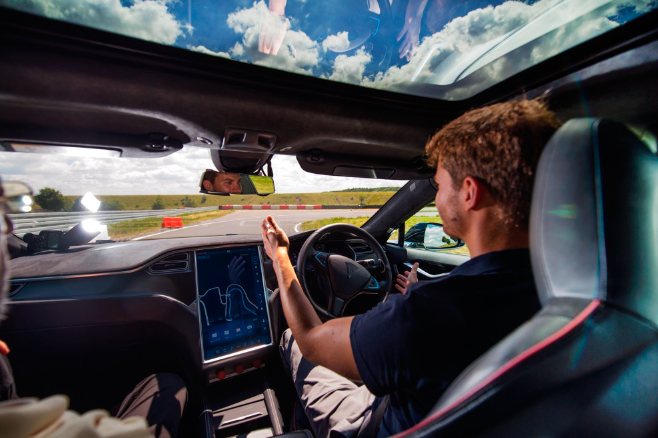
A major milestone was achieved in 1995, with CMU's NavLab 5 completing the first autonomous coast-to-coast drive of the United States. Of the 2,849 mi (4,585 km) between Pittsburgh, Pennsylvania and San Diego, California, 2,797 mi (4,501 km) were autonomous (98.2%), completed with an average speed of 63.8 mph (102.7 km/h)
Automobile insurance costs have become a major concern for many drivers. As the rates increase, insurance companies who offer the most expensive auto insurance policies are able to charge high premiums to drivers who are in a more expensive state. Usually, the higher the rate, the closer the driver is to the state's average car insurance rate
This is the driving force behind what is called the "state gap." Because of the state gap, drivers with a car insurance policy from one state may be paying twice the car insurance rate in another state. Why? Drivers who drive in more expensive states pay the higher rate, while drivers who drive in less expensive states pay the lower rate
The state gap is a result of it being easy for insurance companies to create a higher rate in one state but not other states that are close to that state. How Much Do Automobile Insurance Costs Go Up? According to the National Association of Insurance Commissioners, the average auto insurance rate has been going up