Уважаемые коллеги, доброго времени суток! Представляем вам австралийское научное издание Wildlife Research. У данного журнала второй квартиль, издается Commonwealth Scientific and Industrial Research Organization Publishing, выходит восемь раз в год, за 2019 г. его SJR равен 0,847, импакт-фактор - 1,244, печатный ISSN - 1035-3712, электронный - 1448-5494, предметные области - Эволюция, Динамика изменения и Таксономия, Экология, Менеджмент, мониторинг, закон и право. Вот так выглядит обложка:
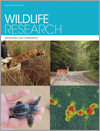
Здесь три редактора: Андреа Тейлор, контактные данные - publishing.wr@csiro.au, publishing.sales@csiro.au

Пиран Уайт - piran.white@york.ac.uk
и Аарон Вирзинг - wirsinga@uw.edu
Другие публикационные контакты: publishing.advertisingsales@csiro.au, publishing@csiro.au
Издание является международным форумом для публикации исследований и дискуссий по вопросам экологии, управления и сохранения диких животных в естественных и измененных местах обитаниях. Журнал сочетает фундаментальные исследования в области экологии дикой природы с достижениями научно обоснованной практики управления. Предметные области включают: прикладную экологию, биологию сохранения, управление экосистемами, управление чрезмерно распространенными, вредными и инвазивными видами, глобальные изменения и управление дикой природой, болезни и их воздействие на популяции дикой природы, человеческие аспекты управления и сохранения, оценка результатов управления и последствия исследований дикой природы для дальнейшей разработки в политической области. На данный момент была опубликована серия статей, посвященных структурированным полевым исследованиям, манипулятивным экспериментам, а также аналитическим и моделирующим исследованиям. Целью является совершенствование практики управления дикой природой и способствование концептуальному прогрессу в знании и понимании экологии дикой природы.
Пример статьи, название - Sources and dynamics of international funding for waterfowl conservation in the Prairie Pothole Region of North America. Заголовок (Abstract):
Context: Funding for habitat-management programs to maintain population viability is critical for conservation of migratory species; however, such financial resources are limited and can vary greatly over time. The Prairie Pothole Region (PPR) of North America is an excellent system for examining spatiotemporal patterns of funding for waterfowl conservation, because this transboundary region is crucial for reproduction and migration of many duck species.
Aims: We examine large-scale spatiotemporal variation in funding for waterfowl habitat conservation in the PPR during 2007–2016. Specifically, we quantify major sources of funding and how funds were directed towards particular geographies within Canada and the USA. We further examine how sources and magnitude of funding changed over time and in relation to numbers of hunters.
Methods: We assembled data from multiple sources to quantify funding (in US$, 2016 values) from (1) USA states and non-government organisations (NGOs), (2) Canadian government and NGOs, and (3) major USA-based federal funding sources to the Canadian and US portions of the PPR between 2007 and 2016. We fit linear regressions to examine spatiotemporal variation in funding and in numbers of active waterfowl hunters in the USA.
Key results: Whereas annual funding for the Canadian portion was comparatively stable throughout the 10 years (range: US$25–41 million), funding for the US portion was dynamic and increased between the first (range: US$36–48 million) and second (range: US$43–117 million) 5-year intervals, despite concurrent declines in the number of active waterfowl hunters in the USA.
Conclusions: We discovered contrasting trends and dynamics in multiple streams of funding for habitat conservation on each side of the border bisecting the PPR. These findings and approaches warrant closer attention by wildlife professionals. Work is needed to analyse past and future funding for habitat conservation, which can then be used to refine plans for maintaining or recovering populations of migratory species.
Implications: Although funding for waterfowl habitat conservation in the PPR increased over the past decade, trends were inconsistent among subregions and uncertain for some major funding sources. Better understanding of the complexities in funding will help inform more efficient long-term planning efforts for conservation of waterfowl and other migratory species.
Additional keywords: breeding, conservation, human dimensions, migration, population management, wildlife economics.