Note from the Olympic Reserve: Mikhail Zalomin - 6-time European champion, 6-time World champion in trampoline
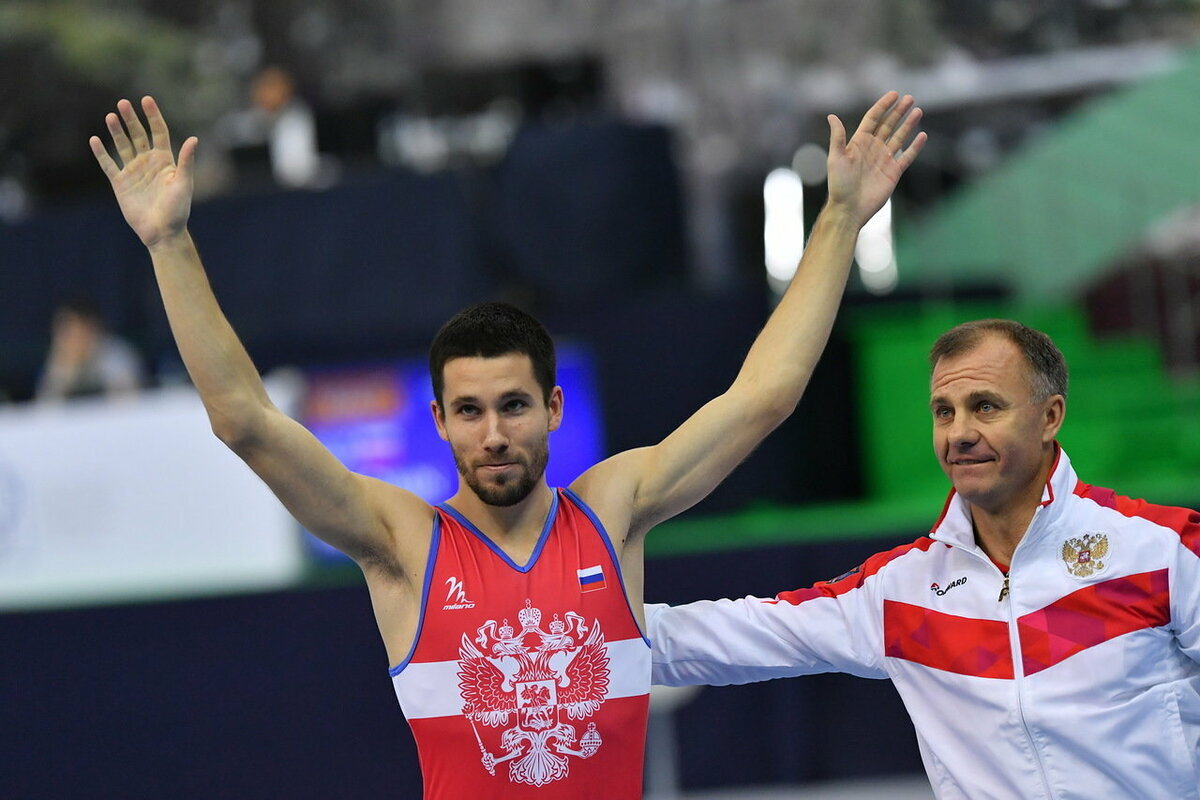
- You are a graduate of Moscow College of Olympic Reserve No. 1. How much has it changed since the time you were a student of the College?
- A lot of things have changed. Starting from the renovation of the buildings, which was completed recently, in the educational part and in dormitories. Everything has changed, it has become much more comfortable. Now everything is done so that all students can feel as comfortable as possible. As I see, all students go with laptops to their classes. We didn’t have that. This is probably a positive trend. Students study more, learn more, which will have a positive effect on their education. I hope so. Everything is done in order to do both, to train and to study.
- Could you tell us about your main victory. What comes to your mind?
- For me, all victories are important. I can not single out any of them. But the most desired is a victory at my first World championship in 2013. All the rest are its confirmation. I thoroughly prepared for all the championships and it took me long time to win these victories.
- Is it difficult to combine studies and professional sport?
- Of course, it’s difficult. If we are talking about studying at college, everything is as convenient as possible for the training process: two trainings a day, classes from 12 o’clock, that is, for schoolchildren and students, it is as convenient as possible while preparing for the competition. If we talk about studying at the institute after graduating from college, teachers try to help them. We sometimes neglect studies, it happens that we miss workouts. The main thing is to plan the preparation process correctly, then there will be no problems in the training process.
- In one of your old interviews, you mentioned that you spend your free time, which you don’t have much, mostly with friends. What are you doing now when you have some free time?
- Since then, a family has appeared. Now I spend all my free time with my family. Of course, I meet with friends. But mostly - family, daughter, wife.
- Your wife Daria is a master of sports of international class in trampoline. Isn't it hard for two athletes under one roof?
- It only for the better, because I can consult with my wife on some issues of doing the exercises. This, on the contrary, only brings us together: there are common topics, we are moving and thinking in one direction. This also helps in raising our daughter. My wife, just like me, works as a trampoline coach.
- You are a trampolinist with great experience. How many changes have occurred in your sport recently?
- From the moment I came to trampoline, a lot has changed. After each Olympiad, the International Gymnastics Federation is trying to improve the rules and introduce more objective assessments for fair refereeing. This applies to all disciplines of our sport. Firms producing shells design them in such a way that they contribute to the complexity of the elements, that is, they make the nets more “pushy” and complicate spring properties.
- Since 2016, you have been the president of the Moscow Trampoline Federation. What are the main steps you need to take to develop this sport?
- Promoting trampoline as much as possible, like all other sports. Advertising is needed. Some things turn out successful, others not.
- How do you think can we make young athletes get interested in this kind of sport?
- Now many commercial trampoline centers are opened throughout Russia. They get to know trampoline better. Trampoline centers, trampoline clubs - they attract people to professional sports.
- But initially they are considered as entertainment.
- Undoubtedly, somewhere it is. And somewhere, coaches lead children and adults specifically to professional sports: to participate in competitions, to receive ranks. There is a gradual familiarization with the sport. Trampoline is not just an entertainment, it is a serious sport. In general, the prospects are good.
- Among other things, you are a judge of the 1st category and take part in refereeing of Moscow and All-Russian competitions. What is most difficult in refereeing?
- It is very difficult to record in short time all the elements that an athlete performs. Everything comes with experience. It is difficult to judge objectively because of attitude to a particular athlete. To do this, you need to involve in refereeing as many independent people as possible who do not have an athlete from the same region or country. Perhaps some day judging will switch to a computer system, but, I think, this will not happen soon.
- What are your plans for the near future, and are there any big goals?
- There are big goals, but I will not say about them, with your permission. Now I enjoy the fact that I am still an active athlete. I want to stay in this sport as long as possible and just enjoy my work.
- What would you advise young athletes, including children studying at the College of Olympic Reserve No. 1?
- Study. Learn. Receive not only school and college education. Go deep into the sport you practice. This will open your eyes to many details. The results in the work will improve if you yourself want to know everything.