Pioneer of French engineering.
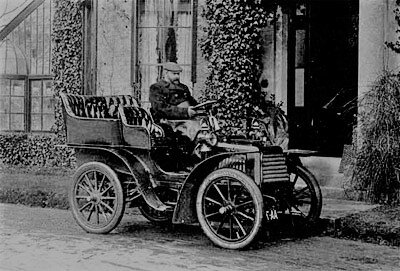
Panhard et Levassor was the first French car manufacturer.
It was created by Emile Levassor and Louis - Rene Panar, owners of a small factory for the production of woodworking machines. Their automaker career began in 1889 - from the moment they acquired a two-cylinder motor license from Gottlieb Daimler. Two years after that, two crews who used this engine were presented to the general public.
Levassor experimented a lot with the layout of the car - he tried to place the engine behind, in the middle of the car. During these experiments, Panhard made a revolution by placing the engine in front of the car.
Thus, in 1891, Levassor proposed a car design that was still relevant for many years. It was he who, for the first time in automotive history, used a combination of rear-wheel drive and front engine layout in his cars.
The first Panhard et Levassor cars for sale began to be produced in 1892. Over time, the car went through numerous improvements and upgrades and was produced until 1898.
In 1894 - 1897, automobile competitions began to emerge. During the Paris-Bordeaux-Paris motor rally, the Panhard et Levassor car was the first to cover a huge distance for that time of 1,150 kilometers.
Before the beginning of World War II, the company produced expensive cars of the highest class.
For example, in the 30s, the Panhard Dynamic coupe was created. However, the demand on the market significantly changed, and the company shifted its attention to the production of economy-class cars.
In 1946, the company launched the Panhard Dyna, a revolutionary car for that time. He was a front wheel drive, and his body was made of aluminum.
However, despite all the innovations used, the overall level of Panhard car sales was low and in 1967 the company ceased to exist as a result of its takeover by the Citroen concern.
Big Two.
The French auto industry has given the world many glorious names. At different times, brands such as Delahaye, Facel Vega, Hotchkiss set the tone in the global automotive industry and were synonymous with prestige and luxury.
However, they all sunk into oblivion and remained a part of history, and now the heroes of the French automotive industry are completely different companies - the PSA Peugeot Citroen and Renault concerns.
Despite the fact that their creation dates back to the 19th century, they function and flourish in our time and let out truly French cars.
Renault.
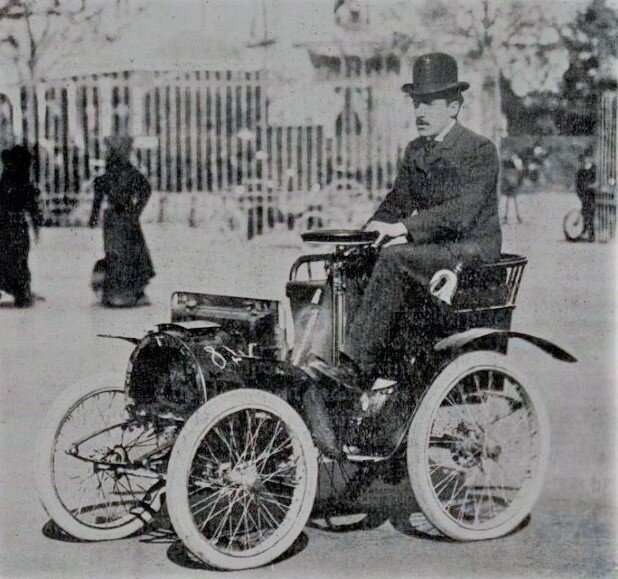
Renault was established in 1899 by Louis Renault. From early childhood he was interested in technology, and created his first car in 1898.
It was a light car, the motor of which developed only 0.75 horsepower.
Its release was followed by a second car, called the “Model A”. It was installed motor De Dion, whose power was 1.75 horsepower. Thanks to the successful design, the car began to be in demand, which served as the basis for the creation of the Renault company, which in 1899 produced and sold 15 such cars.
Beginning in 1900, Renault began producing larger machines and capacities. The model AG1, which was offered with different types of bodies, became the first-born of the new line of cars. It could be ordered in the form of a landau, a capuchin, a double phaeton and a closed limousine.
During World War I, the company changed its profile and supplied the French army with aircraft engines, tanks, ships and other equipment.
Despite the death in 1903 of Marcel Renault, brother of Louis, as a result of an unsuccessful performance in motor racing in the 30s of the last century, Renault cars could be more often seen at sports competitions as winners.
One of the most significant achievements for the car brand was the first journey through the Sahara Desert, which took place on a specially built for this six-wheel prototype in 1923.
The Second World War was a difficult test for the company.
Until 1940 she was one of the leading suppliers of the French army. However, after the occupation of France, she came under the control of the Germans and continued to work on the German army.
After the liberation of France, Louis Renault was accused of collaborating with Nazi Germany and arrested. He was put in Fren's prison, where he died on October 24, 1944, as a result of ill-treatment - a skull was broken into him.
Investigation of the death of Louis Reno by the French government was not conducted, the case was allowed to take its course, and in January 1945, Renault was nationalized and became state property.
In 1967, the heir to Louis, his son Jean-Louis Renault, received a small compensation from the French government for the nationalized company, but Louis himself has not been officially rehabilitated to this day.
Renault Company continues to successfully produce cars to this day.
In 1999, she became the owner of Dacia (Romania), the largest shareholder of Samsung Motors (South Korea) and the owner of a large stake in Nissan (Japan), which with the help of the French was brought out of a severe crisis.
The highest achievement of Renault in sport was the victories in 2005 and 2006 of the own team of Renault F1 in the individual competition in the Formula 1 Designer Cup.
During its existence, the company has produced many iconic cars that have become a reference point for the global automotive industry.
Among them:
- Renault 5 is the world's first supermini car
- Renault Espace - the first European minivan and many others.
- The company's cars received six times the first prize in the nomination European Car of the Year.
At one time, the founder of the company Louis Renault set a high bar for contemporaries. After all, its history is full of victories, prizes and recognition of motorists from around the world. And her ascension and development were not prevented by war, merger, destruction, or even the accusation of treason.
-------------------------------------------------------------------------------------------------
Thanks to every car-lover, who read this page till the end - I do honestly hope that this information helps you a little ! Come back as soon as possible. A lot of interesting things are coming soon.