On Russian see:
Иисус Христос родился 22 сентября 5 года до н.э.? Часть 1 (определение года Р.Х.)
Иисус Христос родился 22 сентября 5 года до н.э.? Часть 2, окончание (определение даты Р.Х.)
The New Testament contains the information which allows to find out real date of a birth of Jesus Christ. Many researchers tried to make it. I have own version. This version is stated in my book «Astro-Biblos» (Russia, St.Petersburg, 1996).Basing on facts that Zoroastrianism had influence on the Qumrans Scrolls of the Essenes (precursors of Christianity) and analyzing Gospels from this point of view, learning upon the ancient Zoroastrian calendar, I have established the real date of birth of Jesus Christ.
He was born on 21/22 September 5 BC.
There are sound reasons for believing that the Incarnation occurred near 5 BC. The first of these is calendrical. In AD 533 the Scythian monk Dionysius Exiguus ((Dennis the Small, Dennis the Dwarf, Dennis the Little or Dennis the Short,) fixed the beginning of the New Era (AD, Anno Domini) and thus our present system of year numbering by a process of back-dating, but he overlooked four years of the reign of Emperor Augustus.
Dionysius Exiguus (470-544 AD)
Secondly, Matthew and Luke agree that Jesus was born in Bethlehem while Herod was King. The death of Herod is well dated to mid-March – end May 4 BC by its proximity to the lunar eclipse of 4 BC March 13, and early sources seem agreed that Jesus was born not long before Herod died.
Herod the Great (73/74 BCE – 4 BCE)
We read in Wikipedia:
“Evidence for the 4 BCE date is provided by the fact that Herod's sons, between whom his kingdom was divided, dated their rule from 4 BCE,[42] and Archelaus
apparently also exercised royal authority during Herod's lifetime.[43] Josephus states that Philip the Tetrarch's death took place after a 37-year reign, in the 20th year of Tiberius (34 CE).[44] Josephus tells us that Herod died after a lunar eclipse.[45] He gives an account of events between this eclipse and his death, and between his death and Passover. A partial eclipse[46] took place on March 13, 4 BCE,[13] about 29 days before Passover, and this eclipse is usually taken to be the one referred to by Josephus.[36] There were however three other, total, eclipses around this time, and there are proponents of both 5 BCE[35]—with two total eclipses,[38][47] and 1 BCE.[13]”
However, the year of the death of the 4th BC is the most historically grounded and plausible.
***
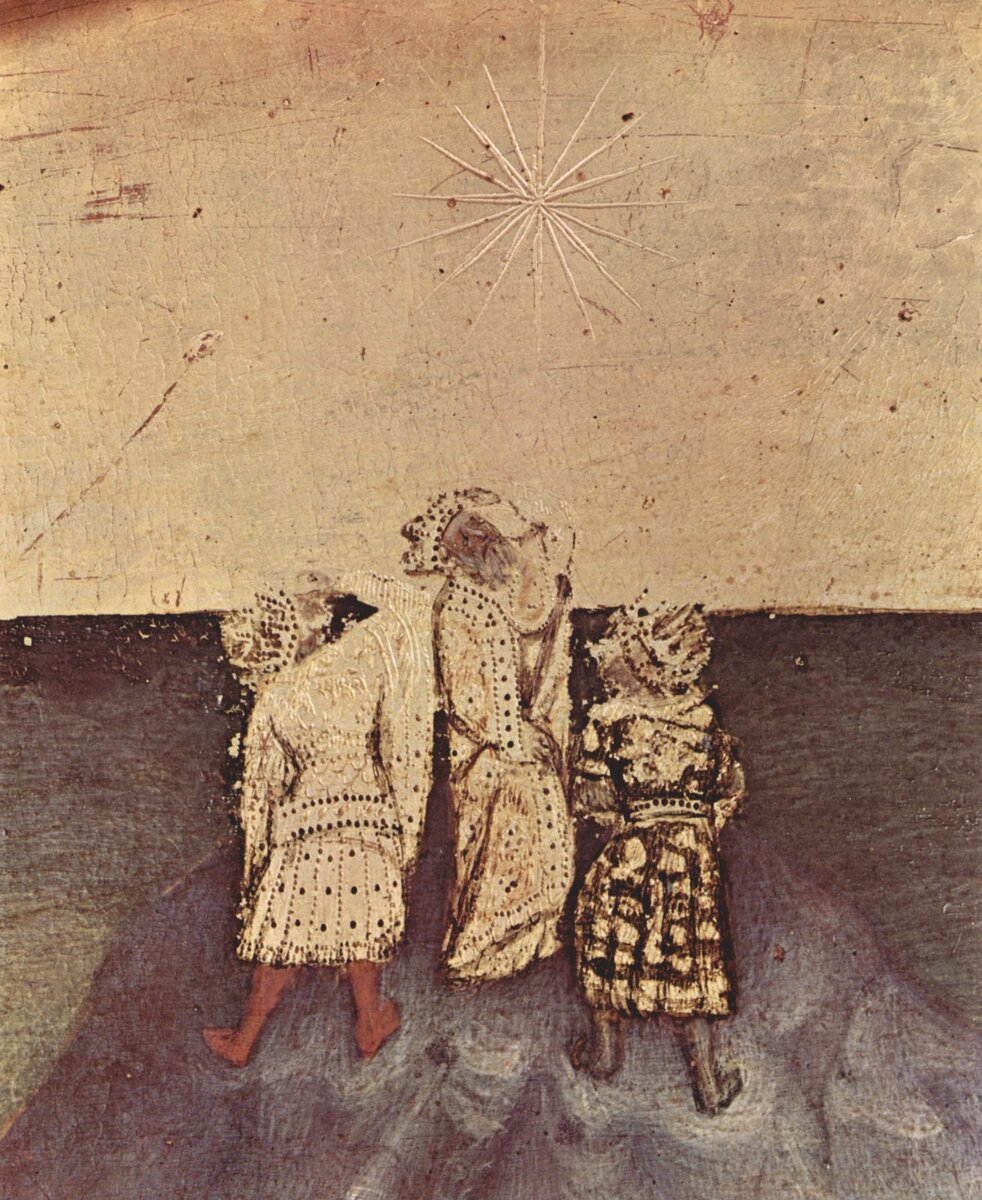
Of course, known versions of identification of the Star of Bethlehem with flashes of new stars or connections of the Jupiter and Saturn at last decade B.C. have been taken into account too. You can read about the Star of Bethlehem in «Quarterly Journal of the Royal Astronomical Society», 1977, v.18, p.443-449 (Clark, Parkinson, Stephenson. An Astronomical Re-Appraisal of the Star of Bethlehem – A Nova in 5 BC).
1. The Star of Bethlehem
We read in Wikipedia:
“In the Gospel of Matthew account, the Magi (usually translated as "wise men" but in this context probably meaning "astronomer" or "astrologer"[10]) arrive at the court of Herod in
Jerusalem and tell the king of a star which signifies the birth of the King of the Jews:
Now after Jesus was born in Bethlehem of Judea in the days of Herod the king, behold, wise men from the East came to Jerusalem, saying, Where is He who has been born King of the Jews? For we have seen His star in the East [or at its rising[11]] and have come to worship Him. When Herod the king heard this, he was troubled, and all Jerusalem with him. And when he had gathered all the chief priests and scribes of the people together, he inquired of them where the Christ was to be born.[12]
Herod is "troubled", not because of the appearance of the star, but because the magi (magus – B.R.) have told him that a "king of the Jews" had been born,[13] which he understands to refer to the Messiah, a leader of the Jewish people whose coming was believed to be foretold in scripture. So he askes his advisors where the Messiah would be born.[14] They answer Bethlehem, birthplace of King David, and quote the prophet Micah.[nb 2] The king passes this
information along to the magi.[15]
Then Herod, when he had secretly called the wise men,determined from them what time the star appeared. And he sent themto Bethlehem and said, Go and search carefully for the young Child,and when you have found Him, bring back word to me, that I may come and worship Him also. When they heard the king, they departed; and behold, the star which they had seen in the East went before them, till it came and stood over where the young Child was. When they saw the star, they rejoiced with exceedingly great joy.[16]
Matthew's account suggests that the magi knew from the star that the "king of the Jews" had been born even before they arrived in Jerusalem. They present Jesus with gifts of gold, frankincense, and myrrh.[17] In a dream, they are warned not to return to Jerusalem, so they leave for their own country by another route.[18] When Herod realizes he has been tricked, he orders the execution of all male children in Bethlehem two years old and younger, based on the information the magi had given him concerning the time the star first appeared.[nb 3] Joseph, warned in a dream, takes his family to Egypt for their safety.[19] The Gospel links the escape to a verse from scripture, which it interprets as a prophecy: "Out of Egypt I called my son."[20] This was a reference to the departure of the Hebrews from Egypt under Moses, so the quote suggests that Matthew saw the life of Jesus as recapitulating the story of the Jewish people, with Judea representing Egypt and Herod standing in for pharaoh.[21] After Herod dies, Joseph and his family return from Egypt,[22] and settle in Nazareth in Galilee.[23] This is said to be a fulfillment of a prophecy ("He will be called a Nazorean," (NRSV)) for which no
scriptural reference is known.[nb 4]” Thus, of the four Evangelists only Matthew (II, 2-12) mentions the appearance of a star in connection with the birth of Jesus Christ. If this event described by Matthew in his gospel was an actual celestial phenomenon then it would almost certainly be mentioned in the astronomical records of the Far East where, at that time, observational astronomy far surpassed that in the Middle East and Europe.
We read in Wikipedia:
“In 1614, German astronomer Johannes Kepler determined that a series of three conjunctions of the planets Jupiter and Saturn occurred in the year 7 BC.[8] Although conjunctions were important in astrology, Kepler was not thinking in astrological terms. He argued (incorrectly) that a planetary conjunction could create a nova, which he linked to the Star of Bethlehem.[8] Modern calculations show that there was a gap of nearly a degree between the planets, so these conjunctions were not visually impressive.[35] An ancient almanac has been found in Babylon which covers the events of this period, but does not indicate that the conjunctions were of any special interest.[35] In the 20th century, Prof. Karlis Kaufmanis, an astronomer, argued that this was an astronomical event where Jupiter and Saturn were in a triple conjunction in the constellation Pisces.[36][37] Other writers suggest that the star was a comet.[35]
Halley's Comet was visible in 12 BC and another object, possibly a comet or nova, was seen by Chinese and Korean stargazers in about 5 BC.[35][38] This object was observed for over seventy days with no movement recorded.[35] Ancient writers described comets as "hanging over" specific cities, just as the Star of Bethlehem was said to have "stood over" the "place" where Jesus was (the town of Bethlehem).[39] However, this is generally thought
unlikely as in ancient times comets were generally seen as bad omens.[40]”
[35] Mark, Kidger. "Chinese and Babylonian
Observations"..
[38] Colin Humphreys, 'The Star of Bethlehem', in Science
and Christian Belief 5 (1995), 83–101
[39] Jenkins, R.M. (June 2004). "The Star of Bethlehem and
the Comet of AD 66". Journal of the British Astronomy Association
(114). pp. 336–43.
[40] Mark Kidger, Astronomical Enigmas: Life on Mars, the
Star of Bethlehem, and Other Milky Way Mysteries, (Johns Hopkins
University Press, 2005), page 61.
NEW STAR (NOVA) IN 5 BC
In 1977 English astronomers have accordingly examined the Far Eastern records for several years around this time. Between 10 BC and 13 AD they have found only two sightings of new stars (other named «nova»): David H.Clarc, John H.Parkinson, F.Richard stephenson.
“An Astronomical Re-Appraisal of the Star of Bethlehem – A
Nova in 5 BC” // Q. Jl R. astr. soc. 1977, 18, pp 443-449.
The first sighting is recorded in the Astronomical Treatise of the History of the Former Han Dynasty (the Ch’ien-han-shu):
«Second year of Ch’ien-p’ing reign period, second month [5 BC March 10 – April 7], a hui-hsing appeared at Ch’ien-niu for over 70 days».
The second sighting appears to have been made in Korea and is recorded in the History of the Three Kingdoms – Chronicle of Silla (Samguk Sagi):
«Fifty fourth year of Hyokkose Wang, second month, (day) chi-yu, a po-hsing appeared at Ho-ku».
English astronomers made big work for identification of these Far Eastern and Korean terms to present astronomical terms. They write:
«The asterisms of Ch’ien-niu and Ho-ku are only some 20 degree apart and these two records could either both be referring toa single nova somewhere in the region between these asterisms in the spring of 5 BC or they could be referring to a nova in 5 BC and a separate comet\nova in the same part of the sky in 4 BC. One item in Matthew’s account which may have a possible astronomical significans is the reference to the star’s position being ‘in the eastern sky’. The asterism Ch’ien-niu, centred 5 degree north of the ecliptic would rise 4.5 hours ahead of the Sun in 5 BC mid-March. Anova in the vicinity of Ch’ien-niu would be observable for an increasing period of a few hours each day prior to sunrise».
Neither Matthew nor the Far Eastern texts contain any direct evidence on the brightness of the star, although the period of visibility of the Chinese object would tend to suggest a fairly bright object at maximum. Novae generally have a rapid rise to maximum light followed by a much slower decline. They have a small range in absolute magnitude but a wide range in apparent magnitude is observed because of the different distance involved. A nova observed to decay by at least five magnitudes in seventy days would be classed as fast or moderately fast, so such an object could justifiably be classed as a typical nova (new star, not comet).
English astronomers explain, that the possibility of a bright object cannot be ruled out on the grounds that few people noticed it, for there are several later examples of super-novae (super-new star), e.g. that which produced the Crab nebula in AD 1054, which went unnoticed, or at least unrecorded outside of the Far East. In conclusions they write:
«The Star of Bethlehem was most likely to have been a bright nova (new star) recorded by the Chinese as appearing in the spring of 5 BC. The Korean report may be a complementary sighting of this nova or it may be referring to a separate event in the same part of the sky in 4 BC. In the Middle East at this time, only the most spectacular events would arouse sufficient interest to be recorded and we judge this star to have been in this category, thus making it
one of the earliest instances where a ‘new star’ has been recorded outside of the Far East. Many authors have tried to fix the date of the birth of Jesus Christ from the date of the appearance of the star. As much contemporary information went unrecorded at this time a post facto association may well have arisen linking the birth with the star’s appearance, rather than there being an inherent correlation. If there is such association then the birth probably took place within a year or so of the spring of 5 BC».
THE CONJUNCTIONS OF SATURN AND JUPITER IN 7 BC
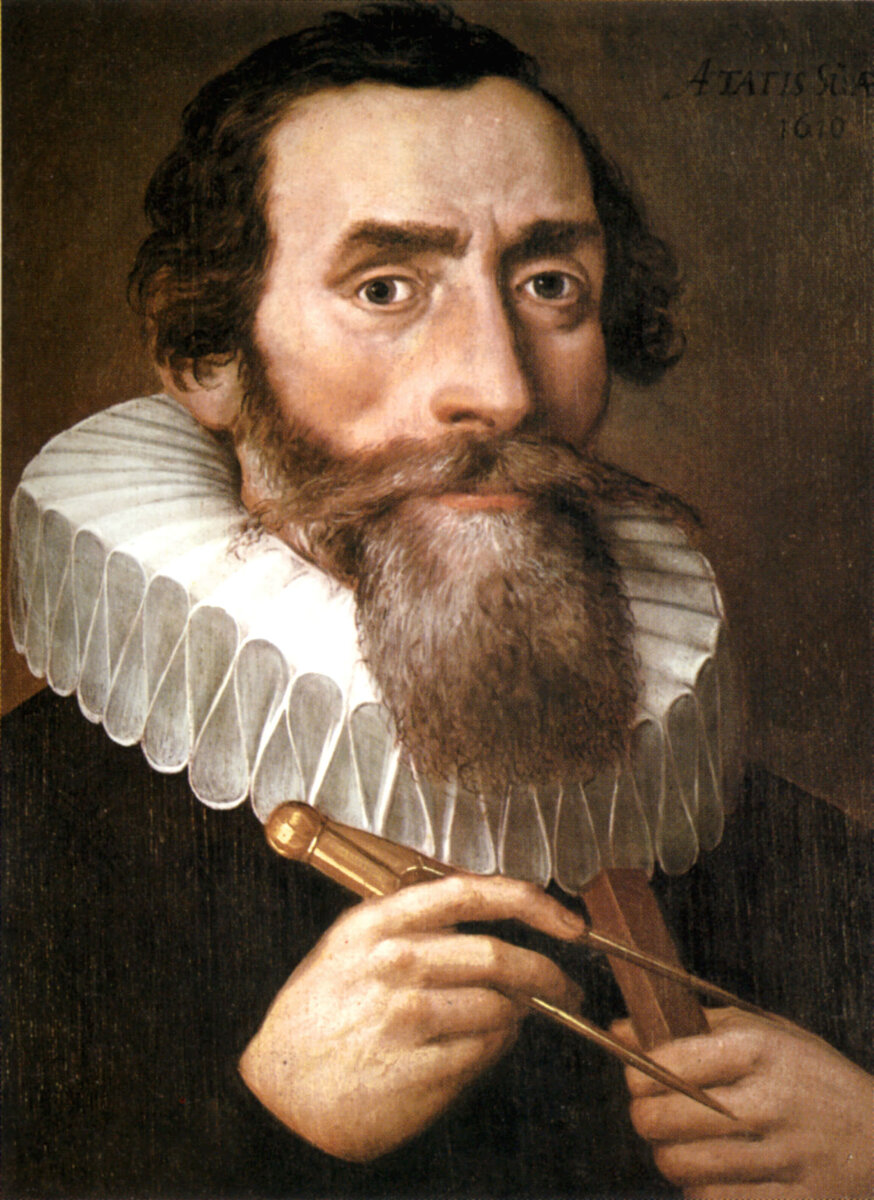
Johannes Kepler suggested (in XVII century) that the "star of Bethlehem" was nothing more than a triple conjunction of Jupiter and Saturn in 7 BC. This suggestion has been repeated by many subsequent authors. However, D.H. Clark, J.P. Parkinson and F.R. Stephenson in
1977 have calculated the separation of Jupiter and Saturn for 7 BC and 6 BC and they have found that the conjunctions had a minimum separation of 1 degree. Thus it is clear that the conjunctions in 7 BC were unspectacular, the planets never coming closer than approximately two apparent lunar diameters and so there is no possibility that the two planets could be close enough to appear to merge together to form a single, bright object.
2. Wise men of Matthew’s Gospel: Zoroastrian priests-astrologer
However astrologers and magi (Persian astrologers) of those centuries (1st BC – 1st AD) well knew laws of movement of planets and very attentively traced their conjunctions. These supervision were necessary for them for prelegends of destinies of tsars. For example, there is well known the Babylonian cuneiform almanac, containing predictions for the dates of equinox, solstices, and eclipses as well as giving the zodiacal sign for the planets. They named the Jupiter «Star of Kings» and Saturn «Planet of Israel». These planets incorporated in 7 BC in a zodiac sign of Pisces. This sign of the Zodiac is connected to secret events and religion. Hence, they could interpret this conjunction of the Jupiter and Saturn as a sign on a forthcoming birth of Tsar of Israel. Motives of secret and religion should accompany with this birth.
The Persian magus (zoroastrians) were in those days the most known and knowing in the East. Almost all researchers of the New Testament agree that the Gospel of Matthew tells about three Persian magus – zoroastrians.
Persian Zoroastrians attentively traced events in Palestine since in 539 BC the army of the Persian tsar Kir has entered Babylon. Tsar Kir has allowed to all peoples which have been
violently lodged in Mesopotamia by the Babylon tsars, to return to own countries and to restore the temples. The Persian tsars during century after that issued decrees about restoration of Jerusalem and the Temple. After these events Jews began to concern with sympathy to the Persians and it has made their susceptible to influence of Zoroastrianism. Zoroastrianism was the state religion of the Persians. Tsar Kir has been glorified by «the second Isaia» (the Jewish prophet) as the Messiah. Zoroastrianism almost two centuries rendered the big influence on Qumran Community of Essenes (precursors of Christianity) up to evangelical events. In detail about influence of Zoroastrianism on a history and ideology of Qumran Community of Essenes it is possible to read in the book of Dr. Igor R. Tantlevskij «The History and Ideology of the Qumran Community» and in many other books.
So, now we should not be surprise that the Persian astrologers (zoroastrians, «Wise men from the East») came to Jerusalem in 5 BC.
We can do not doubt, that in 7 BC they have calculated and observed a triple conjunction of Jupiter and Saturn. However, as these conjunctions were not absolutely exact, this fact could be interpreted by them as a sign on the future birth of Tsar-Messian. According to legends, Moses was born approximately one year later after similar a triple conjunction of Jupiter and Saturn.
In general in an antiquity representation it was widely «known», that at a birth of the great person in the sky the new bright star lights up. In «FiveBook» of Moses there is a direct indication on a kind of a heavenly sign which will appear at a birth of the Messiah; this is prophecy of Balaam:
«I see Him, but nowadays still is not present; I see Him, but not close. The star from Jacob ascends...» (Numbers, 24:17).
GOSPEL OF MATTHEW (II, 1-18)
«Now when Jesus was born in Bethlehem of Judaea in the ays of Herod the king, behold, Wise-men from the east came to Jerusalem, saying, Where is He that is born King of the Jews? For we saw His star in the east, and are come to worship Him. And when Herod the king heard it, he was troubled, and all Jerusalem with him. And gathering together all the chief priests and scribes of the people, he inquired of them where the Christ should be born. And they said unto him, in Bethlehem of Judaea: for thus it is written through the prophet,
And thou Bethlehem, land of Judah,
Art in no wise least among the princes of Judah:
For out of thee shall come forth a governor,
Who shall be shepherd of my people Israel.
Then Herod privacy called the Wise-men, and learned of them exactly what time the star appeared. And he sent them toBethlehem, and said, Go and search out exactly concerning the
young child; and when you have found Him, bring me word, that I also may come and worship Him. And they, having heard the king, went their way; and lo, the star, which they saw in the east, went before them, till it came and stood over where the young Child was.And when they saw the star, they rejoiced with exceeding great joy.And they came into the house and saw the young Child with Mary His mother; and they fell down and worshipped Him; and opening their treasures they offered unto Him gifts, gold and frankincense and myrrh. And being warned of God in a dream that they should not return to Herod, they departed into their own country another way.
Now when they were departed, behold, an angel of the Lord appeared to Joseph in a dream, saying, Arise and take the young Child and his mother, and flee into Egypt, and be thou there until I tell thee: for Herod will seek the young Child to destroy Him. And he arose and took the young Child and his mother by night, and departed into Egypt; and was there until the death of Herod: that it might be fulfilled which was spoken by the Lord through the prophet, saying, Out of Egypt did I call my Son.
Then Herod, when he saw that he was mocked of the Wisemen, was exceeding wroth, and sent forth, and slew all the male children that were in Bethlehem, and in all the borders thereof, from two years old and under, according to the time which he had exactly learned of the Wise-men. Then was fulfilled that which was spoken through Jeremiah the prophet, saying,
A voice was heard in Ramah,
Weeping and great mourning,
Rachel weeping for her children;
And she would not be comforted, because they are not».
***
«… from two years old and under, according to the time which he had exactly learned of the Wise-men».
Why Herod has ordered to kill all babies FROM TWO OLD AND UNDER?
Now we understand, that Wise-men came in Jerusalem not earlier than spring of 5 BC and have told to him (to Herod) as about a heavenly sign of 7 BC (the conjunction of Jupiter and Saturn), so and about a new star which has led up them to Jerusalem. Herod has ordered to kill all babies from two years old and under «just in case».
In the massacre of new born babies of Bethlehem so familiar to us through the Nativity story, King Herod is portrayed as a tyrant prepared to kill infants who could eventually challenge him.
However the historical evidence for the event is only Biblical and in fact only one verse in Matthew mentions it. The event is notably absent from the other gospels.
It seems difficult to imagine such a massacre was not entioned by Josephus a first century historian who described other events in Herod's life. One could be a sceptical of Matthew's account of a massacre of infants.
In fact, demographic clues from first century Palestine reveal that Bethlehem was a small village, with a population between three hundred and a thousand. Experts estimate that, at any
given time, the number of babies under the age of two would be only between seven and twenty. So numbers alone may be the reason why Josephus does not mention the murders.
We read in Wikipedia too:
“Although consistent with other documented actions of King
Herod the massacre cannot be positively verified outside of the
biblical source. Based on the sole Biblical source, it could be
estimated that the number of infants killed at the time in Bethlehem,
a town with a total population of about 1000, would be about
twenty.[8][9] ”
[8] Donald A. Hagner, World Biblical Commentary, Matthew 1-13, page 37.
[9] Raymond Brown’s Birth of the Messiah
ASTROLOGICAL CALCULATIONS
Thus, Zoroastrian priest-astrologers (Wise-men) came in Jerusalem not earlier than spring of 5 BC. Whether we can specify the date of these events? Yes, we can. I shall remind, that English astronomers have precisely established heavenly coordinates of the Star of Bethlehem (new star): 7-th degree of zodiac sign Capricorn. Astronomical calculations confirm, that by spring of 5-th BC its bright light could be observed in Persia (and as a whole in the East) low above horizon, before sunrise. However, how this star could lead up them from Jerusalem to Bethlehem?
« … the star, which they saw in the east, went before them, till it came and stood over where the young Child was. And when they saw the star, they rejoiced with exceeding great joy».
Bethlehem it is located precisely on the south from Jerusalem, approximately at three o'clock walking from it. Simple astronomical calculations show, that the new star could be visible from Jerusalem in the south right after a sunset in the autumn of 5 BC, in September and October. This star ascended after a sunset and rose low above horizon right after a sunset and approximately in three hours this star disappeared (fell) for a line of horizon. In November this star ascended above horizon at late night and not on the south from Jerusalem, and in December this star ascended above horizon only in the afternoon. Thus, in December and the next months the star could not be visible at all.
Hence, if Wise-men came in Jerusalem in September or in October of 5 BC, only in this case they could see in the evening (right after a sunset) in the sky precisely in the south the guiding star. Hence, they could go behind it on the south from Jerusalem and the star «has led up» them into Bethlehem and has gone down horizon («has stopped») above that house, where the young Child was.
***
So, the Star of Bethlehem – new star – has flashed and shone before sunrise in the East in the spring of 5 BC during seventy days. Zoroastrian astrologers (also they were Zoroastrian priests) have apprehended this heavenly sign as the second sign of a soon birth of the Jewish Tsar-Messiah about which two years earlier there was announced to them also by a triple conjunction of Jupiter and Saturn in zodiac sign of Pisces (in 7 BC, May, October, December).
According to legends, Moses was born approximately one year later after similar a triple conjunction of Jupiter and Saturn. Wise-men waited for occurrence of the new star predicted by the Jewish prophets and they have seen this star a year and two – three months later, after December 7 BC. Probably, in the summer of 5 BC they start go to a way from Persia to Jerusalem (1500-2000 km) and arrive there in September or October of 5 BC. At this time of year the new star ascends in the evening after a sunset on a direction precisely on the south off Jerusalem (laws of heavenly mechanics).
The further events are described in Gospel of Matthew. Probably, Wise-men have told Herod as about a triple conjunction of Jupiter and Saturn, had a place two years ago, so and about flash of a new star. That is why Herod has ordered to kill in Bethlehem all babies FROM TWO YEARS OLD AND UNDER (7BC-5BC=2). Hardly pious zoroastrian priests could foresee this massacre.
Evangelist Matthew is exact and any «symbolism» is not present in his story! All evangelists described real events. Only our ignorance or our disbelief prevents us to understand sometimes all power and the truth of the Gospels.
3. Zoroastrinism and the essenes in nearest environment of Jesus Christ.
When was He born?
«Zoroastrianism is the oldest of the revealed worldreligions, and it has probably had more influence on mankind, directly and indirectly, than any other single faith.» – Mary Boyce, Zoroastrians: Their Religious Beliefs and Practices (London: Routledge and Kegan Paul, 1979, p. 1)
«Zoroaster was thus the first to teach the doctrines of an individual judgment, Heaven and Hell, the future resurrection of the body, the general Last Judgment, and life everlasting for the reunited soul and body. These doctrines were to become familiar articles of faith to much of mankind, through borrowings by Judaism, Christianity and Islam; yet it is in Zoroastrianism itself that they have their fullest logical coherence....» – Mary Boyce, Op. Cit. p. 29.
Attentive studying and comparison of Qumrans Scrolls with Gospels has led some scientists to a conclusion that many personnels near around Jesus Christ were close to the essenes (not essenes, but sympathizing them). John Baptist's parents, Jesus Christ's parents
(Joseph and Maria), old man Simeon, apostles John and Andrey (John Baptist's pupils) – all of them well knew the doctrine of essenes and sympathized with them.
The majority of scientists agree that John Baptist has been brought up in a community of essenes in Qumran. By the way, he christened people in Jordan all in several kilometers from Qumran. Probably, apostle Nathanael (Bartholomey) was essene too.
In 31 BC strong earthquake has destroyed Qumran monastery (settlement of essenes) and they were settled in other places, including in cities. All pains and malignity of new life and madness of Herod they counted as attributes of last «convulsions» of a satan before arrival of the long-awaited Messiah. Sympathizing essenes, but not entering directly in their community («State of white clothes»), named himself «looking for the consolation of Israel» or «righteous» (for example, Luke II, 25). Above I have listed those personnels which are named so in the Gospels.
Many scientists consider also, that words from John's gospel «He came to his own, and those who were his own did not receive him» (John I, 11) mean, that Jesus Christ in the beginning of His Way came in a community of essenes, which «did not receive him».
Above I told about what strong influence Zoroastrianism rendered on Jewish mysticism of last centuries BC and (especial) on ideology of a community of essenes. I shall add to this, that among Qumran Scrolls are some astrological texts which testify that the astrology of the Zoroastrian sense was used by leaders and heads of a community for definition of character of people (members of a community) and for the decision of «personnel questions», and also for forecastings. By the way, Joseph Flavy in «Judaic antiquities» tells that certain essene by name Menahem has predicted to the
young Herod that he will be tsar.
Thus, we have all bases to believe, that some mysterious lines of the Gospels can be understood with the help of studying ancient Zoroastrian texts. It concerns, in particular, words of the gospel of Luke about archangel Gabriel who has announced at first to old priest named Zacharias (father of John Baptist) the future birth of the son, and in six month to youthful Maria about Jesus Christ's future birth (Luke, I, 11-20, 26-38).
Above I told that the most probable real time of a birth of Jesus Christ is September – October of 5 BC. A name of an angel of the Lord – Gabriel – will allow us to find out through studying ancient Zoroastrian calendar, that most probable real date of a birth of Jesus Christ – on September, 22 of 5 BC …
Not pressing in specific details which can tire some readers, I shall tell only, that ancient Zoroastrian calendar begins always in day of a spring equinox and marks every month and every day by names of Zoroastrian angels of the Lord. It has allowed me to calculate, that Maria's lady day has taken place on December, 21. Adding to this date the standard (usual) period of pregnancy, we calculate, that Jesus Christ should be born about September, 21-22 (the next year).
Earlier we have calculated with the help of astronomical calculations of English astronomers, that Zoroastrian priests-astrologers (Wise-men) came in Jerusalem and then in Bethlehem in September or in October (5 BC). Summarizing all these data, we can assert(approve), that most probable real date of a birth of Jesus Christ is September, 22 of 5 BC.
IN ADDITION
"When Was Jesus Christ Born?" by Mario Seiglie («The Good News», 1997 January/February – Volume 2, Number 1)
<…>
The census described by Luke
Other evidence arguing against a December birth of Jesus is the Roman census recorded by Luke.
«And it came to pass in those days that a decree went out from Caesar Augustus that all the world should be registered... So all went to be registered, everyone to his own city. Joseph also went up from Galilee, out of the city of Nazareth, into Judea, to the city of David, which is called Bethlehem..., to be registered with Mary, his betrothed wife, who was with child. So it was, that while they were there, the days were completed for her to be delivered. And she
brought forth her firstborn Son...» (Luke 2:1-7).
The Roman rulers knew that taking a census in winter would have been impractical and unpopular. Generally a census would take place after the harvest season, around September or October, when it would not seriously affect the economy, the weather was good and the roads were still dry enough to allow easy travel. According to the normal dates for the census, this would probably be the season of Christ's birth.
One author states that this census «could hardly have been at that season (December 25), however, for such a time would surely not have been chosen by the authorities for a public enrollment, which necessitated the population's traveling from all parts to their natal districts, storms and rain making journeys both unsafe and unpleasant in winter, except in specially favorable years» («Christmas at Bethlehem,» Holy-Days and Holidays, Cunningham Geikie).
Luke's account of the census argues strongly against a December date for Christ's birth. For such an agrarian society, an autumn post-harvest census was much more likely.
<…>
The birth of John the Baptist
We can find still more biblical evidence against a December birth of Christ. John the Baptist was born six months before the birth of his cousin Jesus. Just before Mary miraculously conceived Jesus, the angel said to her: «The Holy Spirit will come upon you, and the power of the Highest will overshadow you; therefore, also, that Holy One who is to be born will be called the Son of God. Now indeed, Elizabeth your relative has also conceived a son in her old age; and
this is now the sixth month for her who was called barren» (Luke 1:35-36).
If we can determine when John was born, then six months later we will come to the approximate date of Christ's birth. Can we find evidence indicating the time of John's birth?
The Bible mentions that Elizabeth conceived shortly after her husband, the priest Zacharias, had finished serving his course at the temple, called «the division of Abijah» (Luke 1:5,8). This was six months before Mary became pregnant with Jesus. Back in King David's day, the priestly course had been separated into 24 turns, or divisions (1 Chronicles 24:7-19). These began in the first month (1Chronicles 27:2), March or April of our modern calendar, and, according to Talmudic and Qumran sources, rotated every week until they reached the end of the sixth month, when the cycle was repeated (beginning in September-October) until the end of the year.
During the festival season, all the priests would come to the temple to serve. Luke shows us that Zacharias' service was not during a feast season, since it was the division of Abijah that was in charge of the temple, and Zacharias was chosen to present the incense offering.
The division of Abijah was the eighth division, or shift,
which normally would take place close to three months after the start of the cycle in March-April. This would place Elizabeth's conception around June or, if it was Zacharias' second yearly turn, around December.
The Bible does not specify which of the two shifts it was. Regardless, nine months after one of the two dates John the Baptist was born. This would place his birth in March or September. Six months later, Jesus' birth would have been around September or the following March. Whichever way it occurred, according to the time of the division of Abijah, a December birth for Christ is out of the question.
***********************************************
Thus, JESUS CHRIST WAS BORN ON 21\22 SEPTEMBER (September 23\24 on the Julian calendar) 5 BC.
***********************************
Note: in my earlier publications (1995-1996), the date of birth of Jesus Christ was defined as September 21 (23 Julian calendar), Saturday. Now this date has been refined using more modern computer programs: Friday, September 22 (24 on the Julian calendar), 5, BC