Manet's work marked a milestone in the selection of themes presented in European painting. Before him, painting usually favored the narrative and avoided the harsh realities of everyday life.
Edouard Manet was a French artist with. XIX, which served as an inspiration to many other later artists due to its style and manner of depiction. Manet opened up new paths, challenging traditional methods of presentation, choosing to draw events and circumstances of his time.
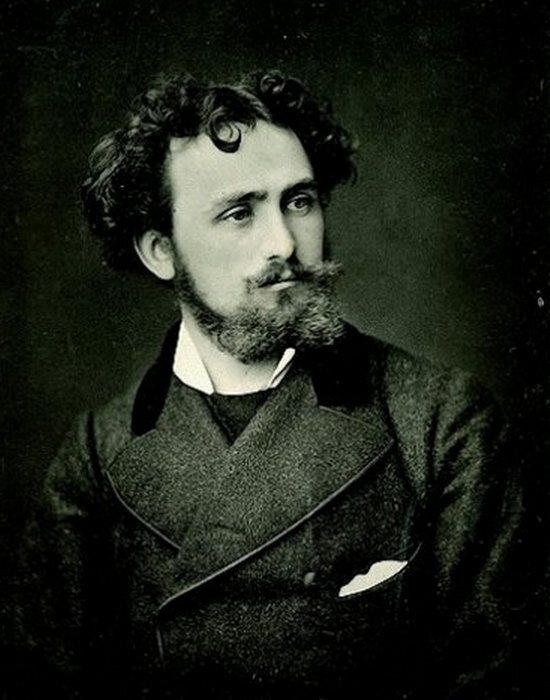
His painting, Déjeuner sur l'herbe (Lunch on the Grass), exhibited in the Hall of the Rejected in 1863, provoked hostility from critics. Although at the same time he received the applause and enthusiasm of a new generation of artists who would later become the core of the impressionist movement.
Early life
Edouard Manet was born on January 23, 1832, in Paris, France. He was the son of Auguste Manet, a senior official of the Department of Justice. His mother, Eugenie-Desiree Fournier, was the daughter of a diplomat and the godmother of the Swedish crown prince.
Rich and with many influential contacts, the couple expected their son to choose a worthy career and, as a preference, protection. However, the future would give Mane a humanistic career.
Since 1839, he attended Canon Poiloup School in Vaugirard. From 1844 to 1848, he remained at Rollen College. He was a poor student who was only interested in the special drawing course offered by the school.
Although his father wanted him to go to law school, Edward did not decide this fate. When his father refused to let him become an artist, he applied for admission to the naval college but did not pass the entrance exam.
At 16, he went as a student pilot on a transport ship. On his return to France on June 1849, he suspended the marine exam for the second time, and his parents finally succumbed to the stubborn determination of his son to become an artist.
The first formal classes of Mans
In 1850, Manet entered the workshop of the classical artist Thomas Couture. There he developed his good understanding of drawing and painting techniques.
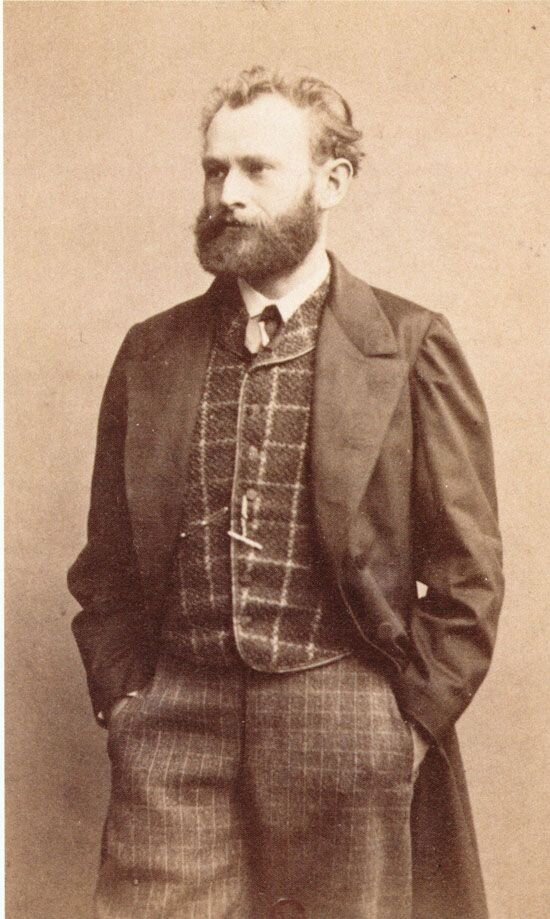
In 1856, after six years at Couture, Manet founded the studio where he lived with Albert de Ballet, a military artist. There he wrote The Boy with Cherry (1858) and then moved to another workshop in which he wrote Absinthe Drunk (1859).
In the same year he made short trips to the Netherlands, Germany, and Italy. Meanwhile, in the Louvre, he copied the paintings of Tiziano and Diego Velazquez.
Despite his success with realism, Manet began to approach a more relaxed and impressionistic style; characterized by the use of broad strokes and the inclusion in their paintings of ordinary people who were engaged in everyday activities.
His canvases were inhabited by singers, street people, gypsies and beggars. This unconventional approach, combined with the mature knowledge of the old masters, surprised some and impressed others.
Mature life and breakfast in the grass
Between 1862 and 1865, Manet participated in exhibitions organized by the Martine Gallery. In 1863, Manet married Suzanne Lenhoff, a Dutch woman who taught piano lessons. The couple had been in a relationship for ten years and had a common child before marriage.
In the same year, the jury rejected his Breakfast in the Grass, a work whose technique was completely revolutionary. For this reason, Manet exhibited it at the Salon de Los Rechazados, founded to exhibit many works rejected by the official Hall of Fine Arts.
"A good picture is true to itself." -Manet-
Breakfast on the grass was inspired by the work of former masters, such as Pastoral concert (Giorgione, 1510) or The Court of Paris (Raphael, 1517-20). This great canvas aroused great disapproval and became for Manet “the notoriety of carnival,” for which he suffered most of his career.
His critics were offended by the presence of a naked woman in the company of two young people dressed in modern clothes. Thus, instead of looking like a distant allegorical figure, the modernity of women made her nakedness seem vulgar and even menacing.
Critics were also annoyed by the way these figures were presented in a harsh and impersonal light. Also, they did not understand why the numbers were located in a forest environment, the prospect of which is unrealistic.
Later years
In 1874, Manet was invited to exhibit at the first exhibition of impressionist artists. Despite his support for the movement, he declined the invitation and subsequent ones that would come from the Impressionists.
Manet felt that it was necessary to remain faithful to the salon and its place in the art world. Like many of his paintings, Eduard Manet was a contradiction, being both bourgeois and ordinary, ordinary and radical.
"A man must be of his time and draw what he sees." -Manet-