Early years
Rembrandt was the fourth of 6 surviving children out of 10. Unlike many artists of his time, he did not come from a family of artists or artisans; his father, Harmen Gerritsun van Rijn (1568–1630), was a miller. His mother, Neltgen Willemsdochter van Zeitbrook (1568–1640), came from a family of bakers.
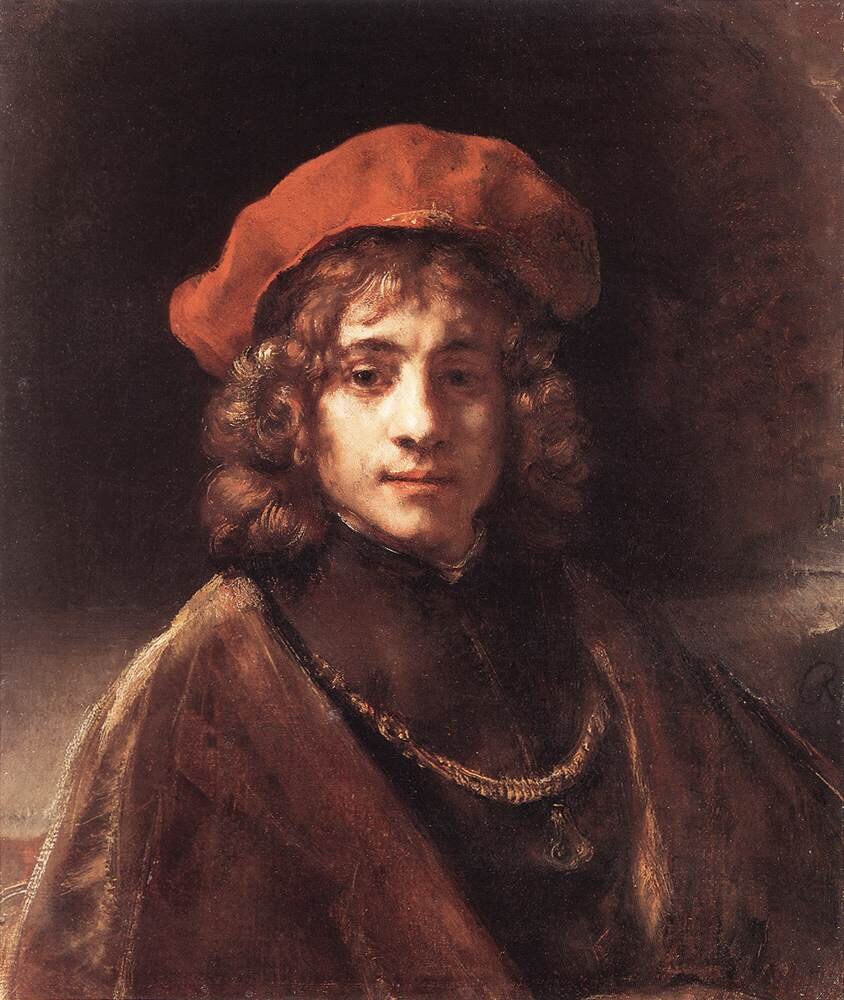
Rembrandt's first name was - and still is - extremely rare. This is akin to the more common Dutch names such as Remmert, Gerbrand and IJsbrand. How Rembrandt inscribed his name in his work - history! In his youth, he signed his work only with the RH monogram (Rembrandt Harmens, “son of Harmen”); from 1626/27, with RHL; and in 1632 with R.H.L. van Rijn (the letter L on the monogram, apparently, means Leiden, "from Leiden", the city in which he was born). At age 26, he began to sign his work only in his name, Rembrandt (ends the only int); from the beginning of 1633 until his death, he wrote down his name Rembrandt (with -dt) and signed his work in this way. It has been suggested that he began to use his name as his signature because he considered himself equal to the great artists of the 15th and 16th centuries; Michelangelo (Michelangelo Buonarroti), Titian (Tiziano Vecellio) and Rafael (Rafaello Sanzio) were also widely known by their names.
Like most Dutch children of that time, Rembrandt attended elementary school (c. 1612–16), after which from about 1616 to 1620 he attended a Latin school in Leiden, where biblical studies and classics were taught. The school’s emphasis on oratory skills may have contributed to his ability to “put” figures in the scenes depicted in his historical paintings, drawings, and etchings. It is not clear whether Rembrandt completed his studies at the Latin school. His first biographer, Jan Jansen Orders (1570–1646), provided a half-page laudatory biography of Rembrandt in his book “The Unscrapped Theater in Leiden” (1641; “Description of the City of Leiden”). There Orders wrote that Rembrandt was prematurely removed from school and, at his request, was sent to study as an artist. The fact that Rembrandt was enrolled at Leiden University on May 20, 1620, does not necessarily contradict this. Whether for tax reasons or simply because they attended a Latin school, Leyden boys often registered as students without participating in any lectures. Rembrandt’s degree of intellectual development and any possible impact that this could have on his work remain a matter of speculation.
From about 1620 to 1624/25, Rembrandt studied as an artist. As was often the case in his time, he had two masters. The first master of Rembrandt was the Leiden artist Jacob van Svanenburg (1571–1638), with whom, according to Orders, he remained for about three years. Van Swanenburg must have taught him the basic skills and transferred the knowledge necessary for the profession. He was a specialist in architectural exhibits and scenes of hell and the underworld, which required the ability to draw fire and reflect it on surrounding objects. At the time of Rembrandt, this skill was considered excellent and demanding. Rembrandt's early acquaintance with this type of graphic problem may lie at the heart of his constant interest in the effects of light.
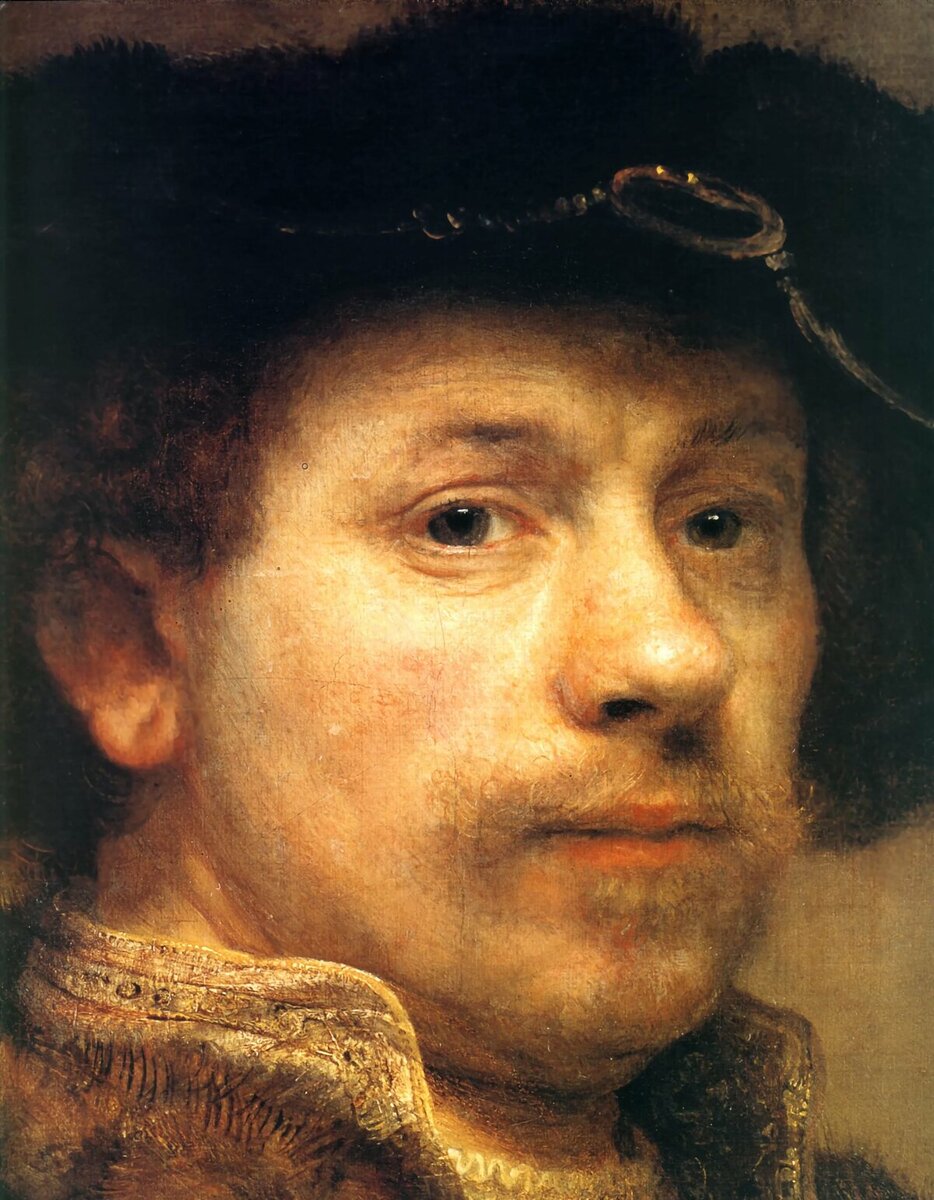
Rembrandt's second teacher, Peter Lastman (1583–1633), lived in Amsterdam. According to Orders, Rembrandt stayed with him for six months. Working with Lastman, who at that time was well known as a historian, was supposed to help Rembrandt gain the knowledge and skills necessary to master this genre. Historical painting included the placement of various figures from biblical, historical, mythological or allegorical scenes in difficult conditions. In the hierarchy of various genres of the 17th century, historical painting occupied the highest position, since it required full possession of all objects, from landscape to architecture, from animals to, above all, a human figure, in a wide range of poses, expressions, and costumes. One Rembrandt biographer, Arnold Hubraken (1660–1719), mentions another Amsterdam history artist, Jacob Pinas (c. 1585–1650), as one of Rembrandt’s teachers. (In 1718, Hubraken wrote the most extensive early biography and characterization of Rembrandt as an artist.
Based on stylistic arguments, it can be assumed that Jan Leavens (1607–1674) may have had an influence on Rembrandt during his training. Lawrence, a year younger than Rembrandt by the time Rembrandt decided to become an artist, was already a full-fledged artist. Although scientists probably only know that Rembrandt and Leavens worked closely for several years after Rembrandt returned to Leiden around 1625, after his training with Lastman, the contacts between the two Leiden boys could have begun earlier. However, no traces of Rembrandt's student exercises were preserved.
To be continued!