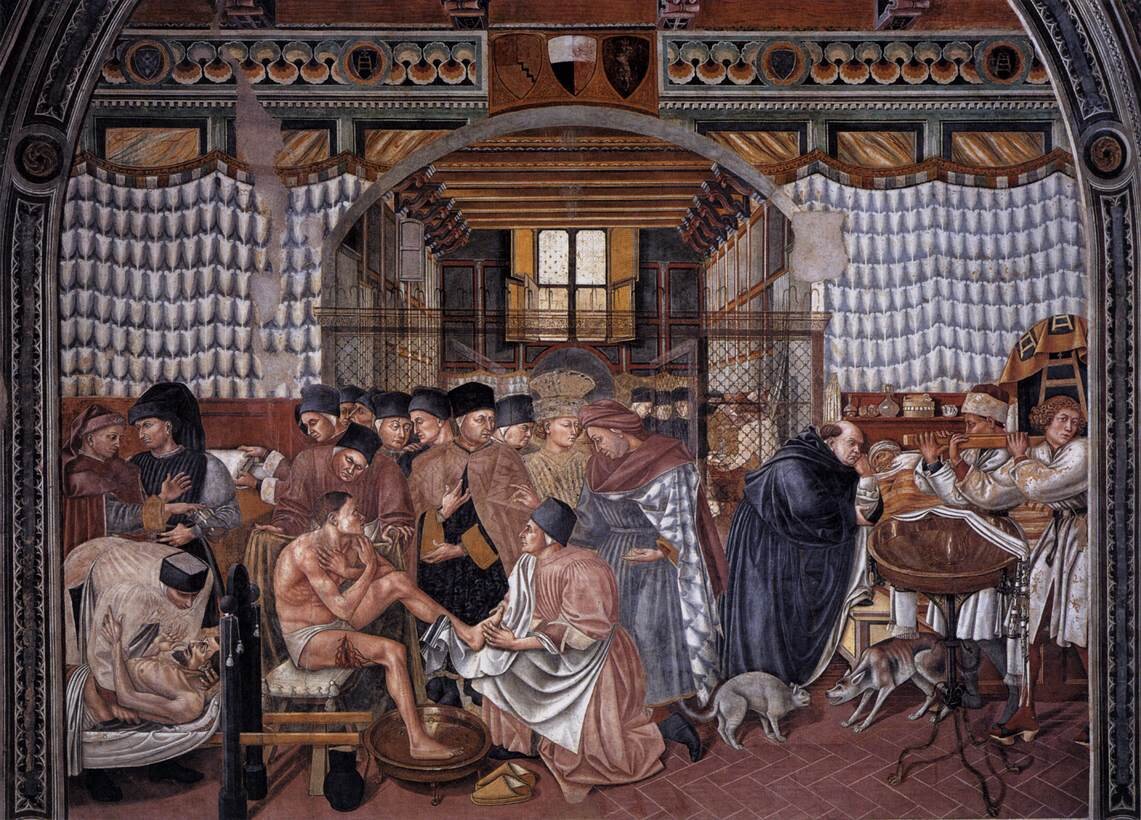
Third, hospitalization was not completely free. The wounded who had money and valuables were expected to make donations. Those who did not have the funds went out to collect alms in the vicinity of the hospital. And the poor, but proud... well, they fasted a little more often than they were supposed to, according to the church calendar.
Doctors
In the Middle Ages, there were also doctors. The real doctors are doctors of medicine, who received a university degree. People are very proud, rich, noble, often knighted. And, perhaps, the least useful among all varieties of doctors.
It is not that the doctor of the Middle Ages did not know how to do anything. He could do something: for example, it was at universities that the best fencing schools were formed... But he could not treat. The worst thing was that the doctor himself did not know this. And treated. Ruthlessly.
The only effect was the scientific approach to treatment introduced by the Greeks. But they have made very little progress in understanding the structure of the human body. The ideas of ancient doctors about the nature of diseases and functions of organs were the most foolish. Only in the 2nd century AD, Galen established, for example, that a man thinks not with his heart, but with his brain, and that blood and not "life force" move along the arteries. And he assumed that the lungs serve to cool the heart.
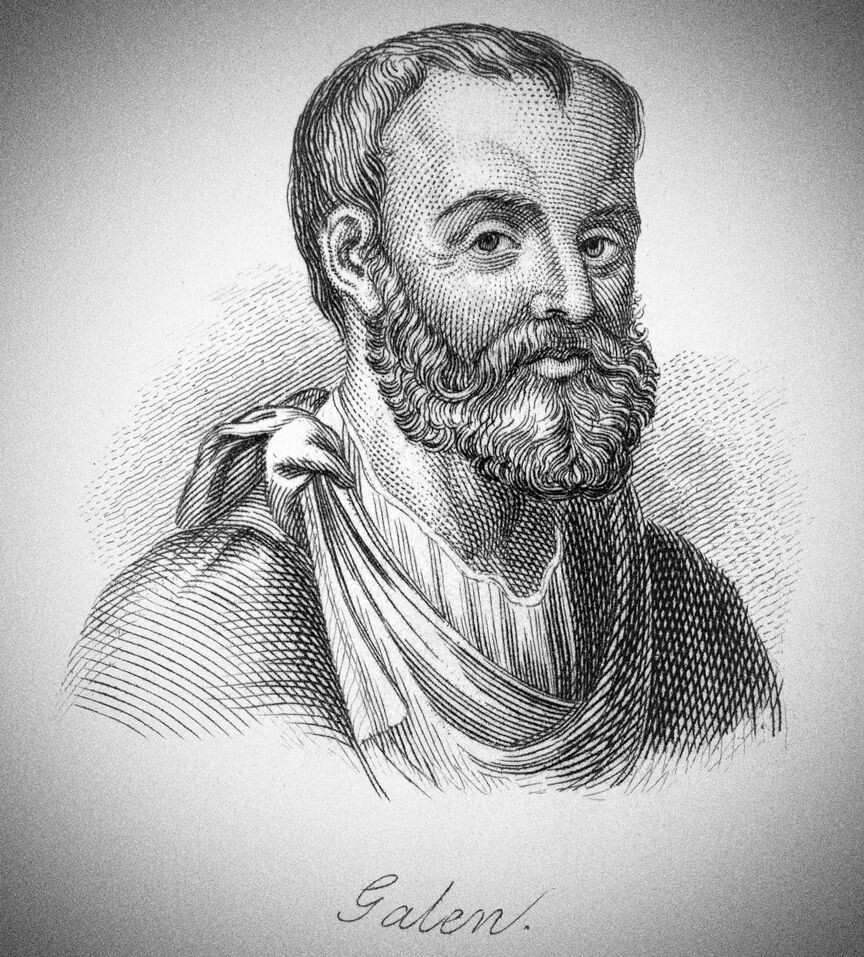
But Galen also based his ideas about physiology on the interaction of the four "primary fluids of the human body": blood, phlegm (mucus), black and yellow bile.
In the Middle Ages, the scientific approach was replaced by a scholastic one. The doctor was forbidden to make his own observations and conclusions. He only memorized the misconceptions of Roman time, which had been turned into a dogma. To explain what "similarity" is easiest by example. Until the 17th century, it was common in Europe to think that flies had 8 legs. For so Aristotle himself wrote. Trusting not the wisdom of the ancients, but your own eyes then were considered a dangerous delusion.
The physician, armed with such knowledge, was very dangerous. He tried to fix a mechanism he had no idea about. Thus, bloodletting seemed to bring a quick and guaranteed relief: the delirious patient calms down and falls asleep. But in fact, they only weakened the body, facilitating and accelerating the patient's transition to a better world. By promoting bloodletting as a generally useful hygienic procedure, doctors caused great harm.
It was in the Middle and New Ages that religion, magic, astrology, and alchemy began to exert great influence on medicine. Even in the 16th century, Paracelsus considered effective means of treating prayers, conspiracies and horoscopes that suggest what kind of metal the patient's body needs. Some were unlucky: mercury fell out.
In ancient times, doctors coped with at least surgery. After all, simple barbers were just butchers. Often, their knives needlessly cut through muscles, nerves and blood vessels, pierced vital organs. The doctor knew the anatomy. His operations were much safer. But the medieval escapes did not do the surgeries. And it is correct because he could only study anatomy theoretically - by the works of Galen. The Church banned autopsies of corpses.
The weakest point of medieval surgery was the inability of doctors to prevent the penetration of infection into the wound. The incision was washed only from visible dirt and only wine, which, unlike vodka, can not destroy the infection. Without knowing anything about the microorganisms, doctors did not even wash their hands before the operation.
Even if they washed ...Gangrene, which can only be countered with antibiotics, remained the scourge of the wounded until the 1940s. Even such a steep measure as scalding the wound with boiling water did not guarantee against infection.
In the case of gangrenous inflammation, hope for salvation left only urgent amputation. But in the Middle Ages and this chance was ghostly. As a rule, during serious surgeries, the patient either died of painful shock or was bleeding out. Anesthesia was then performed with a bottle of strong wine (inside) or a wooden hammer (outside). The ideas of blood circulation at that time were so vague that the tourniquet did not overlap.
In the 15th century, physicians faced the task of healing gunshot wounds, which were more severe than those that surgeons had to meet before. The fact is that the damage from the round lead bullet is crushing in character. But it is also penetrating.
A piece of lead flying at high speed did not cut through but flattened and torn the tissue. In addition, the bullet injected deep into the wound fragments of the shell, fragments of clothing, fibers from gambeson stuffing. If the shot was fired at close range, it was worth looking for wadding in the wound. The conditions for gangrene formation were ideal.
Whatever you say, technological civilization has its advantages.