Post-industrial economics
The Communists considered capitalism to be a necessary but temporary formation to be followed by a bright future. Accordingly, their opponents insisted that capitalism was the final state of society, followed by nothing! But "nothing" in its purest form could not even be imagined by fantasists. Even after capitalism, something - for example, piles of broken bricks and foggy barbarians with machine guns - should have remained. But communism is a thing of the past, and civilization continues to exist, despite the fact that its collapse seemed natural and inevitable only recently.
Post-industrial economy
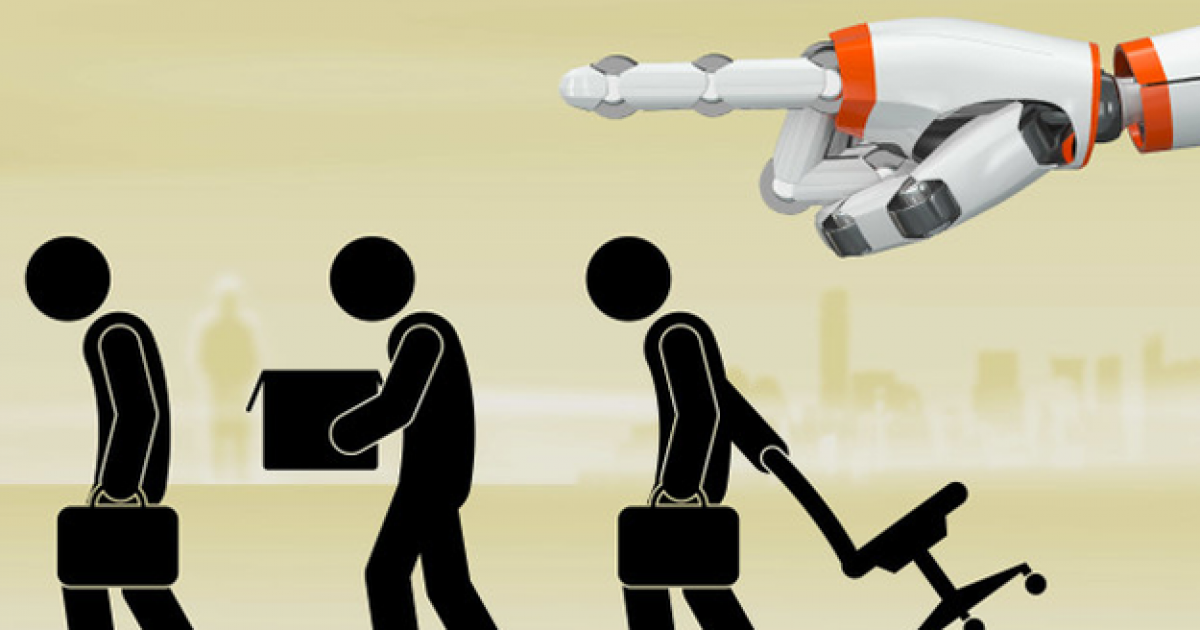
Having noticed a certain tendency of development, fantasists and futurologists try to extrapolate it into the future and see how it ends. Since the middle of the last century, production has required fewer and fewer hands, which should have led to more and angrier proletarians with plenty of free time.
The question of what to do with the freed labor force, fantasists offered various answers. The answers ranged from relatively humane to putting people's minds in the Matrix and turning bodies into batteries to obviously barbaric: teaching everyone to write poetry and completely incapable read other people's poems. In fact, everything is simple and boring. It turned out that in the transition to the post-industrial phase, extra hands are absorbed by the service sector.
Reality has safely gone forward, into the unknown, and now even poorly imagined where it came to be. Marketing costs exceeded production costs. Money is born and disappears in the whirlwinds of the stock exchange and banking magic. Virtual cryptocurrencies turn out to be more reliable than supposedly "real" currencies...
Fantastic is backward and confusedly wandering around the last century. Galactic Empires old-fashionedly continue to fight for resources as in the old days. And in particularly difficult cases - even for the living space
Information technology

The Internet, personal computers and cellular communication are the clearest examples of the complete failure of futurology. But in another sense: predictions were not bold enough. Scientists and writers alike, trying to paint breathtaking pictures of the future, did not foresee anything like this.
Computers - giant, ultra-complicated, often intelligent - were, of course, given a huge role. They seemed necessary in laboratories, in headquarters, on spacecraft. But not in apartments and pockets - not for games and idle chatter! Not to answer the nickname "Google" or "Siri" and give reasonable answers to stupid questions. Even in the 1980s, when it was too late to foresee, fantasists still couldn't imagine how much and too deeply new inventions would change our lives.
As a result, humanity faced a new - virtual - reality that was completely unprepared. And the cultural shock was so great that even to this day on the Web a lot of things are still not forbidden. Although it is not for long. Society cannot and will not tolerate the uncontrolled dissemination of content that is politically incorrect, ideologically immature, incendiary, humiliating, justifying, propagandizing, insulting feelings and not recommended for reading by persons who are not yet able to read!
Flying machines
Filling the sky above the cities with airships, ornithopters, helicopters and, finally, anti-gravity flyers have been an indispensable attribute of the future world for more than a century. But no progress in this direction is noticeable. The flying car is not created, and prospects of the major element of "beautiful far away" seem doubtful.
And it's not because you can't create it. Easy to operate, economical, affordable (only three to four times as expensive as a conventional car of equal weight), the take-off and landing machine can be built vertically. Possessing all the above qualities, the gyroplane with a "jump" appeared in 1942. Of course, the primitive devices of the 1940s had a number of drawbacks. In particular, they were not equipped with air conditioning, music center, electric window lifters, and helm heating. But revision wouldn't be a problem if somebody took on the work to do it.
Fantasts did not take into account another factor. Air transport will always be harder, more voracious, more expensive and more dangerous than ground transport. Yes! It is more convenient... It will become. If the infrastructure intended for its operation - landing sites, parking lots, gas stations, washing, service stations, and finally, air-post service bases - will get the same development as the automobile one. Without all this, the flying machine loses to the ground one.
To be continued...