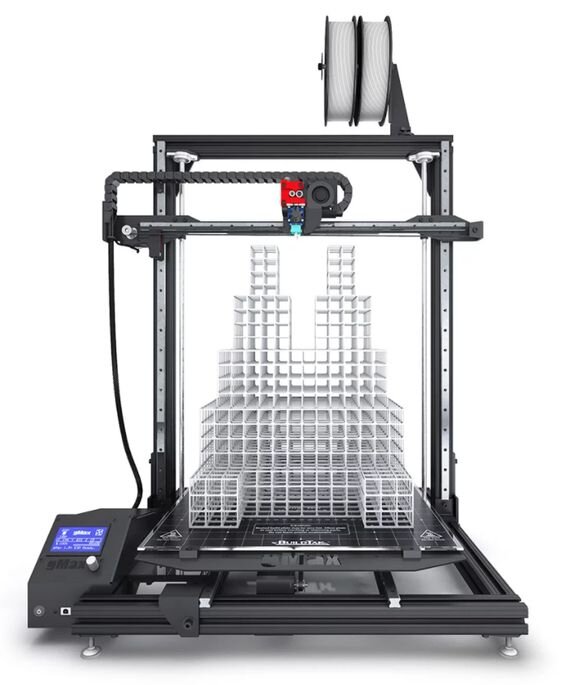
3D printing, a new type of manufacturing technology, is receiving more and more attention. Conventional manufacturing techniques generally process a single piece of material into the required size and shape by means of machining such as cutting or drilling; while 3D printing stacks the material into a specified shape little by little, so it can be used not only You can machine the objects you need without the need for complicated equipment, and you can easily implement complex shapes that are difficult for many traditional manufacturing techniques.
However, when 3D printing became popular around the world, some researchers warned that 3D printing may have some health hazards and further research is needed. So what are the health risks of 3D printing? Let us look at several recent related studies.
Researchers from the United States have chosen animal models commonly used in developmental, toxicology and other studies to identify zebrafish as a research object to observe the potential health hazards of stereolithography. They placed the objects processed by stereolithography together with the zebrafish embryos to observe the development of the embryo. The results showed that about 80% of the zebrafish embryos in the control group survived and hatched during the 7-day observation. However, the embryos in the experimental group were half dead on the third day and none on the seventh day. Fortunately. Moreover, compared with the control group, the proportion of embryos in the experimental group during the development process was significantly increased. Subsequent researchers from the UK also reported similar experimental results.
So where is the problem? Theoretically, the photosensitive resin that is exposed to light should be completely cured into a polymer material which, due to its large molecular weight, is substantially inactive to the organism. However, in the process of stereolithography, this reaction is often difficult to complete, and the residual unreacted or incompletely reacted photosensitive resin may be leaked out of the final product, and many of the substances that leak out are free. Has a certain toxicity. The water used in the experiment was originally strictly purified, but the researchers found some toxic substances in the water of the experimental group, indicating that toxic substances were released from the 3D printed objects.
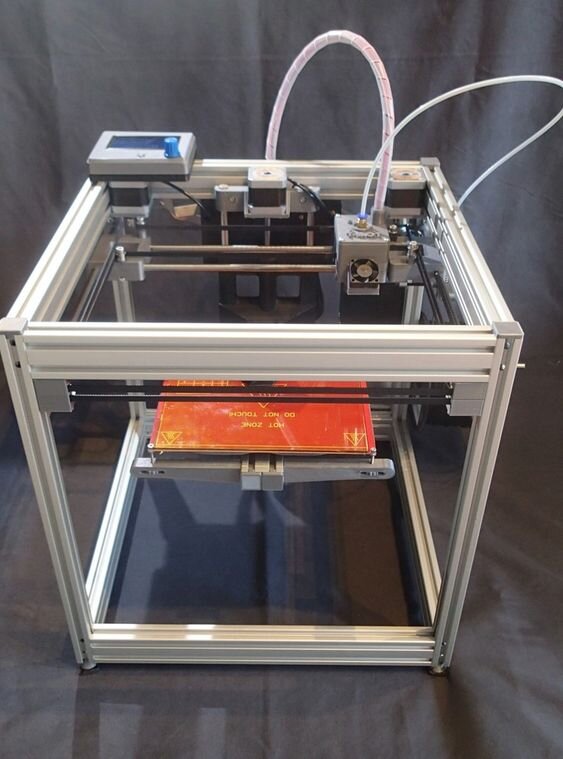
In fact, as early as 2013, studies have indicated that many ultrafine particles, ie particles with a diameter below 100 nm, are produced during the fused deposition process, and inhalation of ultrafine particles has been shown to have a certain degree of damage to health. This year's study shows that this 3D printing technology not only produces ultra-fine particles during processing but also produces a lot of volatile organic compounds. The specific composition depends on the equipment selected by the 3D printer. For example, ABS resin is a kind of plastic that is often used for fused deposition molding. This study shows that the process of 3D printing with ABS resin releases styrene. The International Agency for Research on Cancer lists styrene as a Class 2B carcinogen, which may have a carcinogenic effect on the human body. The researchers estimate that the concentration of styrene produced during 3D printing has exceeded the US standard for commercial building styrene by 20 times. Another plastic nylon commonly used in fused deposition molding releases caprolactam during 3D printing. Although existing studies suggest that caprolactam has no carcinogenic effects, it is also irritating. According to the researchers' estimates, the concentration of caprolactam in indoor air caused by 3D printing has also exceeded the standard, which is obviously not a good phenomenon. The researchers also noted that the packaging of 3D printers, while reducing the emission of ultrafine particles, has limited effect, probably because several packaged 3D printers tested in the study did not completely enclose the device.
Of course, these studies are not so that we are afraid of 3D printing and are completely away from it, but we really need to pay more attention to this issue. On the one hand, relevant government departments should work closely with manufacturers of 3D printing equipment and raw materials to develop standards and try to reduce the amount of harmful substances released by the 3D printing process and processed products; on the other hand, 3D printing Users should also pay attention to personal protection during use. Only in this way can we make the new technology of 3D printing better serve us.