First, we have to figure out what the background radiation is. Many people may first think of these four words as the concept of physics "cosmic background radiation" or "universe microwave background radiation." In fact, background radiation, also known as background radiation, is a concept in the field of radiation safety and protection.
We know that radiation can be divided into ionizing radiation and non-ionizing radiation according to whether it can ionize atoms and molecules. The former includes particles such as α particles, β particles, neutrons, etc., and gamma rays, X-rays and shorter wavelengths in electromagnetic waves. Part of the ultraviolet light; the latter mainly includes visible light, infrared rays, radio waves and long-wavelength ultraviolet rays in electromagnetic waves. Compared to non-ionizing radiation, ionizing radiation is more energetic and therefore more damaging to organisms. When we refer to radiation protection, it is usually the protection of ionizing radiation.
Imagine an X-ray machine in the room. When we discuss how to protect the radiation it produces, we must first determine how strong it is. However, the room is not only a radiation source of the X-ray machine. The stone of the floor may contain traces of natural radioactive elements, and there are traces of radioactive elements in the air. Therefore, we first need to understand how strong all the radiation except the X-ray machine can be used to analyze the health effects of X-ray machine radiation and the corresponding protection wording. The sum of all radiation outside of a given source of radiation like this is background radiation.
In other cases, we do not choose a specific source of radiation, then background radiation refers to the sum of all ionizing radiation, especially often used to reflect people in occupational exposure (such as operating nuclear reactors, testing nuclear weapons, conducting radiation breeding, All radiation that the patient has access to outside the radiotherapy, etc.).
So what are the components of background radiation? Simply put, background radiation can be divided into natural background radiation and artificial background radiation. The presence of natural background radiation is not related to human activity and usually includes the following parts:
- Cosmic rays, ie high-energy particles from outer space. Cosmic rays interact with the atmosphere and are weakened, so people living in high altitudes receive more radiation from cosmic rays, and people are additionally exposed to cosmic rays when they are flying.
- Background radiation in the surface environment. These radiations come from a variety of radioactive elements, widely found in the atmosphere, soil, rocks, and water, and they are also the main source of background radiation.
- In addition, our daily diet also contains trace amounts of radioactive elements, which also produce radiation, and even a certain amount of radioactive elements in the organism itself. These radiations are also considered part of the natural background radiation.
- Artificial background radiation, as the name implies, refers to background radiation caused by human activities. The main sources of artificial background radiation are various medical activities, such as X-ray imaging, medical imaging diagnostic methods such as CT, and therapeutic measures such as radiotherapy.
Main source of background radiation
How strong is the background radiation? When we evaluate the effect of radiation on living organisms, we usually consider the dose of radiation, that is, the total amount of radiation absorbed by the body in a certain period of time. The commonly used unit is Sev (Sv), but this unit is too large to be used. Conveniently, mich (mSv, 1Sv = 1000 mSv) is often used.
Historically, some researchers believe that the damage caused by low-dose radiation is not so serious because organisms have developed a mechanism to deal with radiation damage during the long evolutionary process. Some people even think that low-dose radiation is beneficial to health. In recent years, although new experimental evidence supports the linear thresholdless theory, the relevant debates may continue. However, despite the controversy, from the perspective of radiation protection, linear thresholdless theory is still a good theoretical model.
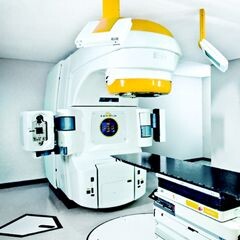
From this perspective, whether background radiation is harmful to health can be said to be a meaningless issue. Because background radiation is present at our side at all times, it is difficult to eliminate. We can't really experiment to observe the health effects of background radiation, because we can't find a situation where there is no background radiation as a control, and it is almost impossible for us to develop operational protective measures for background radiation. Therefore, when we discuss the hazard and protection of radiation, we always refer to the influence of the extra radiation dose on the human body based on the background radiation. The radiation dose safety threshold given by the government agencies of various countries also refers to the background radiation. Additional radiation dose.
There are indeed some places in the world, and special geological reasons have caused strong natural background radiation. The radiation dose absorbed by the residents from the background radiation is not only significantly higher than the world average, and sometimes even exceeds the 20 mA specified by the International Atomic Energy Agency. This is the case for occupational exposure to radiation dose caps, such as Ramsar in Iran and Yangjiang in Guangdong, China. However, current research has not found that such high background radiation has a significant negative impact on the health of local residents. One possible reason is that local residents have already adapted to this high background radiation. Therefore, even for these special regions, the statement that “background radiation is harmless” can still be said to be true.