According to a network news report during the National Day of 2013, 110,000 people watched the flag-raising and left 5 tons of garbage. Some people think that this is a false news, because 5 tons = 5000 kilograms, 110000 ÷ 5000 = 22 kilograms/person, and each person carrying 22 kilograms (44 pounds) of garbage is impossible. I have seen a saying before: 10 cm × 10 cm = 100 cm = 1 m, and 0.1 m × 0.1 m = 0.01 m = 1 cm, so 10 cm is not equal to 0.1 m. Of course, the above two examples are all wrong, the error is misused in the unit. In the first example, the denominator 110,000 is a person, and the numerator 5000 is kilograms. If you want to get a kilogram per person, it should be 5000÷110000≈0.045kg/person. In the second example, both centimeter and meter are lengths. When the lengths are multiplied, the unit of area is obtained, so 10 cm × 10 cm = 100 cm 2 = 0.01 m 2 ; 0.1 m × 0.1 m = 0.01 m 2 .
The physical quantity without units is just a number
When expressing physical quantities, you must add a unit after the number. If we meet with people for a while, we may say that we will see it after 3 minutes, see it after 3 hours, see it after 3 days, and will not simply give a number instead of the unit of number, because a single number "3" is unable to convey the information we want to express. There is a saying in "The Analects of Confucius", "The original thought is the slaughter, and the chestnut is nine hundred, resigned." The millennium here is the salary, but there is no unit, because there is no context and it is not the annual salary or the monthly salary, so only Can rely on guessing. The corresponding total amount of chestnuts can, of course, be 900 tablets. If the grain is used as the unit, then the original thinking is not worth mentioning.
There is a physical relationship between physical quantities, which are linked by various formulas. For example, the familiar Newton's second law: F=ma, the unit of mass m is kilograms (kg), the unit of acceleration a is the square of square meters per second (m/s2), so the unit of force F can only be kgm/s2.
Units are important because they carry physical information that is given or specified by the formula (or physical laws) from the outset. If you leave the unit and only retain the number without prior agreement, it is equivalent to abandoning the laws of physics.
A physical quantity can be expressed in different units
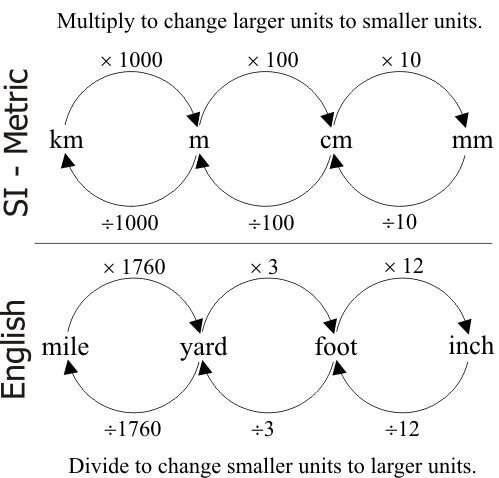
Taking time as an example, the common international unit is seconds. We can also express it in units of minutes and hours, and there is a unique conversion relationship between these different expressions. For example, 1 minute = 60 seconds, this conversion is just a simple 1 → 60 digital transformation.
Physical quantities of different meanings usually use different units
For example, the unit of length is based on meters, and the unit of mass is based on kilograms. We cannot convert directly from kiloseconds to kilograms because time and quality are two separate physical properties. Simply put, units expressing the same physical quantity can be converted to each other, and units expressing different physical quantities cannot be directly converted to each other.
Different units expressing a physical quantity do not have to belong to a series
The series of hours, minutes and seconds is very practical. There is no essential difference between the units in the same series, but the previous numbers are made easier to use by unit conversion. You can imagine how painful it is to express your travel time in seconds or to express the athlete's 100-meter performance in hours.
The same unit can also express different physical quantities
In this case, even if the two physical quantities appear to carry the same units, they may not be directly added or subtracted. The Planck constant is the same as the angular momentum. It is not necessarily meaningful to add and subtract the Planck constant and the angular momentum directly. As an additional example, in a three-dimensional system, the unit of "resistance" is resistivity × length ÷ cross-sectional area = resistivity/meter; if in a two-dimensional system, "cross-sectional area" will become "cross-sectional length" ", then the resistance and resistivity will have the same unit at this time. But the former reflects the ability of a specific device to block current, and the latter reflects the ability of a two-dimensional material to block current as a whole.