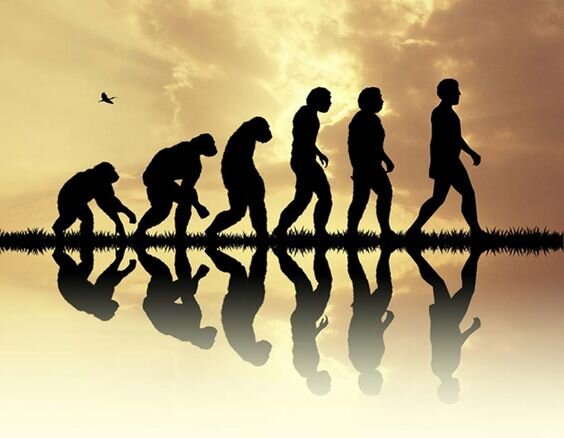
We tend to think that all the characteristics of animals and plants are produced in order to adapt to the environment under the influence of natural selection. In fact, many features are neither an adaptation to the environment nor a result of natural selection.
Why do many people choose to watch simple TV and eat simple microwave food after a hard day? Is this because of convenience or the result of evolution over millions of years?
We are accustomed to the assumption that all aspects of our body and behavior are evolutionary, accustomed to thinking that they exist in this way, have a purpose; we can easily fabricate a bunch of "evolutionary stories" for them. But this is often wrong.
For example, the nipple of a male mammal is of little use, just because the female has a nipple, so the male also has it. The development of the nipple does not require a large price and no harm, so it is not necessary for the male to evolve a different developmental mechanism to "turn off" the growth of the nipple. So the male nipple is not the result of evolution, precisely because there is no evolution. In addition, some people think that women's orgasm is the same as men's nipples, for the same reason.
And our sense of smell. Do you think that the aroma of the rose is strong and scented, or do you still have to sniff it? Can you tell the strange smell of urine in many people after eating asparagus? Different people have different odor perceptions, which are mainly caused by random mutations in genes encoding olfactory receptors, and are not adaptive results.
There are also some features that are the result of natural selection, but they are not themselves adapted to the environment. For example, the short body of the Pygmies is not adaptability, it may just be a by-product of early birth. And "early fertility" is an adaptation of people with high mortality under natural selection.
Under natural selection, there are some adaptations that can cause side effects on other traits. Another reason is that genes have different functions at different stages of development or in different body parts. Sometimes the choice of a genetic variant will have a seemingly unrelated effect. For example, some genetic variants can increase the fertility of females, while males may become homosexual when they carry this mutation.
When a gene is on the same chromosome as a dominant gene, the chances of it being passed on will also increase. Fortunately, at the time of meiosis, homologous chromosomes can be recombined, giving good and bad genes a chance to separate.
Some features are historical issues, such as our irises, ostrich wings, and so on. These are biologically called remnant organs. These organs are no longer in their original role, and now they are either useless or harmless or have some new uses, or they have become harmful, but evolution has not yet had time to eliminate them. Our appendix may have some features, but there is clear evidence that without it does not affect survival, but it has to take greater risks - appendicitis is often fatal before the birth of modern medicine.
So why haven’t our appendix disappeared? Because evolution is a "digital game." Until thousands of years ago, the total population of human beings has been very small in the long evolutionary years, and the fertility rate of each generation is extremely low. This means that evolution has very few opportunities to select mutations that cause the tail to become smaller or completely disappear, and these mutations rarely have the opportunity to spread widely in the population through natural selection. On the other hand, we may have fallen into a state of dilemma in evolution: if the appendix becomes smaller, the risk of appendicitis increases, which hinders the appendix from becoming smaller. In short, the appendix may take quite a long time to disappear.
Wisdom teeth are also remnant organs. Our ancestors' jaws became smaller, making more room for the development of the brain, but it caused the space in the mouth to be too small to accommodate so many dental caries. But wisdom teeth will still grow stubbornly, and the infection it causes can even be fatal. Because wisdom teeth grow out later, usually after the childbearing age, wisdom teeth, although harmful, but the choice pressure they face is not large, and thus left behind.
In short, we should all remain suspicious (not doubtful about evolution) for the "headline party" theory that uses evolution to explain the various behavioral characteristics of human beings. Evolutionary psychology is notorious because it attempts to interpret all human behavior—from gardening to rape—as the result of our ancestors adapting to life in the African savannah. Needless to say, if there is no solid evidence for the "evolution" of "watching TV to eat fast food", we should reserve a high degree of suspicion.