The origins of the Amazon image
Many of the qualities attributed to the Amazons, such as man-hating, striving for war, and burning breasts for better possession of weapons, may have been a reflection of the Greeks' perceptions of barbaric tribes with which the Greeks came into contact and in which women's position was different from that of the Greeks.
Another explanation for the myth lies in the worldview of the ancient Greeks. Thus, one of the stories about the defeat of the Persian army by the Amazons and the capture of the Persian king Cyrus in captivity, perhaps, reflects the fear of the West before the East. Cyrus was crucified, and the unprecedented bravery of the women, as well as the horror that they killed the mighty king of their time, could testify to the real (Parthian) threat that the Greeks and Romans expected from the eastern borders at the turn of the Era.
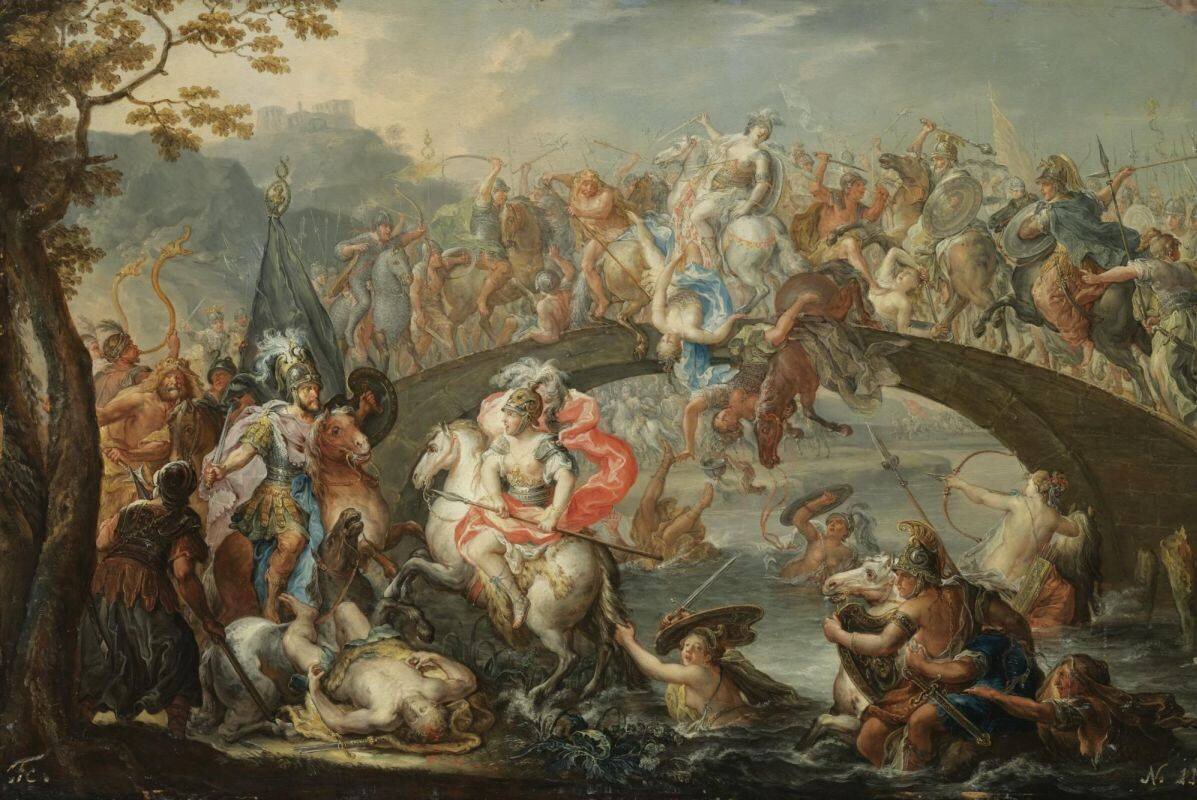
The historical basis of the myths about the Amazons can be found in archaeological data and in the testimonies of the most reliable antique written sources, in particular in the works of Herodotus, Strabo and Pavsanius. According to modern researchers, the Amazons of the ancient authors could call the real tribes who lived on the Black Sea coast, in which the position of women and men was equal, and women were often on the battlefield during the battles. According to one of the versions, the soldiers of these tribes were so different from the Greeks that they were thought to be women.
Researchers agree that there are real origins of the myth of the Amazons, but they disagree on what kind of tribes they were and where they could live. As a result of excavations of tombs of the Sarmato-Sako-Scythian nomads in territory of modern Kuban the weapon belonging to women-warriors has been found, and their remains show signs of fighting wounds. This gives reason to believe that female warriors, who fought on an equal footing with men, could indeed exist.
Reception of the Amazon myth
The image of female warriors is also found in the mythologies of other peoples (ancient Oriental mythology, China), but it was the ancient Greeks who shaped our understanding of the Amazons as a people of female warriors.
The myth of the Amazons was a favorite subject of ancient authors. Already in Antiquity it is possible to speak about two components of a myth which have influenced the further destiny and image of Amazons in a history. On the one hand, the Amazons were presented by the ancient authors as an enemy of the civilized world, which over time was transformed into the image of "another", radically different from Greek society. A similar explanation is also associated with the qualities attributed to the Amazons: belligerence, change in appearance (breast burning), freedom of action and independence from men.
On the other hand, the image of the Amazon, which has been established in the European cultural tradition, is based on ambivalence and the inversion of male and female roles: a woman performs her native male social functions. The Amazon remains a "traditional" woman. For example, there is no evidence of lesbian links between the Amazons. They remain women, even when describing the most bloody subjects in which they are involved, and here the ancient authors emphasize the characteristic "female" roles of the Amazons: beauty, passion, ability to live in marriage (for example, in the myth of Theseus) and give birth to children.
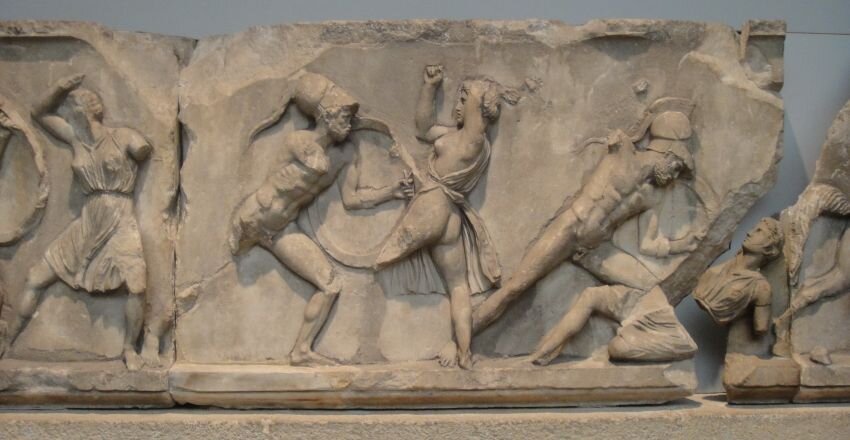
An example of perception of the gender image of the Amazon can be "female" comedies by Aristophanes, primarily "Lisistrata". The play tells of a "strike of women" who refuse to give their husbands caresses to force them to stop the war. Although Aristophanes does not mention Amazons, his description of women and the situation in which they use their power to distract men from the war actually reproduces one of the fragments of the myth - the gender superiority of women, alien to Greek society. The Greeks perceived female superiority as an abnormal situation, so the genre here comedy: women's power was laughed at as something unreal, because in fact it could not happen.