You're intrigued by the ferret, but you don't know anything about this pet? In recent years they have become increasingly widespread, thanks to their intelligence and great affection for humans: however, there are many myths to be debunked and things to learn for proper management, to be able to establish a good relationship with them!
1 - IT'S CALLED FERRET, BUT IN LATIN...
The name ferret is very attractive: it reminds us of something subtle, fast and soft. But the Latin name is not as kind. Mustela putorius furo means "stinky thief beech" because if badly looked after the ferret can steal food and stink a lot.
2 - IT IS NOT A RODENT
The ferret is often mistaken for a rodent, because of its size: nothing could be more wrong. It is a mustelid, predator, and carnivore. Most likely rodents would appreciate them as a meal!
It is very important to understand that the ferret must eat meat, possibly raw, because it is in its nature. In fact, they assimilate proteins like any carnivore and cannot follow the diet that is reserved for rodents. To dispel the myth that raw meat makes them more aggressive, remember: it is not meat that makes them bad, but bad nutrition!
3 - IT IS NOT A WILD ANIMAL
Many people think that it is poorly tamed, like a wild animal. Nothing could be more wrong: the ferret appeared in ancient Egyptian times and since then, just like dogs and cats, it is not able to live in nature but depends on the man.
In fact, he loves human company and cannot stand loneliness: an important thing to take into consideration when welcoming a ferret into the family.
4 - IS ANTI-ALLERGIC AND LOVES CLEANING
The ferret is a practically non-allergenic animal! People who are allergic to the fur of the ferret are very rare and therefore it is an animal very recommended for those who are allergic to other animals. Of course, before taking a specimen it is better to do the allergy tests in any case.
The ferret is very fond of cleaning and must be absolutely washed, brushed and you must also cut his nails: in short, you must take care of him completely and consistently.
5 - LOVES TO PLAY
Anyone who becomes an adoptive parent of a ferret should know that they need to be given time to play and take it for a walk! In addition, with some training, they can learn how to use cat toilets and understand their names when they call them.
THEY ARE ABSOLUTE LOVERS OF GAMES: THEY CAN'T MISS TUNNELS, HANGING BRIDGES TO JUMP ON AND BALLS IN THE HOUSE!
6 - LOVES TO SLEEP
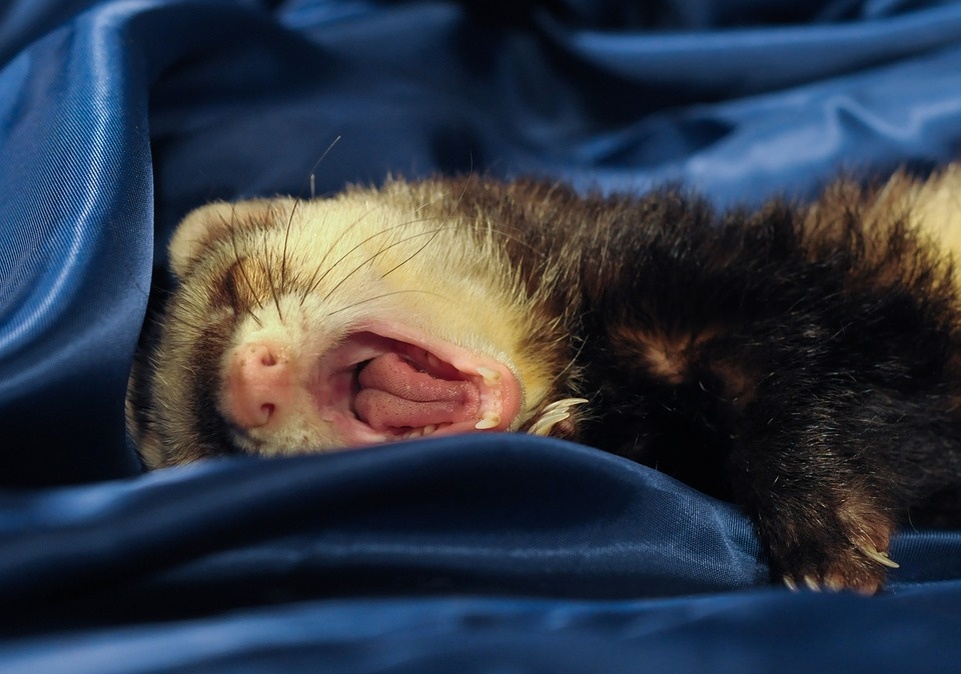
The ferret sleeps for many hours a day: this does not mean that it is sick, apathetic or bored. He simply needs it physiologically! They are mainly nocturnal animals, even if they vary their rhythm in the function of their human family. Of course, if it is kept in a cage or left alone for a long time, it could sleep more than it should, but do not disturb it unnecessarily if its life runs smoothly.
A fantastic gift for a ferret is, in fact, a hammock: they love to sleep suspended!
7 - NOT TO BE KEPT IN A CAGE
As we said at the point above the ferret can not live in a cage. The fact that you don't bark or complain about it doesn't mean you're happy! You can equip yourself with a very large cage, to move around or to close it in rare moments or at night, but the best solution is to leave it open to allow him to come and go.
8 - IT'S EXTREMELY CURIOUS
The ferret is a curious animal: very curious! Just as for rabbits it is essential to secure the house before its arrival or, if not all of it, at least the rooms to which it has access. We must prevent any escape because he would not know how to go home, but above all it is important to avoid bare threads to chew and patches in which you can fit and even get hurt very much!
9 - NEEDS VETERINARY CARE
Like all animals that live with us humans, it is important to have medical examinations. You must take him regularly to the vet for checks and to have him microchipped, remembering to choose a vet experienced in exotic.
10 - YOU CAN ADOPT INSTEAD OF BUY!
Given the lack of information on ferrets and the fashion launched by some Hollywood movies (remember the movie "And finally comes Polly?"), many people have impulsively bought a ferret and then decided to get rid of it in various ways.
This attitude is very distant, if not parallel, to our way of living with animals: we promote the adoption of ferrets that seek a conscious family and can love them as they deserve! There are some associations of volunteers that deal with it in Italy, including the non-profit FurettoMania, which is the largest.