A toothbrush is the main tool for plaque removal from teeth and gums. It was first mentioned in Oriental literature in 1400. In the European sources of the message about a toothbrush concern to 1675. Approximately since XVIII century toothbrushes began to be applied in Russia.
Even in ancient times, people used toothpicks made of wood and bone to clean food from teeth. Already in Ancient Egypt, there were toothpicks, pointed at one end and swollen at the other. This natural broom rubbed their teeth, and special compositions were rubbed into their gums. In Babylon, Greece, and Rome, oral hygiene was also well developed, including teeth cleaning, chewing fibrous plants, and rubbing gums.
In Arab countries, methods of chewing plants with disinfectant properties have also been known for a long time. In India, they still sell chewing branches of wood to them. Friction against twig fibers cleans teeth and juice disinfects and strengthens teeth and gums.
The invention of the composite toothbrush with pork bristles perpendicular to the bamboo stick (which acts as a handle) is attributed to the Chinese and dates back to 1490.
In Russia in the 16th century similar "toothbrushes" were also known, consisting of a wooden stick and a pork bristle. These inventions were brought to Russia from Europe, wherein the course of pork brooms were also panicles made of horsehair, badger bristles, etc.
Peter 1 ordered the boyars to brush their teeth with ground chalk and a damp cloth. And the people knew another way: charcoal from birch wood perfectly whitens teeth. But you should rinse your mouth especially carefully after such a brushing.
In Europe, the widespread use of toothbrushes was due to the publication in 1723 of the famous work on dentistry by Pierre Fauchard, who devoted an entire chapter to oral hygiene, where the need to remove dental plaque was convincingly proved.
The manufacture of cheap toothbrushes was established by an Englishman William Adiss in 1780. The first patent for a toothbrush was granted to American Wadsworth in 1850. The brush was made of pork bristles, and the focus of the patent was to attach the bristles well to the bone handle. By that time, they had learned to detect bacteria and found out that there was a cavity in the praise of the pig's stubble and that bacteria were breeding well there.
The real revolution occurred in 1938 when the company "DuPont de Nemours" replaced the animal's stubble with synthetic nylon and without cavities, incubators of bacteria. But the toothbrushes, even with nylon bristles, remained very stiff until in 1950 Du Ropt improved the technology and made the nylon hairs softer.
The idea of an electric toothbrush was proposed back in 1880 by Dr. Scott. Dr. Scott's electric toothbrush hair According to the manufacturers, "had a constant electromagnetic field.
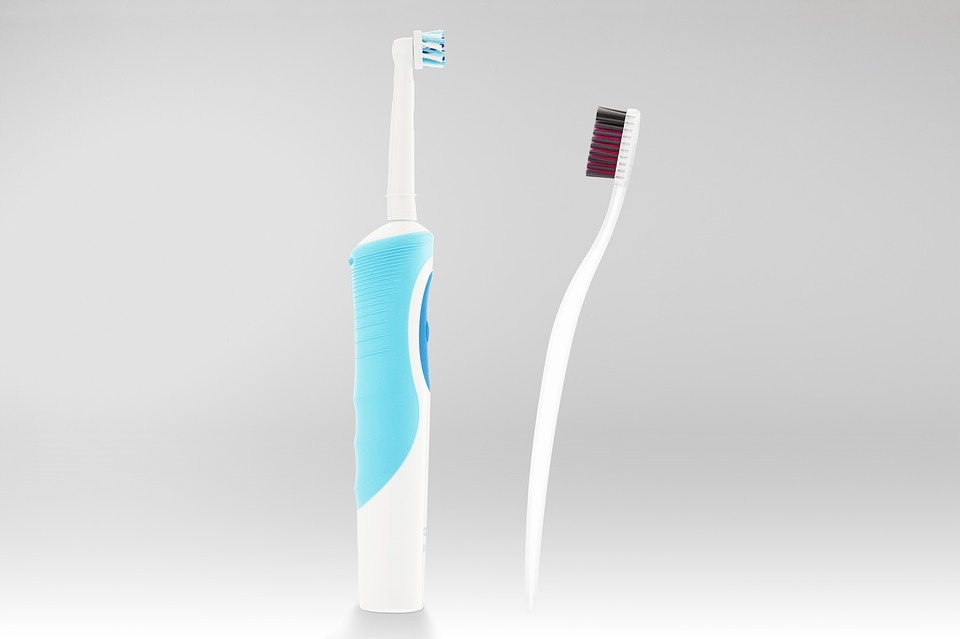
The first real mechanical toothbrush was patented in Switzerland after the Second World War and operated from the electric grid. In 1960 it also appeared on the American market. And in 1961, General Electric introduced the first model with an autonomous power supply. Although many people saw this as a luxury, the electric toothbrush quickly gained popularity. Later on, various modifications appeared: a mechanical toothbrush with an integrated timer, a mechanical toothbrush with replaceable cleaning heads, etc.
In the 60's, in addition to the mechanical brushes, there were also electro-rotating brushes (Rotadent, Interplack, etc.). They work like hand brushes, but with increased abrasion, as they rotate at an average speed of 7000 movements per minute or 58 Hz. These brushes are much more effective than manual brushes but can cause damage to the enamel if cleaned too aggressively. In the 90's, electric reversible-rotating brushes, also based on the principle of abrasion, appeared, most of which exist on the market today.
But the most significant progress in the more "gentle" cleaning of teeth has been made in the development of sound toothbrushes (Braun Oral B-3D, Vanisart, Panasonic, etc.). They operate at an average sound frequency of 30,000 movements per minute or 250 Hz, allowing for deeper yet "gentle" foam cleaning.
In the middle of the 90th years in the USA, Dr. Robert Bock has developed and patented two-frequency ultrasonic brush Ultrasonex. This brush uses a completely new technology based on ultrasound. The brush moves at a speed of 196,000,000 movements per minute (or 1,600,000 Hz), which is more than 6,000 times faster than that of sound.
In addition to the ultrasonic frequency, it also uses a foamy sound frequency of 18,000 movements per minute. The bacteria that makeup plaque are placed in chains and attached to the tooth surface. Waves of therapeutic ultrasound frequency 1.6 MHz break these chains even under the gumline (at the level of 5 mm) and destroy the method of fixing bacteria, and the sound frequency of 18,000 movements per minute or 150 Hz, having a foaming effect, helps to gently remove this plaque.
Another feature of a modern toothbrush is its rounded bristles. For many years, dentists have recommended direct, standard toothbrushes just because they did not have the technology to curl each hair. Round bristles are the least traumatic for oral cavity tissues. Modern production methods allow you to create toothbrushes of various shapes, sizes, and models.
The design and marketing thought did not leave intact a single centimeter of this tool, ranging from a comfortable, non-slip handle, bent, floating, etc. head to the bristle of all kinds of shapes and functions.
In January 2003, Americans called the toothbrush the number one invention on the list of inventions without which they could not live.
According to statistics, between 1963 and 1998 more than 3000 models of toothbrushes were patented! There is also a monument to a toothbrush six meters high. It has stood in the German city of Krefeld since 1983.