Domestic experience
Today, more than 100 companies (both large and medium-sized) in Russia have implemented or are in the process of implementing the Green Office principles. Successful experience has already been gained by Russian offices of foreign companies: Google, Intel Russia, Upeco, Coca-Cola, 3M, KPMG, Courtyard by Marriott Moscow City Center, Ernst&Young, VFS Global (joint service and visa centers). Russian companies, including M.Video, SPLAT, Strelka Institute of Media, Architecture and Design, Optikom Group, Krasnodar Region Department of Foreign Economic Activity and even Moscow secondary school with in-depth study of ecology No. 446 are gradually joining them.
Foreign experience
In October this year, the Y.S. Sun Green Building Research Center, a joint project of Delta Electronics and Chengong University (Taiwan), received several awards in the field of ecology. Awards were received for the use of environmentally friendly building materials, design and construction innovations, as well as high energy efficiency and water conservation. The energy consumption of this building is 3 times lower than the average office building in Taiwan. During the first half of 2011 (the building was commissioned in January), solar and wind generators and LED lamps have resulted in energy savings of 65%.
The Tokyo-based company Kokuyo is trying to realize the original idea of energy saving. If you want to make your office greener and more useful for your employees, create an outdoor workspace. The company has set up a garden with trees and a pond on the roof of its office. There were also mobile solar panels to protect workers from sunlight and generate electricity at the same time. This innovation is expected to reduce carbon dioxide emissions by 56 tons annually.
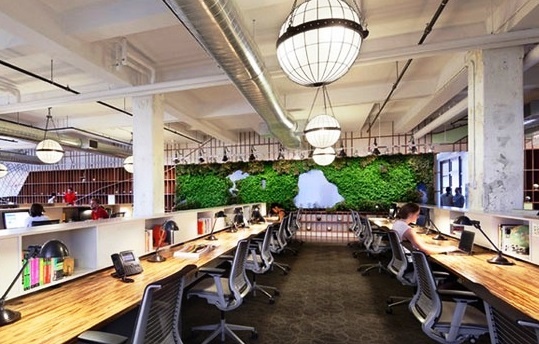
Analysis of domestic and foreign regulatory framework
In order to better understand the resource saving issue within the framework of the green office concept, it is also necessary to analyse the legal framework for the construction and operation of environmentally friendly premises.
So-called "green building standards" have been formulated at different times in different countries, describing the conditions for the construction and operation of green buildings. They involved governments, construction firms, material and equipment manufacturers, scientists and lawyers. "Green Standards" serve to assess the environmental performance of buildings. They apply to both new and existing buildings and are relevant to a wide range of building types: office, residential, industrial, commercial and public. Objects certified according to national green building standards ensure minimal environmental pollution and a high level of environmental safety for people.
Certification of "green offices" can be carried out according to various "green" standards, let's consider the main ones:
- International - LEED (USA) and BREEAM (UK);
- Russian - system of voluntary environmental certification of real estate objects "Green Standards".
In addition, Russia has an EcoPro standard for certification of "green" offices. This system is the only registered and functioning system of certification of office premises specifically.
Since certification according to the standards of such widely used systems as LEED and BREEAM is rather complicated and financially expensive, the domestic standard EcoPro can become alternative and more profitable for certification among Russian offices.
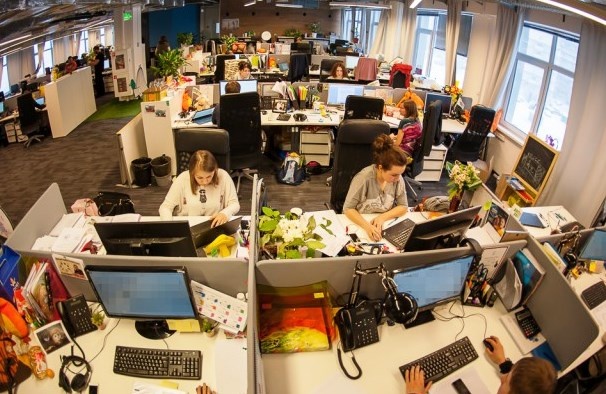
The certification process includes environmental expertise and office audit, development of environmental documentation, environmental training and education, and then the final certification of the facility according to the EcoPro standard. If the facility meets the mandatory and additional requirements of the standard, the EcoPro green office certificate is issued upon completion of the work. Such a certificate characterizes the office as environmentally friendly, economical, comfortable and, as a consequence, safe for people and the environment.
Thus, it is possible to say that achievement of resource saving within the framework of the "green office" concept is possible and will work effectively with the rational use of natural and energy resources, correct design solutions of office premises, as well as with compliance with the requirements, standards and regulations provided by international certification systems.
Rational energy consumption in the office is a real and tangible contribution to the reduction of greenhouse gas emissions, saving the budget of the organization, a step towards solving the problem of energy deficit in the city economy, care for the environment and yourself.