A large, strong, predatory bird, which is unique - is a South American harpy. The animal belongs to the hawk family and is not very well known. Our ancestors believed that one powerful blow of harpy can crush a person's skull. Also, the behavior of the bird is characterized as irritable and aggressive. Most often you can meet the animal in South and Central America, as well as in Brazil and Mexico.
General characteristic
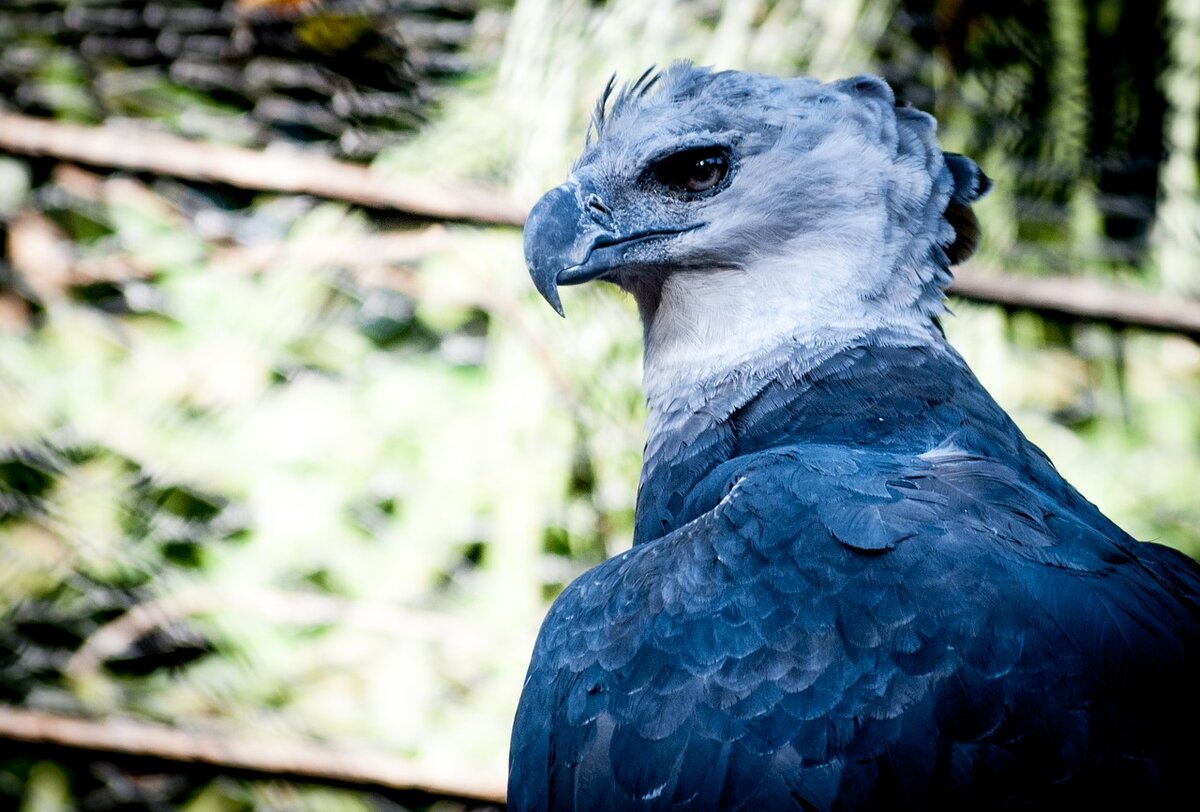
South American predators grow up to 110 cm long, with a bodyweight of 4-9 kg. Females are much larger than males. A characteristic feature of the predator is the light brown feathers on the head (harpy beak of the same color). The legs of the animal are yellow, each of them has powerful claws. The animals' unique paws allow them to lift heavyweights, such as a small dog or a young roe deer.
On the back of the head, the bird has long feathers that it can lift, which creates the impression of a "hood". A bigger and more frightening head gives the predator a more formidable appearance. The young fish have a white belly and a dark, wide collar around their necks.
Harpy is a very strong animal. The range of their wings can reach two meters. Birds are intimidated by their black eyes and curved beaks. It is believed that by raising the feathers on the back of the head, the harpy can hear better.
Behavior and diet
Hawkeye family members are active during the day. They search hard for prey and can find it even in dense thickets. Birds have excellent hearing and vision. Harpy is a large predator, but this does not prevent it from maneuvering and moving easily. Predators prefer to hunt alone but live in pairs for years to come.
Adults equip themselves with a nest. They use thick branches, leaves, and moss as the material. The peculiarity of reproduction is that the female lays only one egg every two years.
The most favorite delicacy of South American harpy is primates and sloths. That's why some call animals "monkeys". Also, birds can also feed on other birds, rodents, lizards, young deer, noses, possums, etc. Predators catch the prey with their powerful paws and claws. Because harpy is at the top of the food ecosystem, they have no enemies.
Breeding characteristics
Birds of prey fly on tall trees (up to 75 m above the ground). The diameter of the harpy nest can be 1.5 m. A female lays eggs in April-May. Female hatching occurs over 56 days. The development of young nestlings is very slow. Babies do not leave their parents' nest for a long time. Even at the age of 8-10 months, the calf is not able to get food for itself. The peculiarity is that birds can do without food for up to 14 days, without damaging their bodies. At the age of 5-6 years, young individuals reach puberty.
Interesting facts about harpy
The South American harpy is a skilled and strong predator. The animal has claws 10 cm long, which makes them an excellent weapon. Harpies are considered the only predators able to cope with porcupines. Excessively aggressive birds can even attack humans.
To date, there are not many forest eagles left, they gradually disappear from our planet. The main reason for this tragedy is the destruction of forests, where predators nest. Also, harpies have a very slow rate of reproduction, which also does not benefit the animals. At the moment, birds are listed in the Red Book.