Chopper.
After the one-percent break with the AMA, of course, they were no longer able to participate in the organization's races. This was of course immediately reflected in their bikes, which were now being modified to reflect the conditions of the streets and the desire of every biker to express himself and be the coolest at .T hat's when the California beaver turned into a chopper.
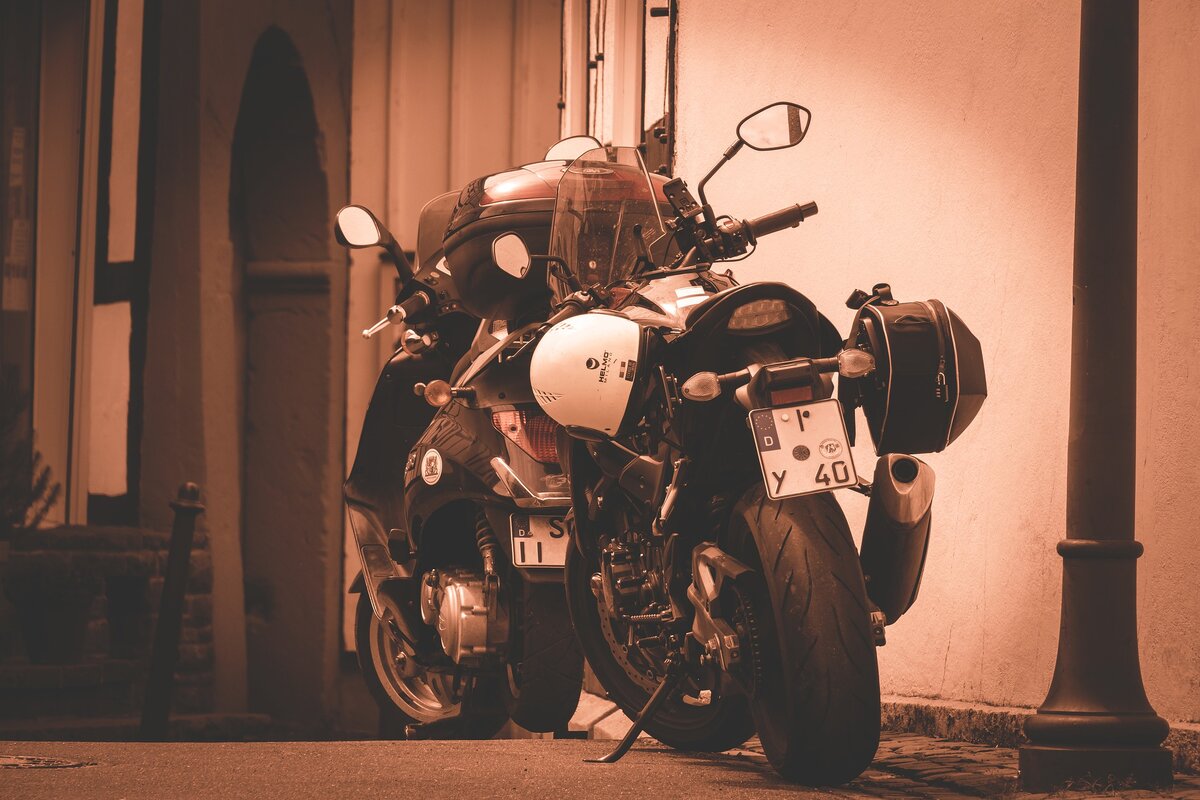
As for the origin of the name Chopper, there are many versions. I personally believe that the word "chop" can be translated from English as "chipping" or "cutting off".
After all, what is a "chopper"? Let's define the terminology. Initially, the chopper was a machine, which was made by removing unnecessary (not directly related to the process of movement) details from the serial motorcycle. Who needs a windshield, front wing, big headlamp, clumsy signal lights, safety stands, big seats and the like? Just throw it all away and make the bike more elegant and easy. After all the alterations you will have a light frame with which to cut off the extra fasteners. Then you need to do the engine, which eventually should be sharpened by a fierce demon of speed. In addition, you should have a naked fork, two lanterns (small in front and very tiny behind), a small seat, a minimum wiring, a small gas tank and two wheels: 16-inch rear and 21-inch front. You can even remove the battery and use the magneto to further reduce weight.
Later, bikers began to extend and tilt the front fork so that the tyre was far ahead of the bike. Why? I don't know the answer to this question. They say that the bike behaves more confidently on the highway, and sit more comfortable. But this definitely gives the bike a cool look, which also spread to the biker
Choppers have long been the predominant outlaw-buyer motorcycles, those same percentage points. But after the release of the film "Easy Rider" (Easy Rider), the wave of chopper building swept all over America and choppers began to gather all who are not lazy. Even those who didn't know how to handle the bike yet, creating rather uncomfortable and dangerous structures by means of banal elongation of the fork, but without making necessary changes in the frame design.
Around the same time, biker culture was influenced by the hippies that flourished at the time, which brought LSD and other joys of life into it, reflected in the look of motorcycles. As a result, there were just incredible psychedelic patterns of coloring, mottled with all conceivable and unthinkable colors.
Besides, hot-rods producers had a significant influence on the appearance of the choppers of that time, many of them were engaged in chopper building (some of them even gave up their previous hobby for this purpose) and brought to this area all the experience accumulated during the years of creation of the coolest cars, which led to a serious increase in the technical perfection of choppers. Turbines and superchargers, nitrous oxide, engine tuning and transmissions were perfected. The cylinders were spinning out and lengthening, which resulted in an increase in volume, providing choppers with considerable power and often a truly incredible torque - even though more was needed by the owner. And as a bonus, painting schemes with flames became fashionable at
Experiments continued with the extension of forks. Soon it became clear that, once a certain length was reached, the fork provided excellent cushioning due to the spring effect of the pipes themselves, which made hydraulics unnecessary. The fork became known as rigid fork. To replace the rudder ape hangers come first Z-shaped rudder. Later on, pull-out back bars appeared, which provided the rider with an even more comfortable and proud landing. The front brake, which was not available on the outlaw-choppers, began to return, the rear wheel continued to grow wider, and the sissy bar was sometimes raised to the sky at
Gradually, companies began to emerge that were engaged in the sale of aftermarket parts, designed specifically for the construction of the jopper. They bought parts from manufacturers and made changes to them, eliminating the need for bikers to produce parts themselves. As a result, this movement developed into an entire industry, which experienced rapid growth during the 70s. It was even possible to assemble an analogue of a serial motorcycle from scratch, using only aftermarket parts.