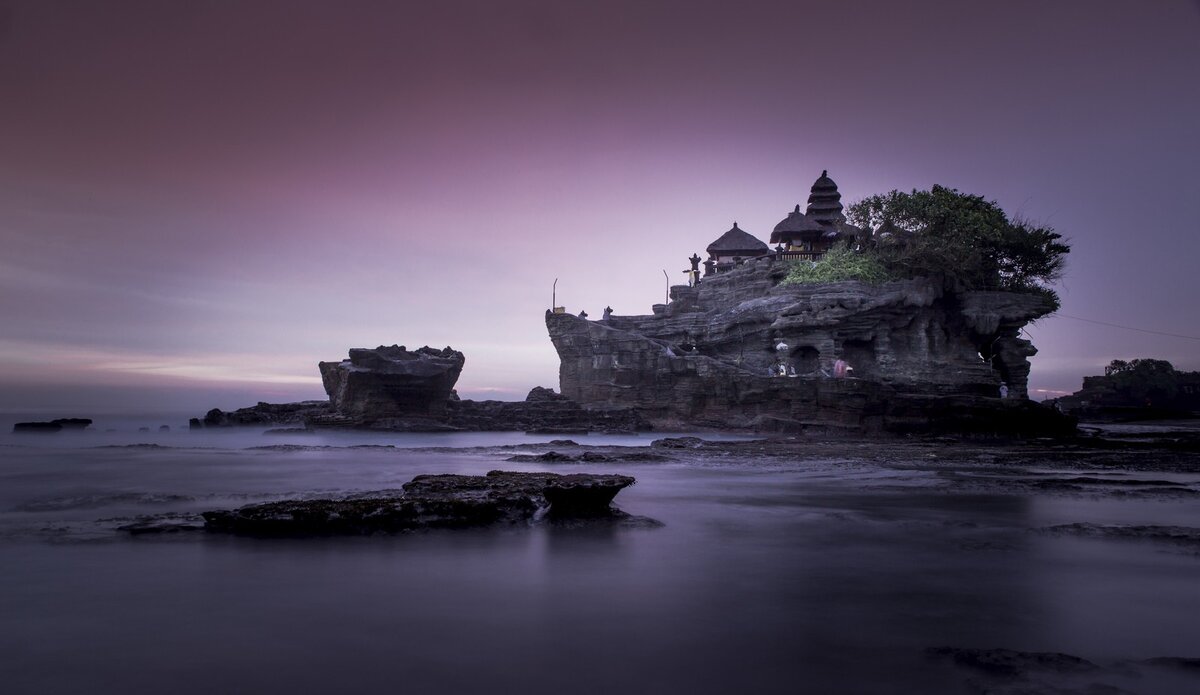
Bali. Beautiful and incomparable corner of the planet. But in spite of the developed tourism, the island contains a lot of mysteries. Read about the mysterious places that can only be called sacred.
Bali is called the Island of the Gods. According to the legend, the higher beings created it for themselves, and people are allowed to use its gifts - provided that they will bring some wealth as a gift to the heavenly masters. Maybe that's why Bali attracts people from all over the world, like a magnet?
Uluwatu Temple.
Uluwatu Temple is one of the most important temples in Bali. It stands on the edge of a 70-meter high cliff protruding into the sea. The locals believe this rock is a fossilized part of the ship of the sea goddess Devi Danu. Fishermen pray for a good catch here, but the sacred significance of the temple of Uluwatu is even greater: it is believed that the temple guards the island from attacks by evil sea spirits.
Goa Gaja Cave Elephants.
The magic cave of Goa Gaja is truly mysterious. There is no single version of who created it, why it is so named and looks like that. But it impresses everyone. The age of the demonic bas-reliefs - at least ten centuries, and if you step inside the open mouth, you will see a dozen and a half niches, which are cut out in the rock for spiritual practices. There are also important relics in the cave: three lingams (signs) of the god Shiva and a statue of Ganesha, a Hindu god with an elephant's head. It is believed that lingas help from infertility: spouses just need to rub their hands.
Tourists are also attracted by the beautiful landscape park surrounding the cave and the small temples nearby. Two ancient baths with fountain statues and golden carps delight both adult and experienced travelers and children.
Pura Temple Complex.
As much as 22 temples form this majestic Hindu temple complex. It is located in the east of the island, in the village of Besakih. The architectural ensemble is located on the slope of the volcano Agung, almost a kilometer above sea level. The central temple of the god Shiva, the temple of Brahma and the temple of the god Vishnu symbolize three earthly elements: earth, water, and air.
The locals believe that it is here, in the multi-story pagodas of measure, that the gods stay - the number of tiers can determine who is where. This belief was especially strengthened after the volcanic eruptions, during which the temples were practically not damaged.
Tirtagang residence.
The Rajah Water Residence appeared in 1942, thanks to the joint work of local architects and their colleagues from China. The water in these three lakes is considered sacred and is used by the Balinese in religious ceremonies. But also ordinary travelers can swim here (for a small fee). You can also go for a walk, feed the fish and enjoy the architecture.
Gunung Qavi Tombs.
Gunung Kavi is a cave temple carved into the rocks on the two banks of the river. To reach it, you will have to cross rice terraces and a tunnel, as well as overcome 300 steps. There are ten tombs in Gunung Qavi, and only five are considered to be true tombs. The rest are likely to be monuments to royalty, as no remains or ashes have been found in them.
The complex is so ancient that scientists could not even read all the letters on the bas-reliefs. It was possible to establish only type of the letter and approximate date of creation of Gunung Kavi - the beginning of XI century.
Brahmavihar Aram Temple.
There are few sacred places among Buddhists in Bali (Hinduism is the most popular here). And one of them is the Temple of Brahmavihar Aram. If you have already been to Java, you will recognize this temple: it is a smaller copy of the Javanese Borobodur.
Since Bali's Buddhist shrines aren't very popular among tourists either, Brahmavihara Aram is always calm, with no crowds, no queues, and no quick trade. All the conditions for gaining spiritual balance, which can be achieved not only through walks. There is a meditation center, where retreats with the participation of masters are regularly held.
Pura Uloon Dana Temple.
Pura Oulun Danu is the main water temple in Bali, which is also considered one of the most beautiful in the world. When the temple is approached closely by lake water, it seems as if it is growing from somewhere in the depths. The place is adored by both tourists and locals, for whom Uloon Dunu is one of the most sacred places in Bali. Lake Bratan, where the temple stands, is the most important source of freshwater and vitality. There is a belief that if you bathe in these waters, you will regain your youth and find longevity.
The temple of Uloon Danu was erected in the XVII century in honor of Devi Danu, the goddess of water elements.
It is a large complex: ten temples, and in the - almost three hundred sanctuaries in honor of different gods and goddesses. Almost everywhere there is an entrance for tourists. Particularly interesting to get to Pura Uloon Dana during a religious ceremony or ceremony.
This is just a small part of the mysterious and delightful places on this island, and how much more it contains unknown and difficult to imagine.