Part 1
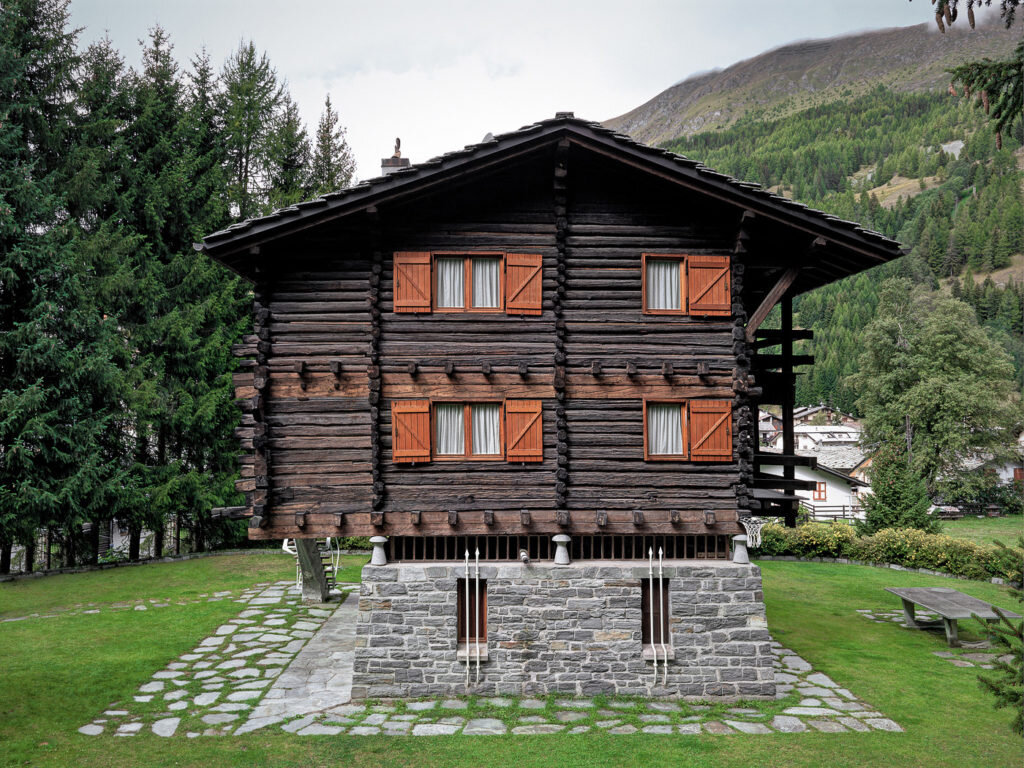
Carlo Mollino was already fifty-eight years old when his friend Felice Garelli proposed a unique enterprise: to dismantle the Talus hut he owned in Champoluc, a wooden hut from 1664, used as a warehouse and barn in the Val d'amas valley, and move it to the opposite side, behind the Santonna church, to make it a second home. The company is at the centre of a recent study, Carlo Mollino. The art of building in the mountains. Casa Garelli, Champoluc, published by Ejecta, by two Molinist experts such as Laura Milan, researcher, and Sergio Passé, professor at the Politico né Torino and curator, among others, of Carlo Mollino architect, 1905-1973, also of Elect (2006). Son of art his beloved and autocratic father was the famous Eugenia, a lucky independent engineer and speculator from Voguera, owner of a very well-established engineering studio with which he had built entire districts of Turin, Mollino was a very solid design technician: he taught Architectural Composition at the Turin Polytechnic and knew how to combine the most advanced rigour with the most fervent creativity.
He was an eclectic genius, as well as a solitary genius. Passionate about mountains, mountaineering, skiing, off-piste skiing and mountaineering, he was a theorist of alpine skiing, to whom he dedicated a unique treatise. He was also an original photographer, an expert in aerodynamics and acrobatics. Amateur and connoisseur of women, and especially of the bodies of women in his eyes, the quintessence of beauty he loved to mask and photograph them in the most unusual poses: back, side, side, side, back, bare feet, chest, with the groin on the back of an armchair, the white face of a schoolgirl or tortured by a rich virago, fixing them in a thousand Polaroids which constitute an infinite repertoire of female grace.
Decades before his involvement in the design of Casa Garelli in 1940, Mollino had already demonstrated his talent by signing the new headquarters of the Ipéca Taurines Company, at the corner of Corso Massimo d'Azeglio and Corso Dante: a building suspended in time and space, a 20th century architectural monument that resolved the impasse of functionalist rationalism with prodigious solutions but was destroyed in 1960 to make way for the celebration of Italy's reunification. With Aldo Morbelli, he designed the interiors of the Auditorium del Rai (1952), and with Mario Federico Roger, he created the co-ownership of the Vialle Conte Crotte in Aosta (1951-1953). As for alpine architecture, after the war, he had already built the Slittovia from Logo Nero to Salice D'Ulzio (1946-47), restored in the early 2000s by Giovanni Brino and Giorgio Rainer, the most three-dimensional work of modern Italian architecture, according to historian Kidder Smith, whose tourist aircraft structure coexists with a ghost galleon form. And he had already built the Casa Des Sole in Cervinia (1947-1955), accompanied by the arrival station of the Fürggen cable car (1950-1953), designed by him but deeply modified without his consent by the engineer Dine Lors Totino. In 1952-54, he also designed two other residential projects in the mountains: Casa Km for the entrepreneur Luigi Cattaneo, on the Agra plateau, and Casa Capita, above Gressoney-Saint-Jean, completed posthumously in 2014. And once again, with the furnishings of Casa Miller and his friends' houses (Mijola, Dévalé, Orange), as well as the Athalie Lutrario ballroom (1960), Mollino had reinvented interior architecture by creating tables, chairs, beds, armchairs, armchairs, storage and secretaries. His furniture, often unique or produced in limited series, has become over time precious collector's items, are moving sculptures, the result of biomorphic suggestions: locust chairs, gazelle chairs, flint lamps. Anatomical details such as the rib cage of a heron, the femurs of a deer, the horns of a deer or the vertebrae of a whale, inspire the legs of a table, the back of an armchair or the line of a desk.
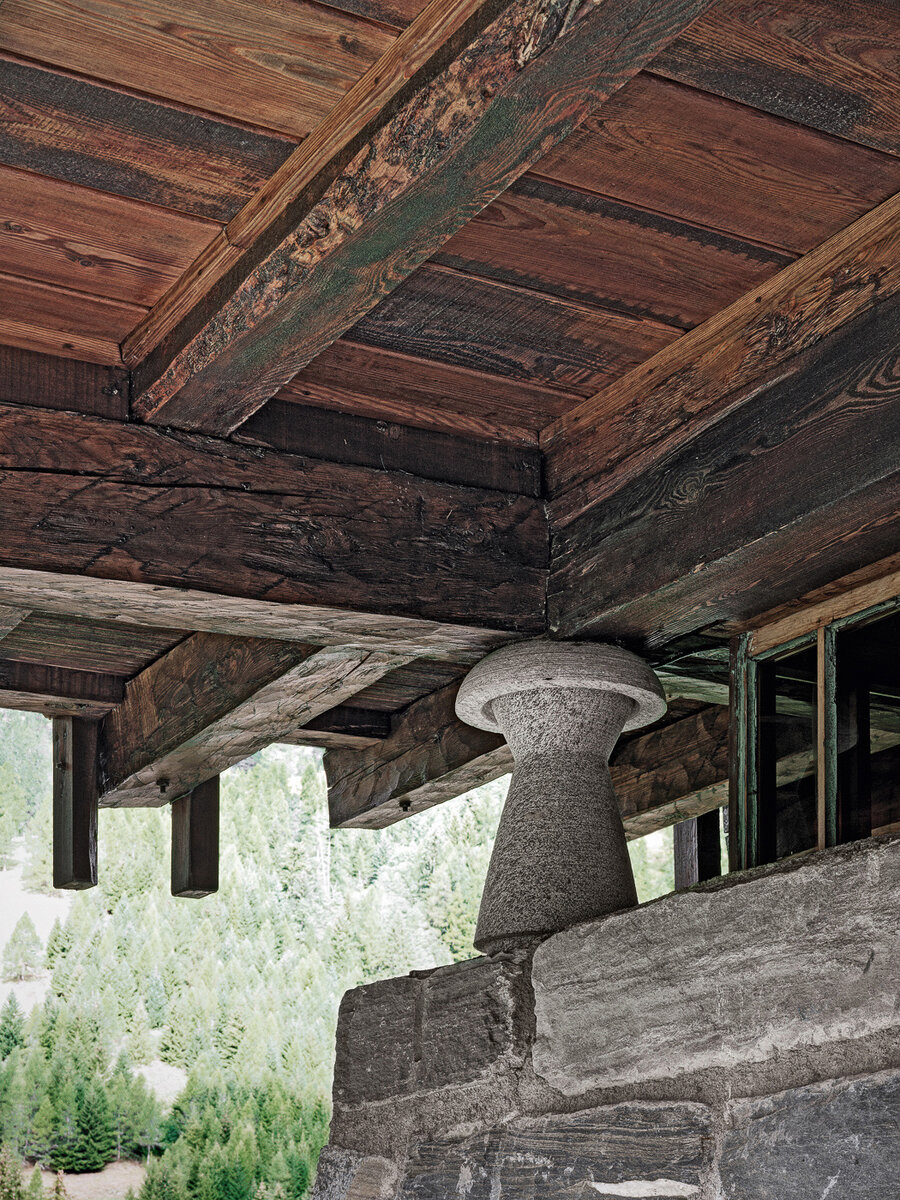
After so many experiences, the challenge proposed by his friend Garelli, surveyor, builder and manufacturer of cement materials who bought the Champoluc map in the summer of 1962 for 850,000 lire, represents for Mollino an opportunity to strengthen a relationship and to experiment: I have not forgotten what I promised you: it is a work that I feel and that I do voluntarily, in addition to my commitment to friendship. I think I will soon be able to give you everything together: these small jobs must be taken in the foreground. In fact, it was a rather complex job.
Read the rest of the following article- https://zen.yandex.ru/profile/editor/id/5d6287904735a600adf0e5b8/5d9536711ee34f00ad9b4e7f/edit