Capcom debuts on Apple Arcade with an interesting underwater metroidvania: here is Shinsekai's review: Into the Depths
This review by Shinsekai: Into the Depths confirms - as if there were still need for it - that Apple Arcade is indeed a fertile ground for more complex mobile experiences than the media: we are speaking in fact of a two-dimensional metroidvania produced by Capcom, which aims however more on the survival element that on the action typical of the genre, offering a decidedly more reflective gameplay. In short, it is a deep title, not only because it is set in the depths of the sea but because it requires an atypical commitment to a game from a smartphone or tablet: let's see if this desire of developers to go against the tide has paid or not.
Survivalvania
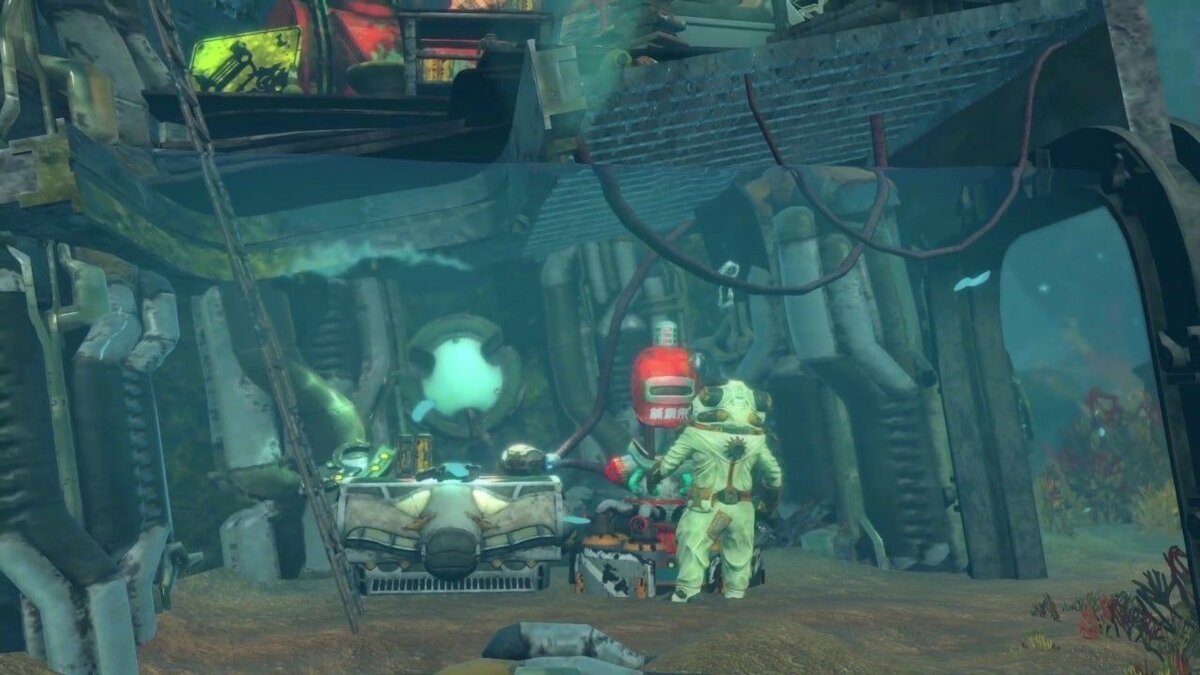
Shinsekai: Into the Depths introduces the user to the game world in a very direct way, without any preamble: in the context of an underwater scenario we only see the anonymous protagonist wearing a diving suit engaged in some of his routine activities, before a avalanche of ice forces him to hurry out of his shelter. From here begins the real adventure, with the player who is left alone to interpret the cryptic fragments that progressively reveal why the on-screen character is in that situation. The first impact with the game is rather unsettling: you have to get used to "slippery" controls due to the submarine setting, the menus are difficult to read and the survival component is immediately felt, given that the protagonist's survival is linked to a reserve of oxygen that runs out rather quickly.
Thanks also to a setting that is as mysterious as it is fascinating, however, Shinsekai: Into the Depths immediately establishes the right gear, and soon ended up involving the user in his mechanics, which strongly favor the exploratory component at the expense of action phases that are present but rather weak. Basically the aim of the game is to go deeper and deeper into the abysses, paying attention to the red colored waters that represent the areas with a pressure higher than the one tolerated by your suit: to be able to immerse yourself, you must first strengthen the suit by collecting resources and minerals hidden in the map. This situation is renewed for all the approximately seven hours required to see the credits, producing an undeniable background repetition but at the same time representing the solid framework of a game that invites the user to calm, encouraging him to proceed by small steps instead of head for the finish line.
This is also demonstrated by the particular fragility of the protagonist: just a few blows suffered by the opponents or even a too violent impact with the bottom to see their own oxygen tanks crack and then finally break, an eventuality that forces them to look for others along the way. The survival aspect then extends to a modest but effective crafting component, with resources gathered from elements of the scenario or released by killed enemies that can be combined to make objects useful to restore equipment or to give momentary bonuses. As mentioned at the beginning, Shinsekai: Into the Depths gives his best in the situations described so far, showing instead the side in purely action terms. Although you can count on a melee attack and a series of ranged weapons to unlock during the adventure, the fights are rather clumsy, also considering the slowness of the protagonist's movements and the enemies' very limited attack patterns: there is to say that the game seems aware of this factor, and to the extent possible always pushes the user to avoid clashes not strictly necessary.
Even marrying this cautious approach, Shinsekai: Into the Depths is more enjoyable when played with an external controller, a setup that allows you to proceed with greater safety especially when it comes to performing precision maneuvers or dosing the oxygen discharges that allow you to brake sparingly falls or reach elevated positions. We close with a comment on the technical section of the Capcom product, which can count on a three-dimensional graphics with great care in detail and on an excellent set of animations for the protagonist, while perhaps something more could be done to make the interface more readable . The game, however, fascinates with its evocative seabed - so rich that it happens to confuse the elements with interactive ones with purely aesthetic ones - and with a really good sound accompaniment, with well-chosen music and perfectly themed sound effects that absolutely deserve the use of headphones.