As a matter of principle, landing in conditions of strong lateral wind was worked out — it was recommended to let out a brake parachute before touching a strip and to shoot it right after the first, sharp extinguishing of speed. In the event of such a landing, the wind could no longer “hook” the parachute and take the plane off the landing strip, while the released parachute had time to extinguish the speed to a value sufficient to prevent the plane from skipping the entire runway. On that unhappy Mayday, the pilot fired and shot off the parachute, strictly following the technique, but could not stand the right direction of landing. On the second round, he left without the main braking equipment. The second call the pilot has executed precisely, but there was nothing to break anymore — the scout has quickly passed on all strip, has crushed under itself the truck established as an emergency barrier and has stopped already on a soft ground. The crew got off with a light fright, and the plane got off with demolished landing gear supports, crumpled fuselage and wings. They did not repair the “rabbit”, but dismantled it for spare parts.
Incidents that did not result in the loss of aircraft occurred more than once in flights from Okinawa. Thus, on September 24, 1974, while performing a familiarization flight with the theater of military operations at an altitude of 23,500 m and a speed of Ì=3.0, the fourth stage of the compressor of the right engine was destroyed and a fire broke out. The pilot managed to return to Kadena on one left engine and safely land the plane. On April 24, 1975, on SR-71 of Captain Robert Helt during the return from the mission, there was a series of failures — failure to start the air intake, pressure drop in the hydraulic system, the part of electrical equipment and navigation system did not work. Helt brought the scout to Kadena literally on his own hands. It is appropriate to remember Colonel Storry's beautiful phrase about “system managers”: sometimes it is not harmful to have in the cockpit a guy who knows how to ruffle the handle.
President Nixon made the combat work of the reconnaissance crews very difficult when in 1972 he forbade intrusion into the air space of the SAR. Previously, SR simply crossed the country in the designated places, but now the flight route lay along the coast of North Vietnam, and to hold an inert plane flying at high speed and altitude, such a rather winding path became a very difficult task. Eventually, it was necessary to reduce the working ceiling and flight speed.
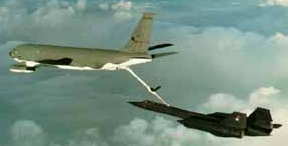
Scouts flew along the SAR for some time after the U.S. formal withdrawal from the war, controlling the implementation of the Paris agreements signed on January 27, 1973.
Vietnam was not the only area of operation for reconnaissance from Okinawa, the second area of use of SR-71 was North Korea; the “road” there, as, however, in Indochina, paved another pilots A-12. The crews of the 9th wing, acting from Okinawa, regularly supplied photographic information about the situation north of the 38th parallel.
One of the flights almost ended in an international scandal: on November 1, 1977, the SR-71, which was located over the territory of the DPRK, collapsed a bunch of failures — failure to start the air intake, malfunction in the hydraulic system plus the plane's self-oscillation on the roll and strong vibrations of the structure. The pilot was able to regain control of the engines and land the SR-71 at the Hosan airbase in South Korea. That landing was the only known landing of the SR-71 at a foreign airbase, excluding “official visits” to Paris, Farnborough and the deployment of “unit 4” aircraft in Mildenhall.
The flights over Korea have not been advertised and are more widely known from Pyongyang Radio:
On February 27, 1980, the SR-71, a U.S. strategic reconnaissance officer, entered DPRK airspace east of Kaesong (Gangwon Province) and flew back to an area east of Sosua (North Hamgyong Province). Between January 11 and February 27, SR-71 aircraft violated the DPRK border 23 times;
On Friday, June 20, 1980, an American reconnaissance aircraft crossed the demilitarized zone near Keson and deepened into the airspace of the DPRK. The DPRK government protested to the U.S. government;
On Saturday, June 20, 1981, the SR-71 scout violated the airspace of the DPRK in the area of Kaesong, Radio Pyongyang noted that in the first six months of 1981, SR-71 reconnaissance aircraft violated the border of the DPRK more than 70 times, the violation of June 20 — the third in the last week.
On August 26, 1981, another violator was fired with S-75 SAM missiles, to no avail, of course. It is amazing how the Americans reacted to this incident. Dean Fisher, State Department spokesman, made an official statement: “President Reagan's administration considers this act illegal... and contrary to international law. Interestingly, does a military aircraft violating the border of a sovereign state comply with international law? However, the Yankees both then and later denied that the scouts violated the border, arguing that the planes did not enter the country's airspace by Kim Il Sung.