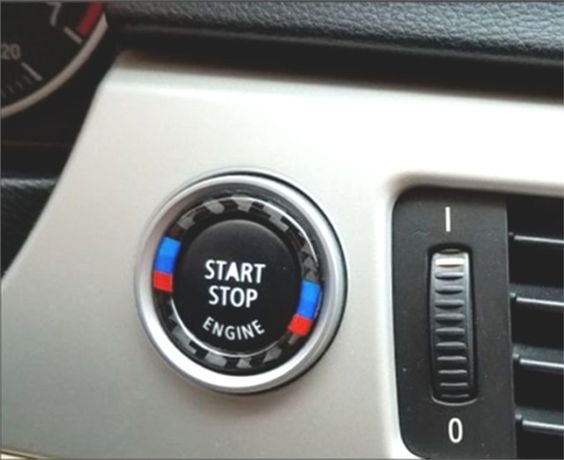
Now it's on the line!
Soon the cars will start to "stall" right on the move! Hybrids know how to do it for a long time, but now ordinary cars will get the same function - with the only difference that they will use not electric traction, but the force of inertia for further movement.
The Start-Stop inertia system, which is only one step away from mass deployment, stops the engine from running while it is in motion: it is switched off every time the car can move by inertia, for example, on a small descent. To restart, the driver just needs to press the accelerator or brake pedal. There's no need to worry about active safety: even when the engine is off, all systems, such as power steering and brakes, are working, and it's the stabilization system that's responsible for keeping the tractionless vehicle stable.
The other side of the coin
The main reason for the mass use of the Start-Stop system is the ability to reduce emissions. Let's be blunt, in our region, it's not common to think about the environment, so another advantage comes first - less fuel consumption. Taking into account our prices for oil products, we will be able to save about $100-200 per year with an annual mileage of 20,000 km.
This is a good time to talk about the technical aspects of Start-Stop. It is clear that it can recognize the conditions for starting the function with the help of standard sensors (speed, engine temperature, rudder angle, crankshaft position, etc.). Whether it's an additional firmware or a separate unit, it's not important either. But here's a question that you might have asked when reading the previous part of this article: Won't the starter and battery be able to finish such frequent engine starts, because they increase the load on them by several times compared to a normal car?
The creators have a ready-made answer to this. Firstly, in order to reduce the load on the starter and battery, as well as reduce fuel consumption, the engine start is facilitated by "preventive" measures: at the moment of stopping the engine, the crankshaft is installed in the most advantageous position for its further start.
Second, vehicles with Start-Stop are fitted with special reinforced starters, which are designed for increased loads and increased starting cycles. Correspondingly, higher power generators are also used. So the functionality and node life should be in order.
Another thing is that the cost of a "reinforced" starter is one and a half to two times higher than the standard one. But in some models, the starter and the generator can be combined into one node (starter-generator, or reversible generator), which is more complicated and much more expensive than its "components" separately. In addition, taking into account the peculiarities of this tandem, which works as a starter and then as a generator, uses a special drive. Failure of the united node or its drive can turn into serious expenses.
Finally, frequent starting of the engine means the increased load on the battery, which constantly has to give energy at the "start", but will it have time to charge during the trip? A typical lead-acid battery with a liquid electrolyte would not be easy - it does not like deep discharges, it recovers relatively long.
That's why vehicles equipped with a Start-Stop system use AGM batteries. For this specific application, they have a very important quality - they have lower internal resistance than "traditional" batteries, which means that with the same capacity they can provide more inrush current and charge faster. Also (which is equally important), they are able to withstand deep discharges. So here too the question is closed, except for one thing but: at the comparable service life of AGM-batteries approximately in 2-3 times more expensive than "usual" accumulators with liquid electrolyte!
In general, we can assume that all the savings will be made by car owners aged up to 3-5 years. Then you will have to spend money on an expensive battery, and in 10 years - on an expensive reinforced starter or a miracle module called a reverse generator.
The verdict of "Autobusiness"
Recognizing all the advantages of the Start-Stop system, we would like to note one of the advantages of the Start-Stop... Recognizing all the advantages of the Start-Stop system, we would like to note one of the advantages of the Start-Stop... the function of turning it off! Owners of new and fresh cars will press the cherished button "to avoid nervousness", owners of old cars - hoping to get the best of both worlds!