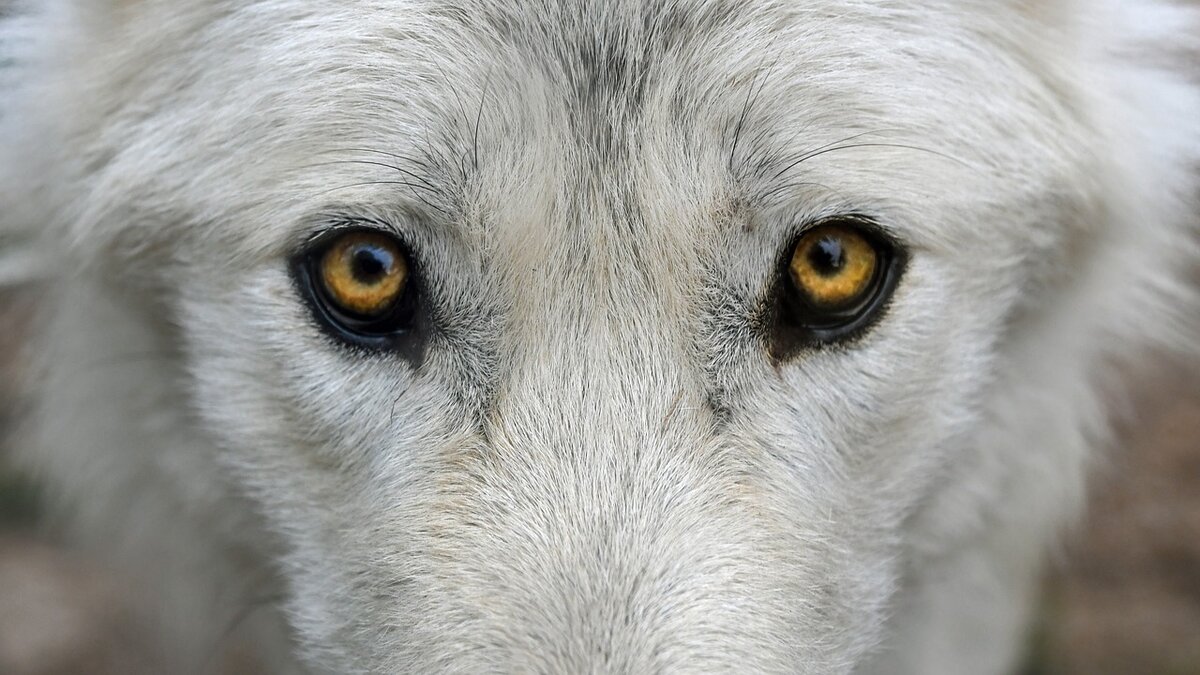
Everyone remembers a fairy tale about a grey wolf, which we were told as a child. So who really is the wolf? A fairy tale image or a dangerous animal? A common wolf is a large predator of the Dog family. Grey wolf is the owner of tundra and taiga, enduring and very clever animal. In this article, you will find a description and photo of the wolf, learn a lot of interesting things about the harsh life of this formidable predator.
What does the wolf look like?
Externally, the gray wolf is very similar to a dog, which is not surprising, because these animals have common ancestors. However, the wolf looks much larger. Wolf's body length can reach 110-160 cm, tail length - up to 52 cm, height in the withers varies from 60 to 90 cm, and the bodyweight of wild predator can reach up to 80 kg.
There have been cases where individual weights have exceeded 92 kg. The average weight of wolves varies from 30 to 65 kg. The size and weight of wolves depend on the geographical location. The colder the climate, the larger the animal. Males are always larger than females.
The wolf has a thick, long and warm fur, which consists of two layers, which makes the wolf look larger. The first layer of wolf wool is more rigid and protects it from dirt. The second one is a waterproof undercoat, which protects the wolf from the cold and various extreme conditions of nature. Animal gray wolf is very enduring.
The wolf looks like a threatening and dangerous animal, has a strong muscular body, tall strong legs and a large wide head with sharp ears. The elongated and large muzzle with dark stripes is combined with almost white cheeks and light spots in the eye area. The massive muzzle of a wolf is also very expressive. The tail of the grey wolf is rather long and usually dropped down. By its movement and position, one can judge the mood of the predator.
The common wolf has a completely different coloring, depending on the habitat. In forests, it is a grey-brown color. In tundra, it is lighter, almost white. In the desert, it is grayishly reddish. There are even white individuals that can be found in the Arctic, as well as red or almost black ones. The undercoat of the beast is always grey.
What is the difference between a wolf and a dog? A common wolf differs from a dog not only in appearance but also in its traces. The track of a grey wolf is more even than that of a dog and forms an almost straight line. Also, the wolf has a different track length, which is 9-11 cm, and a width of 6-7 cm and the she-wolf has a track length of 7-9 cm and 5-6 cm. The two middle fingers of the wolf's toes are more forward, the fingers are not spread out and form a much more relief print than the dog's.
Where do wolves live?
A wolf is the most common terrestrial predator. This wild animal has a wide range of habitats. The wolf lives mainly in cold countries and in different landscapes. In forests, steppes, deserts, taiga, tundra, forest-steppe and at the foot of mountains.
Wolves live in many parts of Europe (from Russia to Portugal), Asia (from Korea to Georgia) and North America (from Alaska to Mexico). Large individuals inhabit the tundra, while small individuals inhabit the southern regions. Interestingly, in Russia, the wolf is absent only on Sakhalin Island.
The common wolf is a territorial animal. Flocks of wolves live on conquered areas, the boundaries of which are marked with marks. In summer, when a wolf pack breaks up, the area is divided into several sections. The best of them is occupied by the main pair, and the rest of the wolves switch to a nomadic way of life.
How do wolves live?
The wolf is a social animal. That's why wolves live in packs, they hunt, play and even howl together. Wolf flock is a family group consisting of animals of different ages and can number from 3 to 40 individuals. The flock is managed by a leader or a mother wolf, the dominant male animal. This is the smartest, wisest and strongest male in a wolf pack. The pack leader has a girlfriend - the dominant female. Together, they form a pair, thus uniting the other wolves around them - this is the wolf pack.
A flock of wolves has its own hierarchy. The leader in the pack has undisputed authority. This is a wise leader and he is friendly towards all members of the pack. But the strangers are met by a wolf that is extremely aggressive. A beta male is often present in the pack - the most likely successor to the leader. Usually, he is the common son of the leading pair or the brother of the leading male. The applicant for the position of the head of the pack periodically demonstrates aggression against the alpha male, as if checking his status, as he is ready to take his place at any time.
A wolf who has left the pack on his own or has been expelled is called a lone wolf. Such animals have every chance to create their own flock.
Wolves live on their own feelings. They use these feelings to hunt and communicate with other wolves. The beast's excellent hearing allows you to hear a wolf at a distance of seven kilometers. Their sense of smell is 100 times stronger than that of humans. The grey wolf can run at 55 km/h.
Wolves live in packs and each pack has its own hunting ground, which animals carefully guard against other wolves. In a pack where the leader keeps order, wolves live peacefully and do not fight. Battles happen with strangers and single wolves, who have violated the boundaries of the site. Each wolf pack has its own territory and only hunts there.
The owners carefully guard and mark their territory, leave scratches on fallen trees or old stumps. Thus, they make it clear that it is better to stay away. Unexpected guests are punished, these are the cruel laws of the wolf pack. The wolf howl, which is heard around, is a way of informing that the territory is already occupied.
The size of a wolf's family territory depends on the landscape and ranges from 50 to 1500 km². The survival of the flock depends on the size of its hunting grounds, so wolves carefully protect them. If there is more than enough food on the family hunting ground, several generations of wolves will live on one site. The largest hunting grounds of wolves can be found in the open landscapes of tundra and steppe and are 1000-1250 km². In the forest zone they are much smaller - 200-250 km².
When wolves do not have small calves, they migrate. Wolves wander both in flocks and alone. As a result of wandering animals sometimes appear in areas where wolves have not been seen for several years. Nomadic wolves run up to 70 kilometers in one night.
Grey wolves gather in flocks in winter. If the snow is deep, the wolves in the flock go goose. Each animal follows the other, stepping into the same trial if possible. A wolf is a very tricky one. Therefore, it is difficult to find out from the tracks how many wolves a flock consists of.
Why do wolves howl? Wolves howl because howl is the way they communicate with each other. With the help of wolves, they will find out where their family members are, announce the capture of prey and capture the territory, or simply - to communicate with their relatives. Wolves usually howl in the late evenings. During the year wolves howl most often in winter when the number of members of the pack reaches its maximum. Wolves begin to howl more actively by the end of summer and the beginning of autumn, as well as when puppies are developing their family plot and begin to move around its territory.
What does the wolf eat and how does he hunt?
A wolf is an unprofitable predator. The main ration of the common wolf includes large ungulates: deer, elks, saigas, rams, and goats. But the wolf also feeds on hares, rodents, and birds, because it is unfeasible. Sometimes wolves can eat dead pack members.
Large clusters of livestock attract wild and predatory wolves. Therefore, it is common to meet a grey wolf near farms. Wolf feeds on meat, so the average animal needs 3-4.5 kg of meat per day. Wolves store their food. When the wolf is full, it buries the remaining pieces of meat. Wolves can do without food for more than two weeks. In summer, the wolf's diet includes vegetable food, so in summer the wolf also eats fruits and berries.
The principles of wolf hunting are very diverse. In winter wolves hunt large ungulates collectively. This type of hunting wolves are used in winter. The main advantage of winter hunting wolf is the presence of snow cover, on which he easily moves. Snow considerably complicates the possibility of escaping from the wolf - wild and predatory animal - to the smoky animals.
Interestingly, the collective hunting of wolves provides for the distribution of responsibilities: some of the flock participates in the pursuit of prey, while others cut the path of prey. The wolf's nose is the main advisor on hunting. He tells the wild predator where to look for prey. Wolves can smell even a small animal, which is a couple of kilometers away from them. It is with the help of the sharp sense of smell that wolves can follow the victim in the footsteps. The wolf hunts almost silently.
The main weapons of the wolf are teeth. The wolf holds and drags the victim with sharp fangs 5 cm long, and cuts the game with the rest of its teeth. Wolf's teeth are not only his weapons, but also his protection, so their loss is fatal for the animal.
Especially large ungulates are killed by wolves, attacking the entire pack and attacking until their victim does not fall. At the same time, the championship to eat the prey rightfully belongs to the leader and his female, they eat the best pieces of carcass.
The wolf is hunting very carefully. Sneaking up on the animal, he grabbed it by the throat and dropping it to the ground with a sneaky jump. He can sit in an ambush for hours and wait for the prey all day long. Often they can follow the herd of ungulates, predators do not give up their presence, and wait for the right moment to attack.
Wolves are very clever, in pursuit they stop chasing, allowing the prey to go far ahead. When the victim slows down, the wolf attacks again. Often wolves attack foxes. But most often they do not eat them. Attacking a herd of livestock, wolves can distract the dogs. A part of the wolf pack attacks the dogs and the rest attack the herd.
Wolves are very well oriented on the terrain. Many flocks use the same parts of the area to drive the victim to a dead end. When hunting rodents, the wolf jumps on the prey, paws it down and eats it. This method of hunting is common for wolves in summer.
In summer the flock is divided and predators live alone or in small groups. Wolves feed on a variety of animals using used hunting techniques. In summer, wolves usually eat hares. But even with all calculated moves and clever maneuvers in hunting, it does not always end successfully.