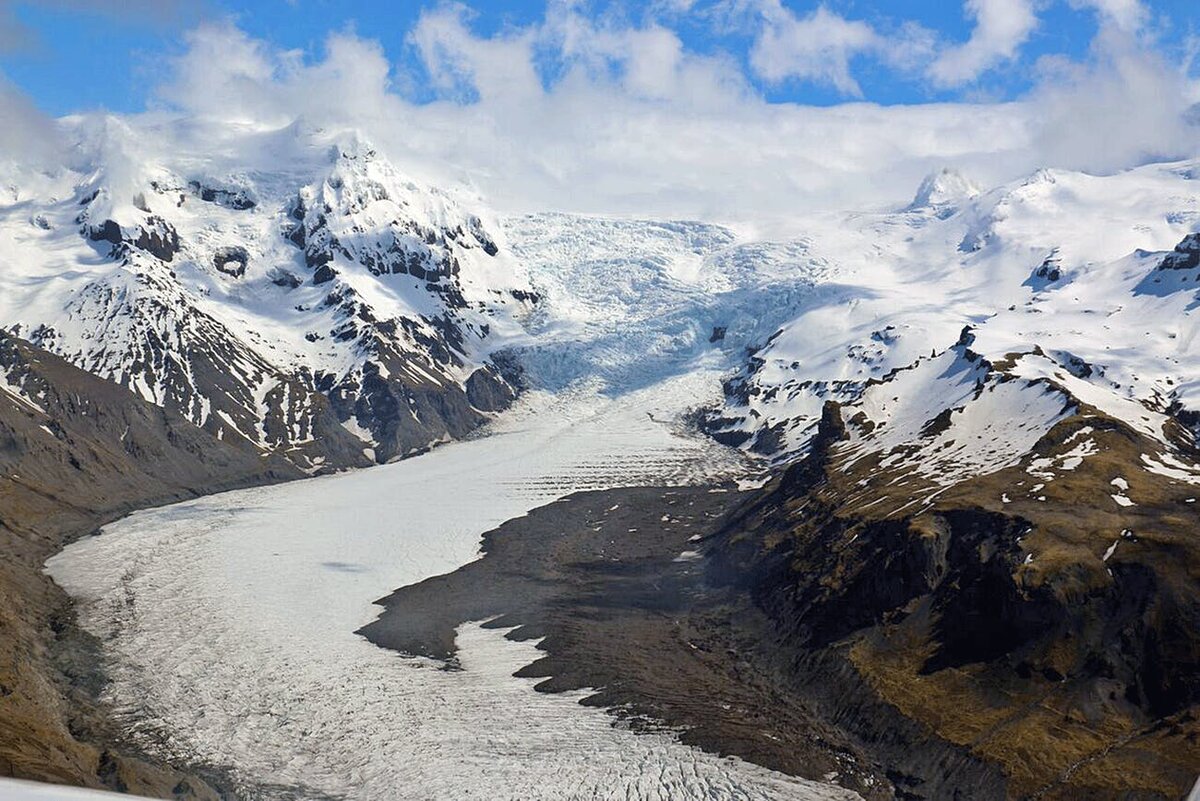
Skaftafell
A trip to Iceland can not fail to include a stop at the Skaftafell National Park, the second in Iceland and probably the best known. This area of 160 thousand hectares of wilderness extends between the southern part of the Vatnajökull glacier, the largest in Europe except Greenland, and the Atlantic Ocean. With its glaciers, waterfalls, green expanses, gorges and, of course, enchanting ice caves, it is a treasure chest that encloses the entire range of typically Icelandic landscapes, where nature gives life to breathtaking scenery to explore on tiptoe.
One of the most interesting places is the glacial lagoon of Jökulsárlón, which is located under one of the languages of the Vatnajökull, where you can admire the icebergs that float slowly, until you get to the black beach overlooking the ocean.
The park is crossed by a dense network of paths along which you can make excursions of different difficulty and duration.
In the shopping center of the Skaftafell there is an information point, where you can inquire about the aera and possible excursions. Among the most fascinating walks that leads to the so-called "Black waterfall", the Svartifoss waterfall, reachable in about thirty minutes of walking in the Green of the woods, which conceals the view until arrival. The waterfall owes its epithet to the arch of black basalt columns of volcanic origin that embraces it and along which it throws, forming a unique chromatic spectacle.
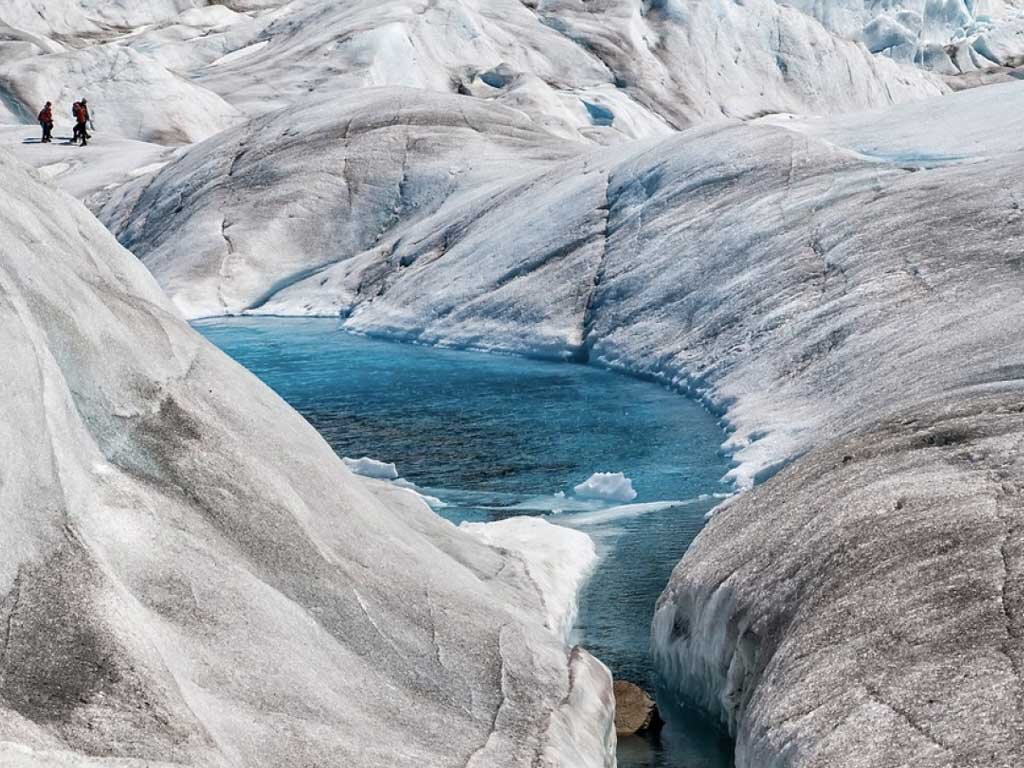
Ice caves
If you do not want to miss an unparalleled experience it is advisable to organize your trip to Iceland in winter, when you can visit one of the most striking attractions of the island-the ice caves. This season, in fact, the frost causes the streams to retreat and the structure of the glacial holes is stable. These fascinating architectural structures, constantly changing, are the result of the slow and incessant transformations of glaciers.
Of these caves, although sharing the name “ice caves”, there are actually two types: the ones carved over the centuries by the advance of ice, which carves and holds the rock, therefore, is more properly definable as “frozen”, and those spaces formed by the ice, and then actually “ice”, formed by the flowing water within the glaciers, or the effect of the heat of the volcanoes beneath it.
Although they are the result of centuries of ice work, the changing nature of the ice caves is perceptible by the continuous crunches that can be heard from the inside, while admiring the bright shades of blue ice.
The most famous is the Crystal Cave, not far from the lagoon of Svinafellsjokull. The characteristic blue color of ice is the result of centuries of layering and snow on the glacier, which squeezed out all the air. The play of colors, ranging from deep blue to light blue, is most visible on sunny days. The opening of the cave is seven meters and the time is already after a few steps, very low, so the visit can be difficult if you suffer from claustrophobia, but, otherwise, the spectacle of this charming, unique place in the world is priceless.
To visit these fascinating natural structures it is strongly recommended to use the assistance of an expert guide, able to assess the level of safety of the excursion. From November to march, in fact, Skaftafell park guides organize tours to the caves, the feasibility of which depends heavily on environmental conditions. Warm, waterproof and layered clothing and wearing hiking shoes is recommended, while helmets, crampons and technical equipment are provided by guides.
How to get there
Located along the main road that runs along the entire perimeter of Iceland, the Hringvegur, the park can be easily reached by car from the nearby port town of Höfn.
Alternatively you can choose to reach it by traveling by bus that runs along the Reykjavik-Hofn section, although during the winter bus rides are limited.
Except those connecting to farms, there are no roads within the park of Skaftafell, so you have to move along the marked paths, which are, almost all, connected to the parking of the campsite inside the park, where you can stay overnight. To reach the ice caves, instead, you have to walk a stretch of glacier, on which you can move only by specially equipped means that lead small groups, accompanied by guides, from the park to the caves.