The history of the world around us, the history of the universe - is a matter that has worried humanity from the earliest stages of knowledge. Myths and religious teachings suggest their "cosmological systems", their theories of evolution of the universe.
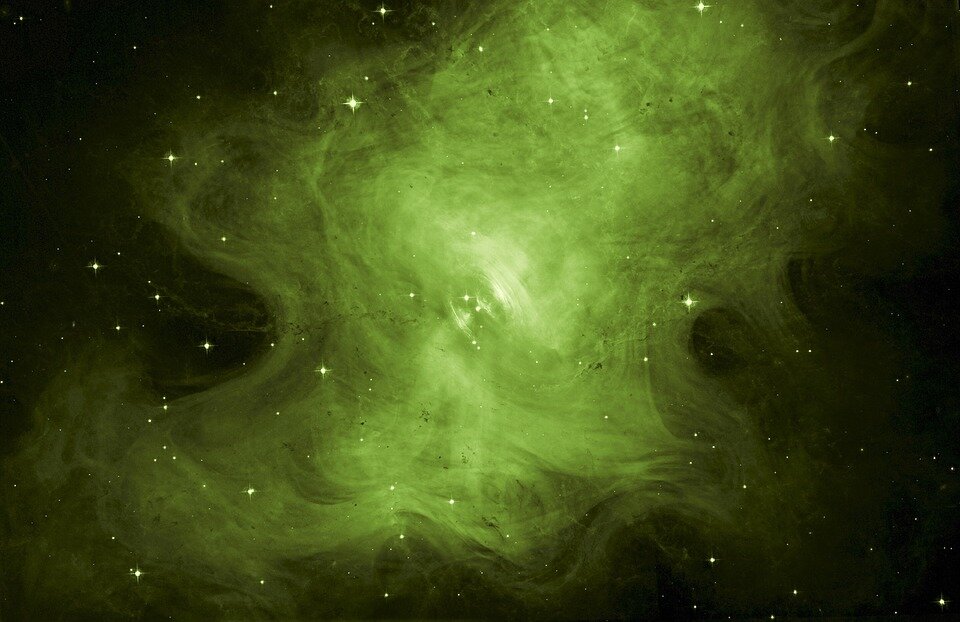
The evolution of the Universe, starting with the Big Bang, is considered as a joint development of micro- and macro phenomena, including the processes of differentiation and complication in micro- and macro-evolution.
Our Universe participates in the natural evolutionary process
But it would be a mistake to identify the process of evolution of the Universe, as well as any other material system, with only one progressive branch of development. Development always consists of two branches or stages - progressive and regressive, which are united by one common characteristic: irreversibility of changes occurring in them.
The state of matter and the course of physical processes, the very concepts of time and space in the "early" period of evolution of the Universe, when the density was grandiose, are not yet clear enough and probably differ significantly from the concepts of physics today.
But qualitative changes in the Universe occurred not only in the distant past. There are theoretical assumptions that under certain conditions the evolution of stars leads to the formation of so-called "black holes". The field of gravity at the surface of these holes is so large that the forces of gravity "bind" in this part of the space all kinds of radiant energy, including light. Therefore, these massive stars become invisible, unless the substance falls on them from the outside. Finding out how to find "black holes" is one of the most interesting tasks of modern astrophysics.
The universe is a material world viewed from its astronomical perspective. There are different models of the Universe: "Einstein's Universe", "Friedman's Universe", "Lemeter's Universe", "Naan's Universe", "Zelmanov's Universe", corresponding to different perceptions of it as a whole.
The modern picture of the evolving Universe - not only expanding, but also literally "exploding" - is perhaps just as similar to the picture of the static universe, which was drawn by astronomy in the early 20th century, as modern concepts of the interconvergence of atoms and elementary particles to the indivisible atoms of classical physics.
The scientific formulation of the question of the history of the Universe is one of the most important achievements of modern science. Astronomy uses observations with the help of telescopes, explores the spectra of distant celestial bodies, studies radio waves coming from the most remote areas. Conclusions from these observations are made taking into account the laws of nature, studied in earthly laboratories. We use data on atomic spectra, radiation laws, and radio wave propagation. We apply to the universe and to the huge constellations of stars the theory of global gravitation, which has been tested in terrestrial conditions and in the solar system, in particular in the movement of human-made spacecraft.
A great achievement of our century is the establishment of the fact that the evolution of the universe is changing. The stars are using up their fuel, hydrogen. Burning here is the conversion of hydrogen into helium through nuclear reactions. Huge clusters of stars are being removed from each other. Part of this accumulation is our Galaxy, with its 100,000,000 stars. We just need to remember that neither the Earth itself, nor the solar system, nor the Galaxy is expanding.
The new radiation discovered in 1965 is explained by the fact that many billions of years ago the whole universe was completely different from the present one. The whole space was filled with what physicists call plasma - hot gas consisting of electrons, hydrogen and helium nuclei and radiation. Particles of radiation even prevailed. The universe was expanding, and in the course of this expansion, there was a gradual change, a cooling of the plasma. The radio waves observed today are the descendants of hot radiation in the past.
This conclusion is also confirmed by the spectrum of radio waves - the theory makes it possible to correctly predict the wave flows in different ranges.
Cooling is also associated with the separation of individual celestial bodies. It is well known that the cooling of warm air causes fog: water vapor contained in the air turns into water droplets. Something similar happens with plasma as well: electrons and nuclei are combined into atoms, atoms are combined into gas clouds, and then these clouds break up into separate stars. Part of the substance still remains in the form of gas.
A detailed theoretical study of the formation of galaxies and stars is one of the central tasks of astrophysics.