1. Discovered a star system with three earth-like planets

In February, NASA reported the discovery of a star system in which seven planets are similar in size to Earth, and three of them are also in the habitable zone. There is a high degree of probability that this Trinity has conditions under which life is possible on them. The planets supposedly have liquid water and a dense atmosphere.
Comparison of the orbits of the planets TRAPPSIT-1 and our Solar system Cold red dwarf TRAPPIST -1 is located in the constellation Aquarius, at a distance of 39.5 SV. years from us. The first three planets of the system were discovered in 2016 by a group of astronomers from Belgium and the United States led by Michael Gillon using a robotic 0.6-meter TRAPPIST telescope (TRAnsiting Planets and Planetesimals Small Telescope), located at the ESO La Silla Observatory in Chile. However, the discovery of one of the planets — TRAPPIST-1 d — later was not confirmed. The" rediscovery "of planet d (the third from the star in the system) and the discovery of four more planets occurred later thanks to additional observations using several ground-based telescopes and the Spitzer orbital telescope. Some data on the system has also been obtained by the Kepler telescope. At a press conference on February 22, scientists noted that this is the most important discovery in recent years. Its significance is not so much in the fact of the discovery of exoplanets, but in the proximity of the exoplanetary system to us and the opportunities for its study and the study of possible extraterrestrial life on them.
2. Found traces of ancient microorganisms
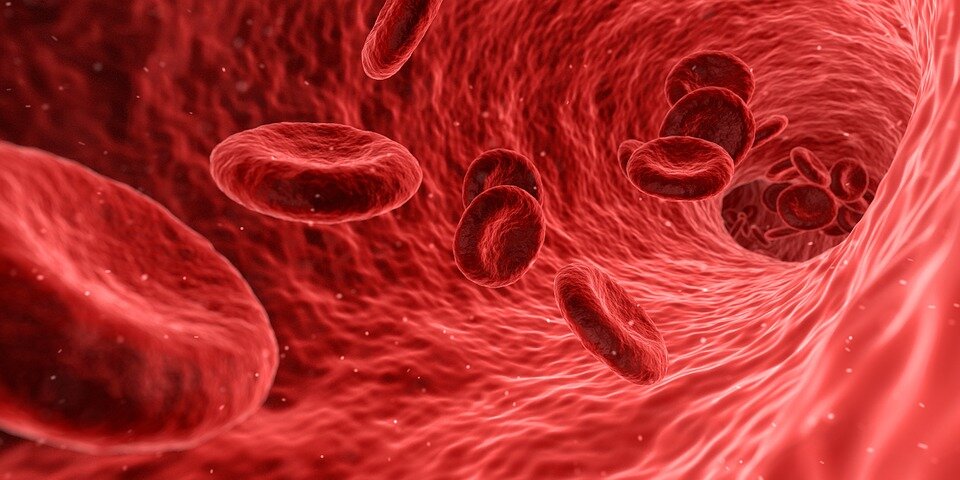
Traces of ancient bacteria were discovered by an international group of paleobiologists in the rocks of Nuvvuagittuka (Canada, Quebec). The age of the rocks is up to 4.3 billion years. It was determined in 2012 using samarium-neodymium Dating. At the same time, as we know, the age of our planet is about 4.6 billion years.
The tube-like structures found by scientists are at least 3.77 billion years old. Fossils are hematite tubes and fibers similar in morphology to filamentous microorganisms from modern hydrothermal vents and fossils in young rocks. They testify to the life activity of iron bacteria that took place here in the distant past. These bacteria are able to oxidize ferrous iron to trivalent, and the released energy is used to absorb carbon from carbon dioxide or carbonates. They lived, presumably, under water in hydrothermal vents. It is noteworthy that at the same time liquid water was on Mars. This means that there is every reason to hope that on the red planet in the same period there was life. The article analyzing the find was published in the journal Nature on March 1.
3. Getting the image of a black hole
In April, scientists from the Event Horizon Telescope project spent five days "photographing" black holes. The aim of the experiment is to obtain the first ever image of a black hole. For observations astronomers have chosen two objects. The first-Sagittarius A * - compact radio source, which in addition to radio waves also emits in the infrared, x-ray and other bands. It is located in the center of the milky Way, at a distance of 26 thousand light years from us. The second object of observation is a black hole in the supergiant elliptical galaxy M 87, the largest in the constellation Virgo. It is located approximately 53.5 million light years from Earth.
To get the images, astronomers created a "virtual" telescope, combining several telescopes located in Mexico, Arizona, Chile, Spain, Antarctica and Hawaii. Each of the participating observatories collected 500 TB of data, which fit on 1024 hard drives. Themselves Observatory, of course, not have opportunities process such number of information on place, so data are in Massachusetts Institute of technology (the US) and in radio Astronomy Institute max Planck (Germany). Here on supercomputers they will be processed, as a result of which we will see the first ever photo of a black hole. However, the first images of the black hole will not appear until 2018.
4. Record success of blockchain technology
The record growth of bitcoin this year (and it has grown almost 16 times in a year) is an event not only from the world of Finance, but also from the world of technology. During the year, the total capitalization of all cryptocurrencies increased from $ 17 billion in January 2017 to almost $ 500 billion in mid-December. At the same time, the market of primary placements in cryptocurrency (ICO) is booming, it can only be compared with the dot-com era of the end of the last century. In addition, bitcoin itself has experienced four forks in the second half of the year: Bitcoin Cash, Bitcoin Gold, Bitcoin Diamond and Super Bitcoin — everyone wants their own bitcoin. Perhaps no other application of cryptographic techniques has had such success before. Blockchain, the technology on which bitcoin and other cryptocurrencies are based, can be used for other purposes: elections and voting, management of decentralized organizations, fundraising and so on — that is, wherever there is no trust between people and you need to avoid intermediaries.
These were some of the achievements of science and technology in 2017. Even more interesting in the following articles. Stay with us :)