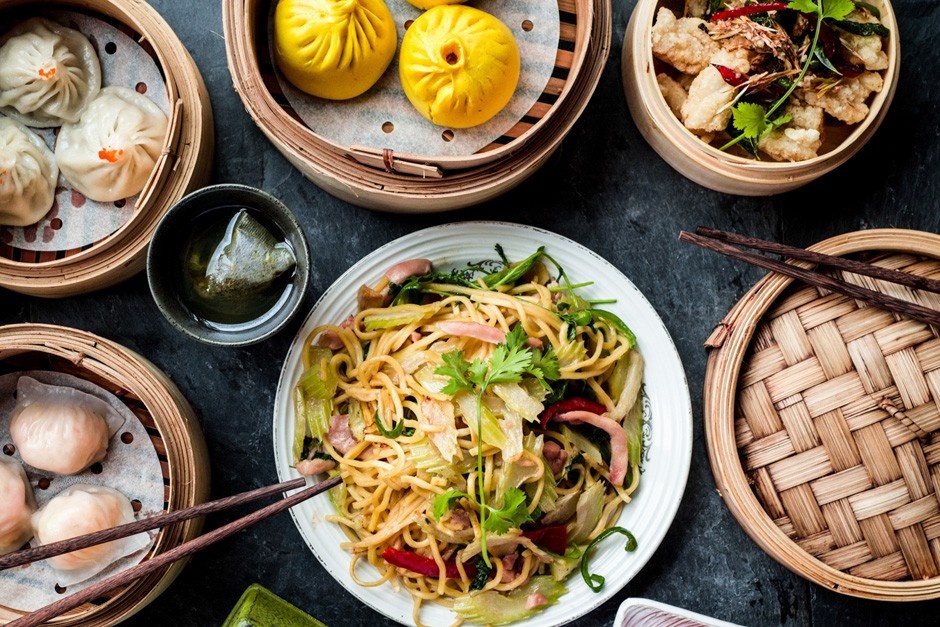
Chinese cuisine is one of the important components of Chinese cooking and Chinese culture. Also known as Chinese food culture. One of the world's three major cuisines (Chinese, French, and Turkish) has profoundly influenced East Asia. The recipes are based on dishes from various regions and ethnic groups in China.
Chinese cuisine originated in the Central Plains. It has a long history, exquisite technology, rich variety, numerous genres and unique styles. It is the crystallization of thousands of years of Chinese cooking and enjoys a high reputation in the world.
A general term for various dishes of various regions and ethnic groups in China. With a long history, exquisite technology, rich variety, numerous genres and unique styles, it is the knot of Chinese cooking for thousands of years.
Chinese cuisine, Lu cuisine
Jing, has a good reputation in the world. Chinese cooking, one of the important components of Chinese culture. Also known as Chinese food culture. One of the world's three major cuisines (Chinese, French, and Turkish) has profoundly influenced East Asia. The recipes are based on dishes from various regions and ethnic groups in China.
According to the literature, as early as 5,000 years ago, China had barbecued meat, grilled fish and other foods. The Shang Dynasty Yi Yin and five flavors reconciled, and the Zhou Dynasty appeared as the name of "Bazhen", which had a great influence on later generations. During the Han, Wei and Southern and Northern Dynasties, Chinese cuisine developed rapidly and the number of famous dishes increased. The "five Hous" of the invention in the Han Dynasty was the earliest Chinese amaranth. There are hundreds of dishes on the bamboo slips unearthed from the Han Tomb No. 1 of Mawangdui. There are more than 200 dishes in the "Qi Min Yao Shu" written by Jia Weijun of the Northern Wei Dynasty. Due to the introduction and popularity of Buddhism, and the advocacy of Emperor Wu of the Southern Dynasties, Buddhism has gradually exerted influence on the society, which has further developed the vegetarian food that has already appeared in China. During the Sui, Tang and Five Dynasties, there were also new developments in Chinese flower and vegetable dishes.
In the Song Dynasty, the development of Chinese cuisine showed a climax. In the cities of Yujing and Lin'an, there were hundreds of famous dishes such as cold dishes, hot dishes, soups and flower dishes. At that time, there were dishes and vegetarian dishes marked with South, North and Sichuan flavors on the market, indicating that the main flavor genre of Chinese dishes had taken shape in the Song Dynasty.
In the third generation of the Yuan, Ming and Qing Dynasties, Chinese cuisine has been greatly developed, and there are thousands of dishes. During this period, because ethnic minorities who believe in Islam moved to various places, halal cuisine has a certain position in Chinese cuisine as a unique flavor. The flavor genre of Chinese cuisine has basically taken shape. From the late Qing Dynasty to the early Republic of China, as foreigners came to China, Chinese dishes were also blended with some Western dishes.
Since the founding of the People's Republic of China, especially since 1979, it has achieved gratifying results in the inheritance and innovation of dishes. Traditional flavored dishes from all over China have been re-listed. In addition to Beijing's imitation dishes, Xi'an, Hangzhou, Kaifeng, Yangzhou and other places have also developed imitation Tang dishes, imitation Song dishes, Confucian dishes and red house dishes.
There are many varieties of Chinese dishes in the dish category. In addition to the classification by region and ethnic group, there are also different processing methods due to different consumption objects. There are also two classification methods. 1 consumption category. Due to different consumption targets, there are different dishes, including home cooking, city leeks, public canteens, temples, official dishes, palace dishes, and medicinal dishes. 2 processing categories. Due to the variety of Chinese food processing techniques, the dishes and their functions are also different, mainly divided into cold dishes, hot dishes, large dishes, side dishes, beets, soup dishes and so on.
The flavor genre China is a multi-ethnic country. Due to differences in geography, climate, property, culture, beliefs, etc., the flavors of the dishes vary greatly, forming many genres, with four major cuisines and eight major cuisines. The four major cuisines are Lu cuisine in the lower Yellow River, Sichuan cuisine in the upper reaches of the Yangtze River, Huaiyang cuisine in the Huai'an-Yangzhou area of Jiangsu, and Cantonese cuisine in the Lingnan area . Since these cuisines are naturally evolved, they can only be roughly distinguished from the taste, production, taste and artistic style of their dishes.